
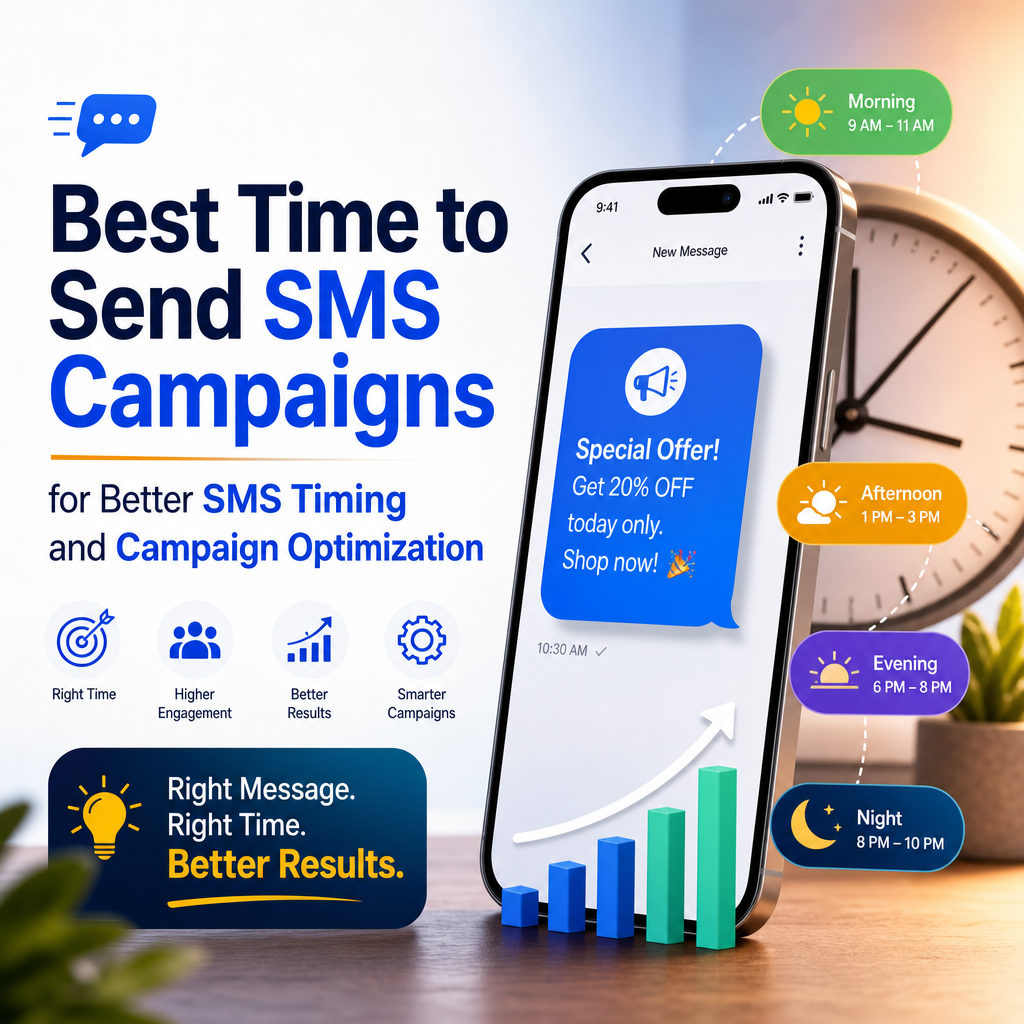
Best Time to Send SMS Campaigns
Timing can make or break an SMS campaign. A strong message with a compelling offer can still underperform if it lands in a customer’s inbox at the wrong moment. On the other hand, a well-timed text can drive instant attention, clicks, and conversions because SMS is one of the most immediate marketing channels available.
Finding the best time to send SMS campaigns is not about choosing a single universal hour and sticking to it forever. It is about understanding your audience, the purpose of the message, and the context in which people are most likely to read and act. In this guide, we’ll break down the key principles of sms timing, explore common timing windows, and show how to use data for smarter campaign optimization.
Why SMS Timing Matters
Unlike email, which may sit unread for hours or days, SMS is typically opened within minutes. That makes timing especially important. If your message arrives when people are busy, sleeping, commuting, or otherwise distracted, it may get ignored or even annoy recipients.
Good timing helps you:
- Increase open and response rates
- Reduce opt-outs and complaints
- Improve click-through and conversion rates
- Make promotions feel relevant and timely
- Strengthen customer trust by respecting their attention
The best message in the world will not perform well if sent at the wrong time. That’s why timing should be treated as a core part of campaign optimization, not an afterthought.
The General Best Times to Send SMS Campaigns
There is no single perfect time for every audience, but some windows tend to perform better than others. These are broad starting points, not absolute rules.
Weekdays Often Outperform Weekends
For many businesses, weekdays are the safest and most effective time to send SMS campaigns. People are in routine mode, checking their phones regularly, and more likely to act on practical or promotional messages.
Commonly strong days include:
- Tuesday
- Wednesday
- Thursday
These midweek days often strike a balance between attention and action. Monday can be crowded as people return to work and handle backlog. Friday may work for entertainment, dining, or weekend promotions, but it can also be less effective for urgency-driven campaigns. Weekends can perform well for some industries, but often require more careful timing and a more casual tone.
Late Morning and Early Evening Are Commonly Effective
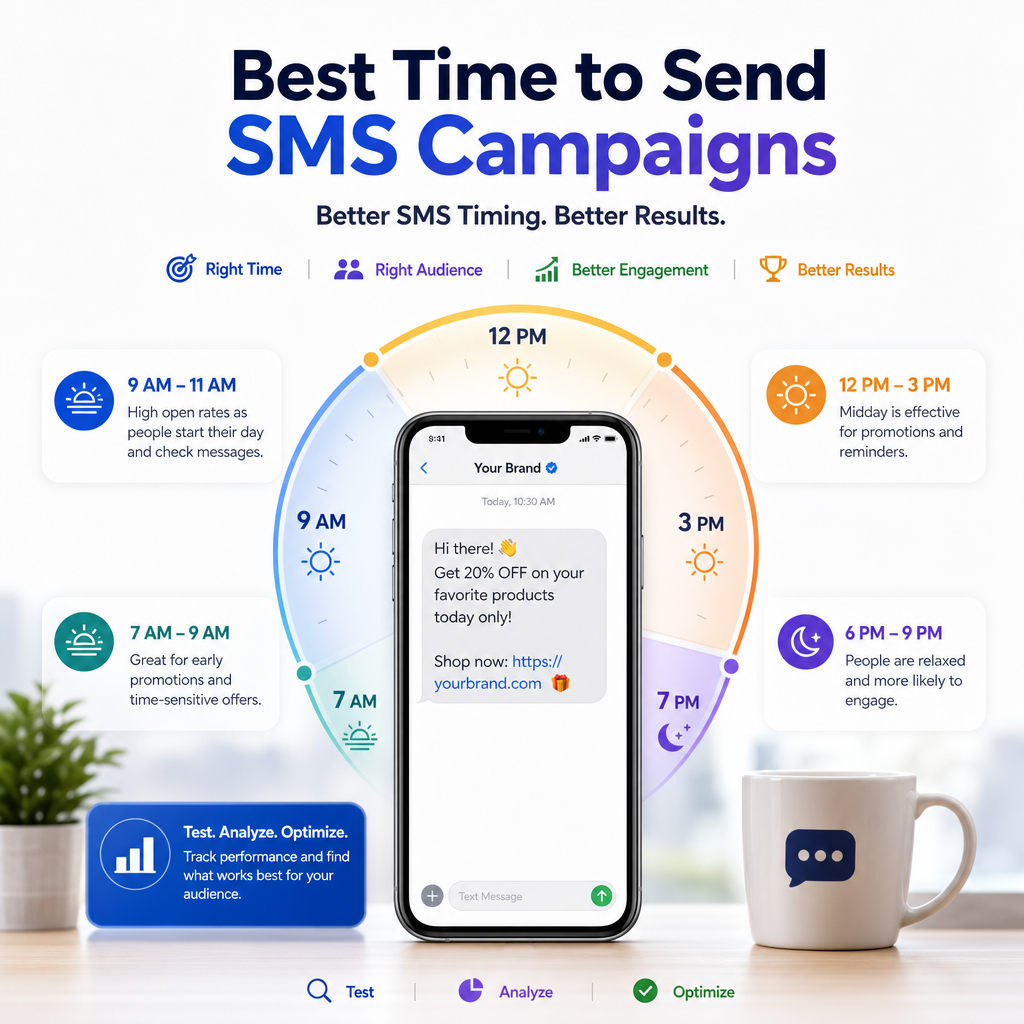
Many marketers see strong results when messages are sent during these time windows:
- 9:00 AM to 11:00 AM: People are settled into the day and checking their phones
- 12:00 PM to 2:00 PM: Lunch breaks can be a good attention window
- 4:00 PM to 7:00 PM: After work hours, people may be more available to browse and buy
These periods tend to work because recipients are awake, mentally available, and more likely to engage with a short message. Sending too early in the morning can feel intrusive, while late-night texts may be disruptive.
Avoiding Bad SMS Timing
Just as important as knowing when to send is knowing when not to. Poor timing can reduce engagement and hurt your brand reputation.
Avoid Very Early or Late Sends
In most cases, avoid sending text messages:
- Before 8:00 AM
- After 8:00 PM
- During overnight hours
People generally view SMS as a personal channel. Messages that arrive too early or too late can seem inconsiderate, especially if they are promotional rather than urgent.
Be Careful Around Busy Life Moments
Even if the clock says it’s a good time, context matters. For example, a lunch promotion may not work well during a holiday rush, and a retail sale may underperform during a major local event when people are distracted.
Think about moments such as:
- Major holidays
- School drop-off and pick-up times
- Commute hours
- Workday meetings
- Local events or emergencies
The goal is to reach people when they can actually pay attention, not just when your schedule says to send.
Different Campaign Types Need Different Timing
The best time to send an SMS campaign depends heavily on the message type. A flash sale, a reminder, and a shipping update all serve different purposes and should be timed differently.
Promotional Campaigns
Promotional texts work best when recipients have time to browse or shop. That usually means:
- Mid-morning for general retail offers
- Early afternoon for limited-time sales
- Early evening for lifestyle, dining, or entertainment offers
Example:
A clothing brand might send a 20% off text at 10:30 AM on a Wednesday, when customers are likely checking their phones and can shop during the day.
Appointment Reminders
Appointment reminders should be sent far enough ahead to be useful, but close enough to remain relevant. A common approach is:
- 24 hours before the appointment
- 2 to 4 hours before the appointment as a second reminder, if appropriate
Example:
A dental office might send an appointment confirmation the day before at 11:00 AM, then a short reminder at 8:00 AM on the day of the visit.
Order and Shipping Updates
Transactional messages are different from promotional texts. Customers usually expect these quickly and may appreciate immediate delivery.
Best timing for these messages is:
- As soon as the event happens
- During normal business hours when possible
- Immediately for urgent updates, regardless of the time if your system and policies allow it
Example:
If a package is marked out for delivery, the customer should receive that alert promptly rather than waiting for a specific marketing window.
Event and RSVP Messages
For event-based campaigns, timing should reflect urgency and planning behavior.
- Early announcements: send during weekday daytime hours
- Reminder messages: send 1 to 3 days before the event
- Same-day reminders: send in the morning or early afternoon
Example:
A restaurant hosting a live music night might announce it on Tuesday at 1:00 PM, then send a reminder on Friday at 4:30 PM.
Flash Sales and Limited-Time Offers
These campaigns benefit from urgency, so timing matters a lot. You want to catch people when they can respond quickly.
Good windows often include:
- Mid-morning
- Lunch break
- After work
Avoid sending flash sale texts too late unless your audience is known to shop at night and your offer is designed for that behavior.
Know Your Audience Before Choosing a Send Time
The real secret to better sms timing is not following generic advice forever. It is learning when your specific audience responds best.
Consider Customer Behavior
Different audiences have different phone habits:
- Working professionals may engage mid-morning or after work
- Parents may be more responsive after school drop-off or after bedtime
- Students may be active later in the day
- Local shoppers may respond during lunch or commute hours
- Night-shift workers may have very different patterns
A B2B audience will usually respond differently than a consumer audience. Likewise, an audience for a coffee shop will not behave the same as an audience for a luxury spa.
Use Time Zone Awareness
If your list spans multiple time zones, sending one mass SMS at a single clock time can be a mistake. A message that lands at 10:00 AM in one region could arrive at 7:00 AM or 1:00 PM in another.
Best practices include:
- Segmenting audiences by time zone
- Scheduling sends based on local time
- Testing separately by region
This is especially important for national brands or e-commerce businesses with broad customer bases.
Look at Past Campaign Data
Your own results are more valuable than any generic benchmark. Review:
- Open or click rates
- Conversion rates
- Unsubscribe rates
- Response times
- Sales by send hour and day
Look for patterns. If messages sent at 5:30 PM regularly outperform those sent at 11:00 AM, your audience may be more active after work. If Tuesday and Thursday perform better than Monday, that is useful data for future campaign optimization.
How to Test SMS Timing
A strong SMS strategy is built on testing. Small timing changes can produce big differences in outcomes.
Run A/B Tests
Try sending the same campaign at different times to similar audience segments. For example:
- Group A: Wednesday at 10:00 AM
- Group B: Wednesday at 5:00 PM
Compare the results based on:
- Click-through rate
- Conversion rate
- Revenue per recipient
- Opt-out rate
Make sure the sample sizes are large enough to be meaningful.
Test Different Days and Times
You can test:
- Day of the week
- Time of day
- Weekday vs. weekend
- Morning vs. afternoon vs. evening
Change one variable at a time if possible. That makes it easier to identify what is driving performance.
Track Message Type Separately
Not every campaign should be judged by the same standard. A reminder text may have a higher response rate than a discount offer, but that does not mean one time is universally better. Track timing by campaign category so your conclusions are more accurate.
Industry Examples of Good SMS Timing
Different industries often benefit from different timing patterns. Here are a few examples.
Retail
Retail brands often see strong results in:
- Late morning
- Lunchtime
- Early evening
Why it works: customers can browse during breaks or after work.
Example:
A beauty retailer sends a free-shipping promotion at 12:15 PM on Thursday.
Restaurants and Food Delivery
Restaurants often perform well with:
- Late afternoon
- Early evening
- Weekend lunch hours
Why it works: these are moments when people are deciding where to eat.
Example:
A pizza shop sends a two-hour dinner special at 4:45 PM on Friday.
Healthcare and Wellness
Appointment-related messages usually work best:
- During business hours
- The day before appointments
- In the morning for same-day reminders
Why it works: patients need enough notice to prepare and reschedule if needed.
Example:
A clinic sends a reminder at 9:30 AM on Tuesday for a Wednesday afternoon appointment.
E-commerce
E-commerce brands often do well with:
- Midweek daytime sends
- Evening reminder campaigns
- Post-purchase transactional messages immediately
Why it works: customers are comfortable shopping online at nearly any time, but response is often stronger when they are not rushed.
Hospitality and Events
Hotels, concerts, and event promoters may benefit from:
- Early planning reminders
- Afternoon or early evening promotional sends
- Same-day reminders in the morning
Why it works: people need time to coordinate schedules, tickets, and travel.
Best Practices for Campaign Optimization
Good timing is only one part of effective SMS marketing. To maximize results, combine timing with strong campaign fundamentals.
Keep Messages Short and Relevant
SMS is a limited, personal channel. Messages should be:
- Clear
- Brief
- Action-oriented
- Easy to understand in seconds
If your message takes too long to read, timing alone will not save it.
Match Timing to Urgency
A limited-time offer should feel timely. A reminder should feel helpful. A shipping update should feel immediate. If the timing and the message’s purpose do not align, engagement will drop.
Respect Frequency
Even perfect timing won’t help if you send too often. Too many messages can cause fatigue and opt-outs. Build a schedule that balances consistency with restraint.
Personalize When Possible
Personalization can improve performance when paired with smart timing. Examples include:
- First-name personalization
- Location-based offers
- Purchase-history recommendations
- Birthday or anniversary messages
When people feel the text is relevant to them, they are more likely to respond.
A Simple Framework for Choosing the Best Send Time
If you need a practical starting point, use this framework:
-
Define the goal
Is it sales, reminders, updates, or event attendance? -
Identify the audience
What are their habits, time zone, and likely availability? -
Choose a safe default window
Mid-morning, lunchtime, or early evening often work well. -
Test against alternatives
Compare at least two send times. -
Review results and refine
Use performance data to improve future campaigns.
This approach turns timing into a repeatable process instead of a guess.
Conclusion
The best time to send SMS campaigns depends on your audience, your industry, and the purpose of the message. While midweek mornings and early evenings often perform well, the most effective strategy is to test, measure, and adjust. Strong sms timing is not just about avoiding bad hours; it is about sending the right message when people are most likely to notice and act.
When you combine thoughtful timing with relevant content and consistent campaign optimization, your SMS campaigns can become more effective, more respectful, and more profitable.
