
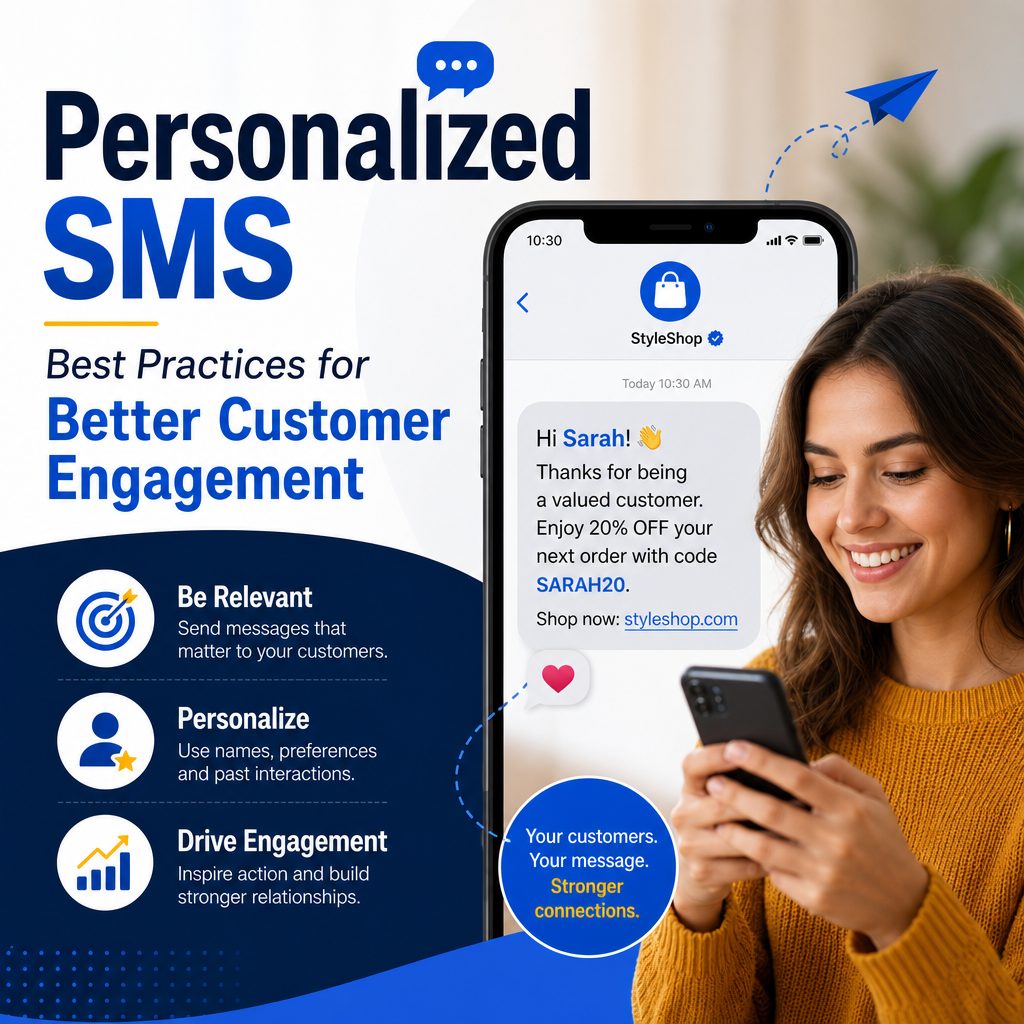
SMS Personalization Best Practices for Better Customer Engagement
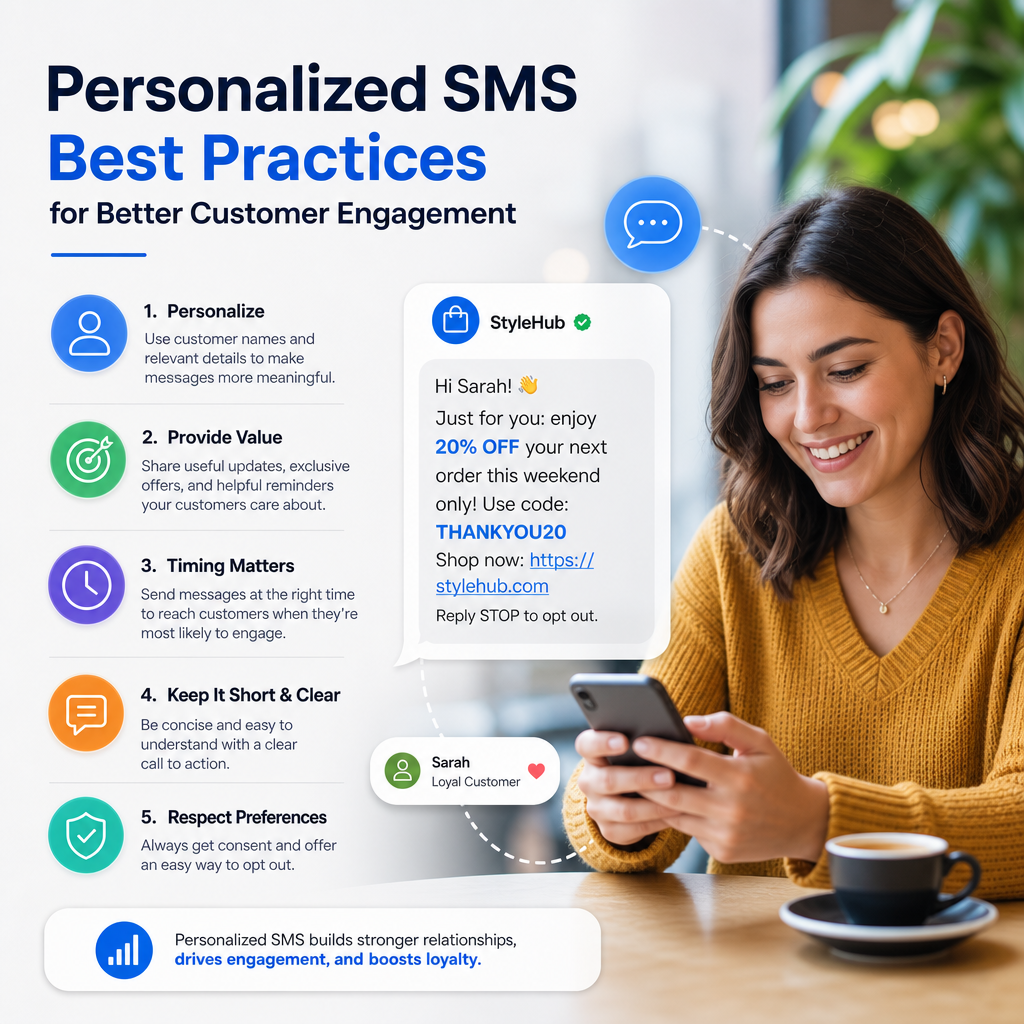
SMS remains one of the most direct and effective channels for reaching customers. With open rates far higher than email and response times that are often measured in minutes, text messaging can drive action quickly. But the real power of SMS comes from relevance. A generic mass text may get ignored, while a well-crafted personalized SMS can feel timely, useful, and human.
That’s why personalization is no longer optional. Customers expect brands to know their preferences, respect their time, and send messages that fit their needs. When done well, personalization improves customer engagement, builds trust, and increases conversions. When done poorly, it can feel intrusive or even spammy.
This guide covers the best practices for SMS personalization, including what to personalize, how to use data responsibly, and how to avoid common mistakes.
Why SMS Personalization Matters
SMS is a highly personal channel. Most people carry their phones everywhere and check texts more often than other forms of communication. That makes every message feel more immediate than an email or social ad.
Personalization matters because it helps your message stand out in a crowded inbox. Instead of sending the same reminder, offer, or promotion to everyone, you can tailor the message to reflect a customer’s history, behavior, or interests.
Benefits of personalized SMS
- Higher open and click-through rates
- Better response rates
- Improved customer satisfaction
- Stronger brand loyalty
- More efficient campaigns with less wasted outreach
For example, a fitness brand sending a text that says, “Hi Jordan, your next yoga class is tomorrow at 6 PM,” is far more effective than a generic “Reminder: class tomorrow.” The first message feels relevant and useful. The second feels like a system alert.
Start with the Right Data
Good personalization depends on good data. Before you can send effective personalized SMS messages, you need to know what information is available and how it can be used.
Useful data points for SMS personalization
- First name
- Purchase history
- Browsing behavior
- Location
- Preferred product categories
- Loyalty status
- Appointment history
- Last interaction or engagement date
- Abandoned cart items
- Birthdays or anniversaries
Not all data should be used in every campaign. The goal is to choose details that make the message more helpful, not more invasive.
For instance, a clothing retailer might use browsing history to send a text about items left in a cart. A salon might use appointment data to send a reminder and a rebooking prompt. A restaurant might use location and order history to offer a relevant lunch promotion.
Keep your data clean and current
Personalization is only effective if the information is accurate. If your records are outdated, you risk sending the wrong name, incorrect purchase suggestions, or irrelevant offers.
To avoid that:
- Regularly update customer profiles
- Remove duplicate records
- Sync SMS data with your CRM or eCommerce platform
- Ask customers to confirm preferences when needed
Clean data leads to more trustworthy messaging and better customer engagement.
Segment Your Audience
One of the most effective SMS personalization best practices is segmentation. Rather than treating your audience as one large list, divide it into smaller groups based on behavior, demographics, or preferences.
Segmentation makes personalization easier because each group shares something in common. That means you can send more targeted, more relevant messages without creating a completely unique text for every person.
Common ways to segment SMS audiences
- New subscribers
- Repeat buyers
- Loyal customers
- Inactive customers
- Cart abandoners
- Frequent visitors
- Location-based groups
- Product interest groups
Example of segmentation in action
A skincare brand could create separate SMS campaigns for:
- New customers who need onboarding tips
- Returning customers who may want refill reminders
- High-value loyalty members who receive exclusive offers
- Inactive customers who get a re-engagement discount
Each segment receives a different message based on their relationship with the brand. That approach improves customer engagement because people are more likely to respond to messages that match where they are in the journey.
Personalize the Message, Not Just the Name
Adding a first name is a good start, but real personalization goes deeper. Many brands stop at “Hi Sarah,” which can feel robotic if the rest of the text is generic. True personalized SMS should reflect the recipient’s needs, behavior, or context.
Ways to personalize beyond the first name
- Reference a recent purchase
- Mention an abandoned cart item
- Recommend products based on past browsing
- Use local store or event information
- Adjust timing based on time zone or behavior
- Include a loyalty status or reward balance
- Tailor offers to interests or purchase frequency
Example
Instead of:
Hi Michael, check out our new collection today.
Try:
Hi Michael, we noticed you liked our running shoes. New lightweight styles just dropped, and your size is in stock.
The second message is more specific, more useful, and more likely to drive action.
Use dynamic content carefully
Dynamic fields can make messages feel more personal, but they should be used thoughtfully. Make sure the message still reads naturally if a field is missing or inaccurate. Always test your templates to ensure names, offers, and links appear correctly.
Match the Message to Customer Behavior
Behavior-based personalization is one of the strongest ways to increase SMS performance. When you respond to a customer’s action, the message feels timely and relevant.
Examples of behavior-based SMS personalization
Cart abandonment
If a customer leaves items in their cart, send a reminder that includes the product name or image and, if appropriate, a gentle incentive.
Example:
Still thinking about the navy jacket, Priya? It’s waiting in your cart. Complete your order today before it sells out.
Post-purchase follow-up
After a purchase, send a thank-you message, order tracking info, or usage tips.
Example:
Thanks for your order, Alex. Your headphones shipped today, and tracking details are here: [link].
Re-engagement
If a customer hasn’t interacted in a while, send a message based on their previous interest.
Example:
We miss you, Daniel. The home gym gear you viewed is now 15% off this week.
Appointment reminders
For service businesses, reminders should include date, time, and relevant context.
Example:
Hi Lena, your dentist appointment is tomorrow at 10:30 AM. Reply C to confirm or R to reschedule.
Behavior-based SMS makes outreach feel helpful instead of random.
Get the Timing Right
Even the most well-written personalized SMS can fail if it arrives at the wrong time. Timing affects whether a customer sees your message as useful or disruptive.
Best timing practices
- Send during local business hours
- Avoid late-night or very early messages
- Align messages with customer behavior
- Use time-sensitive triggers when appropriate
- Respect time zones for national audiences
For example, a lunch promotion sent at 11:15 AM can perform much better than one sent at 4:30 PM. Similarly, an abandoned cart reminder sent within an hour may outperform one sent two days later.
Use timing to support engagement
Timing should reinforce the relevance of your message. A reminder before an appointment, a restock alert when a product returns, or a birthday offer on the customer’s actual birthday all feel timely and thoughtful.
Good timing improves customer engagement because it reaches people when they’re most likely to take action.
Keep Messages Short and Clear
SMS is not the place for long explanations. Even with personalization, the message should be concise, easy to read, and focused on one clear purpose.
SMS copy tips
- Lead with the most important detail
- Use simple language
- Keep one primary call to action
- Avoid unnecessary filler
- Make the next step obvious
Example of a strong SMS structure
A good SMS often includes:
- A personalized greeting
- A relevant benefit or reminder
- A clear call to action
- A link or reply option
Example:
Hi Emily, your favorite moisturizer is back in stock. Order now before it sells out: [link]
This works because it is short, specific, and actionable.
Avoid overloading the message
Too many details can make the text hard to scan. If you need to communicate complex information, such as shipping policies or event instructions, consider linking to a landing page where the customer can learn more.
Respect Consent and Privacy
Personalization should never cross the line into discomfort. SMS is a permission-based channel, and customers must opt in to receive texts. Just because you have access to data does not mean you should use all of it.
Privacy best practices
- Collect clear opt-in consent
- Explain what types of messages customers will receive
- Offer an easy way to opt out
- Use data only for stated purposes
- Follow applicable privacy laws and regulations
Transparency builds trust. If customers feel that your brand respects their preferences and boundaries, they are more likely to engage with future messages.
Avoid being overly intrusive
Some types of personalization can feel too personal if the context is wrong. For example, mentioning a customer’s exact browsing history in a message might be helpful in some cases, but too invasive in others. The more sensitive the data, the more carefully it should be handled.
As a rule, personalize to add value, not to show how much you know.
Test and Optimize Your Messages
Personalization is not a one-time setup. To improve results, you need to test different message variations and measure what resonates with your audience.
What to test
- Name vs. no name in the greeting
- Short vs. slightly longer copy
- Different calls to action
- Discount-based vs. benefit-based offers
- Product recommendations by category
- Send time and frequency
Important metrics to track
- Delivery rate
- Open rate
- Click-through rate
- Reply rate
- Conversion rate
- Unsubscribe rate
If one version of a personalized SMS generates more clicks or purchases, use that insight to refine future campaigns. Small changes in wording or timing can create meaningful gains in customer engagement.
Example test scenario
A retailer might test two messages for cart recovery:
- Version A: “Hi Ava, your cart is waiting. Finish checkout now.”
- Version B: “Hi Ava, the items in your cart may sell out soon. Complete your order here: [link]”
Testing reveals whether urgency, product-specific language, or a softer reminder performs better.
Use Personalization Across the Customer Journey
The best SMS strategies do not rely on a single type of message. Instead, they use personalization throughout the full customer journey.
At different stages, personalize differently
Acquisition
Welcome new subscribers with a message that reflects how they joined or what they signed up for.
Example:
Welcome to the VIP list, Marcus. Your first exclusive offer is here: [link]
Consideration
Send product recommendations or educational content based on browsing interest.
Example:
Hi Sofia, since you checked out our planners, here’s a guide to choosing the right one for your workflow.
Purchase
Confirm orders, provide shipping updates, and thank customers after checkout.
Example:
Thanks for your order, Noah. Your package is on the way and should arrive Friday.
Retention
Reward loyal customers with personalized offers, early access, or replenishment reminders.
Example:
You’ve earned 500 loyalty points, Chloe. Redeem them on your next order before they expire.
Win-back
Re-engage inactive customers with relevant offers based on past preferences.
Example:
We saved your favorites, Emma. Come back this week for 20% off the items you loved.
Using personalization across the journey creates a more connected experience and strengthens long-term loyalty.
Common SMS Personalization Mistakes to Avoid
Even with the best intentions, brands sometimes make mistakes that weaken their SMS campaigns.
Watch out for these issues
- Overusing the customer’s name
- Sending messages that are too generic
- Using stale or inaccurate data
- Personalizing without consent
- Sending too many texts
- Making the offer irrelevant to the recipient
- Writing messages that sound automated or unnatural
A personalized SMS should feel like a helpful message from a brand that understands the customer, not a template with a name inserted at the top.
Conclusion
SMS personalization works because it makes messages more relevant, timely, and useful. When you use accurate data, smart segmentation, behavior-based triggers, and thoughtful timing, your texts are more likely to capture attention and inspire action.
The best personalized SMS campaigns go beyond first names. They reflect customer needs, respect privacy, and support every stage of the journey. Done well, SMS becomes more than a broadcast tool—it becomes a powerful driver of customer engagement and loyalty.
