
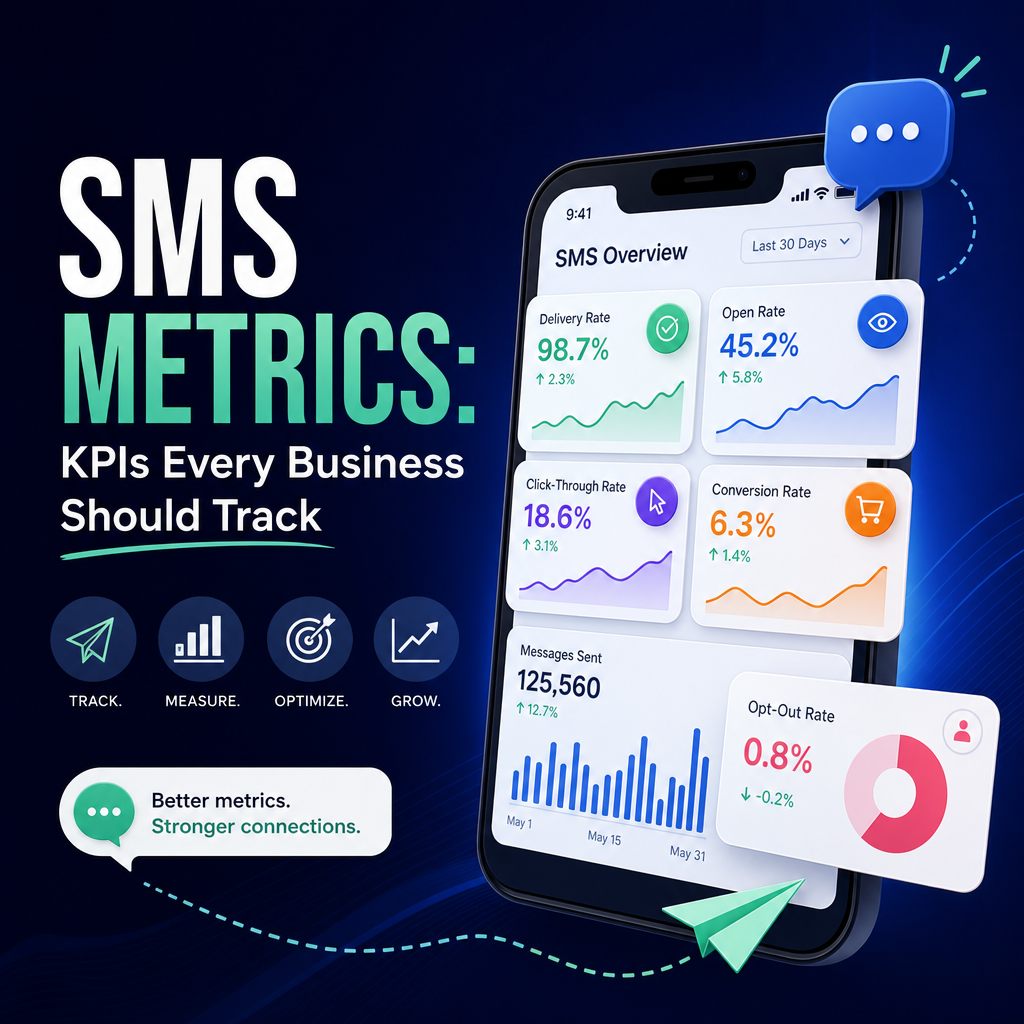
SMS Marketing KPIs Every Business Should Track
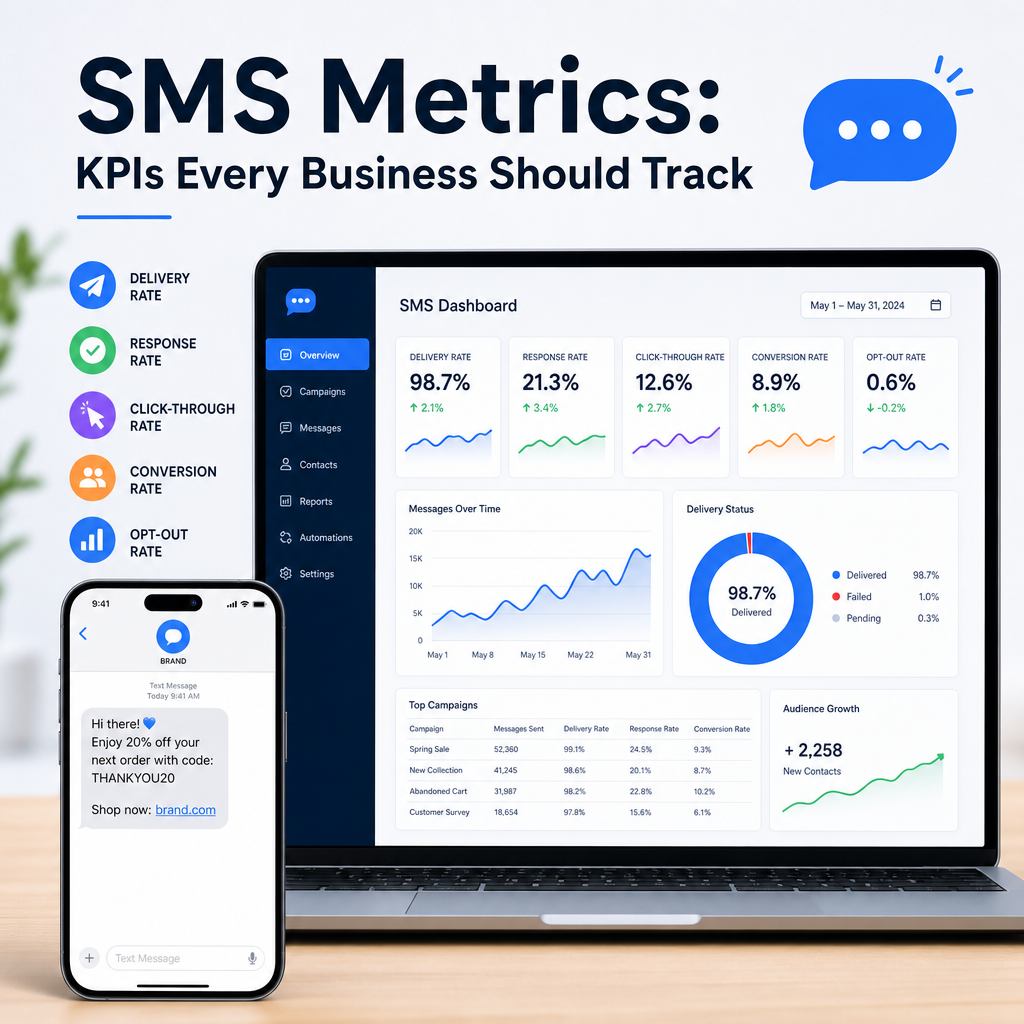
SMS marketing remains one of the most direct and effective ways to reach customers. Text messages are opened quickly, often within minutes, and they can drive immediate actions such as purchases, bookings, or event signups. But sending messages alone is not enough. To understand whether your campaigns are actually working, you need to track the right SMS metrics.
The challenge is that many businesses focus only on surface-level numbers like how many messages were sent. While volume matters, it does not tell the full story. A campaign can reach thousands of people and still fail to generate clicks, conversions, or revenue. On the other hand, a smaller campaign with strong engagement may produce excellent results.
This is why KPI tracking is essential. By monitoring the right SMS marketing KPIs, you can improve targeting, sharpen your message, and increase return on investment. In this guide, we’ll break down the most important SMS metrics every business should track, why they matter, and how to use them to make smarter decisions.
Why SMS Marketing KPIs Matter
KPIs, or key performance indicators, help you measure whether your marketing efforts are meeting business goals. In SMS marketing, these metrics show how recipients interact with your texts and whether those interactions lead to meaningful outcomes.
Without KPI tracking, you may be guessing at what works. For example:
- Are customers opening your texts but not clicking?
- Are too many people unsubscribing after one campaign?
- Is a specific offer driving sales, or just engagement?
- Are you sending texts too often or not often enough?
The right SMS metrics help answer these questions. They also allow you to compare campaigns over time, test different messages, and identify opportunities for improvement. Over time, this leads to stronger audience relationships and better performance.
1. Delivery Rate
The delivery rate shows how many of your text messages actually reached recipients’ phones. It is one of the most basic but important SMS metrics because a message cannot perform if it is never delivered.
Why it matters
A low delivery rate can signal problems with your contact list, carrier filtering, invalid phone numbers, or compliance issues. If your messages are not reaching people, other metrics become less useful.
How to calculate it
Delivery Rate = (Delivered Messages ÷ Sent Messages) × 100
What to look for
A strong delivery rate usually indicates a healthy list and a reliable SMS provider. If the number drops, check for:
- Outdated or incorrect phone numbers
- Poor list hygiene
- Carrier restrictions
- Compliance concerns related to consent
Example
If you send 10,000 texts and 9,700 are delivered, your delivery rate is 97%. That is generally a solid result. If it drops to 90% or lower, it may be time to audit your data and messaging practices.
2. Open Rate
The open rate measures how many recipients opened your text message. Unlike email, SMS usually has very high open rates, which is one of the reasons brands rely on it for time-sensitive communication.
Why it matters
Open rate tells you whether your message grabbed attention. If recipients are receiving your texts but not opening them, the issue may be with the sender name, timing, or relevance of your message.
How to use it
While open rates in SMS are typically higher than in email, they still provide useful insight. You can compare open rates across campaigns to see which subject-style wording, timing, or audience segments perform best.
Factors that influence open rate
- Sender recognition
- Message timing
- Clarity of the first few words
- Audience interest in the offer
- Frequency of prior messages
Example
A restaurant sends a lunch special at 10:30 a.m. and sees a much higher open rate than when it sends the same offer at 4:00 p.m. This suggests that timing is directly affecting engagement.
3. Click-Through Rate
Click-through rate, or CTR, measures how many recipients clicked on a link in your text message. This is one of the most valuable SMS metrics because it shows whether your content prompted action.
Why it matters
A high open rate is good, but a campaign only becomes truly effective when customers take the next step. CTR helps you evaluate whether your offer, call to action, and link placement are compelling.
How to calculate it
CTR = (Unique Clicks ÷ Delivered Messages) × 100
Some businesses also track click-to-open rate, which measures clicks relative to opens. That can help isolate the strength of the message itself once it has been opened.
How to improve CTR
- Use a clear and direct call to action
- Keep links short and easy to tap
- Make the offer easy to understand
- Create urgency without being pushy
- Match the message to the audience segment
Example
A clothing retailer sends a “24-hour flash sale” text with a product link and gets a 12% CTR. A second campaign with a vague “shop now” message gets only 4%. The better performance shows that a specific, time-sensitive offer drives more action.
4. Conversion Rate
Conversion rate measures how many recipients completed the desired action after clicking or viewing your message. This could mean making a purchase, filling out a form, booking an appointment, or signing up for an event.
Why it matters
Clicks are helpful, but conversions reveal business impact. A campaign may generate traffic without generating revenue. Conversion rate helps determine whether your text message is bringing in actual results.
How to calculate it
Conversion Rate = (Conversions ÷ Delivered Messages) × 100
You can also measure conversions from clicks, depending on your reporting setup.
Common conversion goals
- Online sales
- In-store purchases
- Appointment bookings
- Coupon redemptions
- Webinar registrations
- App downloads
Example
A salon sends a text promoting a new client discount. Out of 1,500 delivered texts, 90 people book an appointment. That gives the campaign a 6% conversion rate. If the average booking value is high, this campaign may be extremely profitable.
5. Response Rate
Response rate measures how many recipients reply to your text message. This metric is especially useful for two-way SMS campaigns where you invite customers to answer a question, confirm an appointment, or request more information.
Why it matters
A reply indicates engagement and can help you measure how interactive your audience is. It is particularly important for customer service, appointment reminders, polls, and lead qualification.
Example use cases
- “Reply YES to confirm your appointment.”
- “Text us your preferred delivery time.”
- “Respond with 1, 2, or 3 to choose your offer.”
What a strong response rate shows
A healthy response rate suggests that your message is clear and your audience is motivated to engage. A low response rate may mean the message is too vague, the ask is too complicated, or the timing is off.
6. Opt-Out Rate
The opt-out rate measures how many recipients unsubscribe from your SMS list after receiving a message. This is one of the most important sms metrics because it reflects audience satisfaction and compliance risk.
Why it matters
A high opt-out rate can signal that your content is irrelevant, too frequent, or too promotional. It can also reveal a mismatch between expectations and actual message content.
How to calculate it
Opt-Out Rate = (Unsubscribes ÷ Delivered Messages) × 100
How to keep opt-outs low
- Set expectations when users subscribe
- Send only relevant messages
- Avoid over-messaging
- Segment your audience
- Provide value in every text
Example
If a retail brand sends daily promotional texts to a list that signed up for weekly offers, unsubscribes may rise quickly. The issue is not just the content, but the mismatch between frequency and user expectations.
7. Bounce Rate or Failed Delivery Rate
Sometimes messages fail to deliver due to invalid numbers, disconnected phones, or carrier issues. Bounce rate, or failed delivery rate, tracks how many texts never reached the recipient.
Why it matters
A high failed delivery rate wastes budget and hurts overall campaign performance. It can also indicate that your data needs cleanup.
Common causes
- Incorrect or outdated phone numbers
- Numbers that are no longer active
- Carrier filtering
- Formatting issues
- Lack of proper consent or compliance problems
Why businesses should monitor it
If failed delivery rises, you may need to verify collection methods for phone numbers or improve validation at signup. Clean data makes every other SMS metric more reliable.
8. Revenue Per Message
Revenue per message shows how much income each sent text generates on average. This is a powerful KPI for measuring financial return, especially for e-commerce and retail businesses.
Why it matters
It connects SMS activity directly to money. Even if a campaign has modest engagement, it may still generate strong revenue if the offer is well targeted.
How to calculate it
Revenue Per Message = Total Revenue Attributed to SMS ÷ Number of Messages Sent
Example
If one campaign generates $5,000 in sales from 2,000 text messages, your revenue per message is $2.50. That figure helps you compare campaigns and judge whether SMS is profitable.
When to use it
This KPI is especially useful when comparing:
- Different promotions
- Seasonal campaigns
- Audience segments
- Message types, such as flash sales vs. reminders
9. List Growth Rate
List growth rate measures how quickly your SMS subscriber list is expanding. A healthy list is essential for long-term success, but growth should always be balanced with quality.
Why it matters
If your list is growing steadily, it means your acquisition strategy is working. But if growth is slow or flat, your reach may be limited. If growth is fast but opt-outs are high, you may be attracting the wrong audience.
How to calculate it
List Growth Rate = ((New Subscribers – Unsubscribes) ÷ Total Subscribers) × 100
Ways to grow your list
- Offer a discount or incentive for sign-up
- Promote SMS opt-ins on your website
- Collect numbers at checkout
- Use QR codes in-store
- Add sign-up options to social media campaigns
10. Customer Lifetime Value from SMS
Customer lifetime value, or CLV, estimates how much revenue a customer generates over time. When tied to SMS campaigns, it helps you see whether text subscribers are more valuable than non-subscribers.
Why it matters
SMS often supports repeat purchases and loyalty. If customers who receive texts buy more often or spend more over time, your SMS strategy is increasing long-term value.
How to use it
Compare the lifetime value of:
- SMS subscribers vs. non-subscribers
- Customers who redeem SMS offers vs. those who do not
- High-engagement segments vs. low-engagement segments
Example
An online store finds that SMS subscribers place 30% more repeat orders than non-subscribers. That means the channel is not just driving short-term sales; it is building lasting customer value.
How to Choose the Right SMS KPIs for Your Business
Not every business needs to track every metric equally. The best approach is to focus on KPIs that align with your goals.
If your goal is sales
Track:
- CTR
- Conversion rate
- Revenue per message
- Customer lifetime value
If your goal is list health
Track:
- Delivery rate
- Opt-out rate
- Bounce rate
- List growth rate
If your goal is engagement
Track:
- Open rate
- Response rate
- CTR
If your goal is customer retention
Track:
- Repeat purchase rate
- CLV
- Response rate
- Opt-out rate
The key is to avoid chasing vanity metrics. A high open rate looks good, but it does not matter much if nobody clicks or buys. Choose SMS metrics that directly reflect your business goals.
Best Practices for Tracking SMS Metrics
Once you know which KPIs matter, you need a consistent process for tracking them.
Use UTM tags and tracking links
These help you attribute web traffic and sales to specific campaigns.
Segment your audience
Break down metrics by customer type, location, behavior, or purchase history. Segmentation often reveals patterns that overall averages hide.
Test one variable at a time
Try changing the offer, timing, CTA, or sender name one at a time so you can identify what caused the difference in performance.
Monitor trends over time
A single campaign can be misleading. Look at weekly or monthly performance to see whether your SMS strategy is improving.
Clean your list regularly
Remove inactive or invalid numbers to improve delivery and reporting accuracy.
Conclusion
SMS marketing can be one of the highest-performing channels in your strategy, but only if you measure it correctly. Tracking the right SMS metrics gives you the insight needed to improve delivery, boost engagement, increase conversions, and protect the health of your subscriber list.
Start with the essentials: delivery rate, open rate, CTR, conversion rate, opt-out rate, and revenue per message. Then layer in response rate, list growth, failed delivery rate, and customer lifetime value as your SMS program matures. When you monitor these KPIs consistently, you can make smarter decisions and get far more value from every text you send.
