
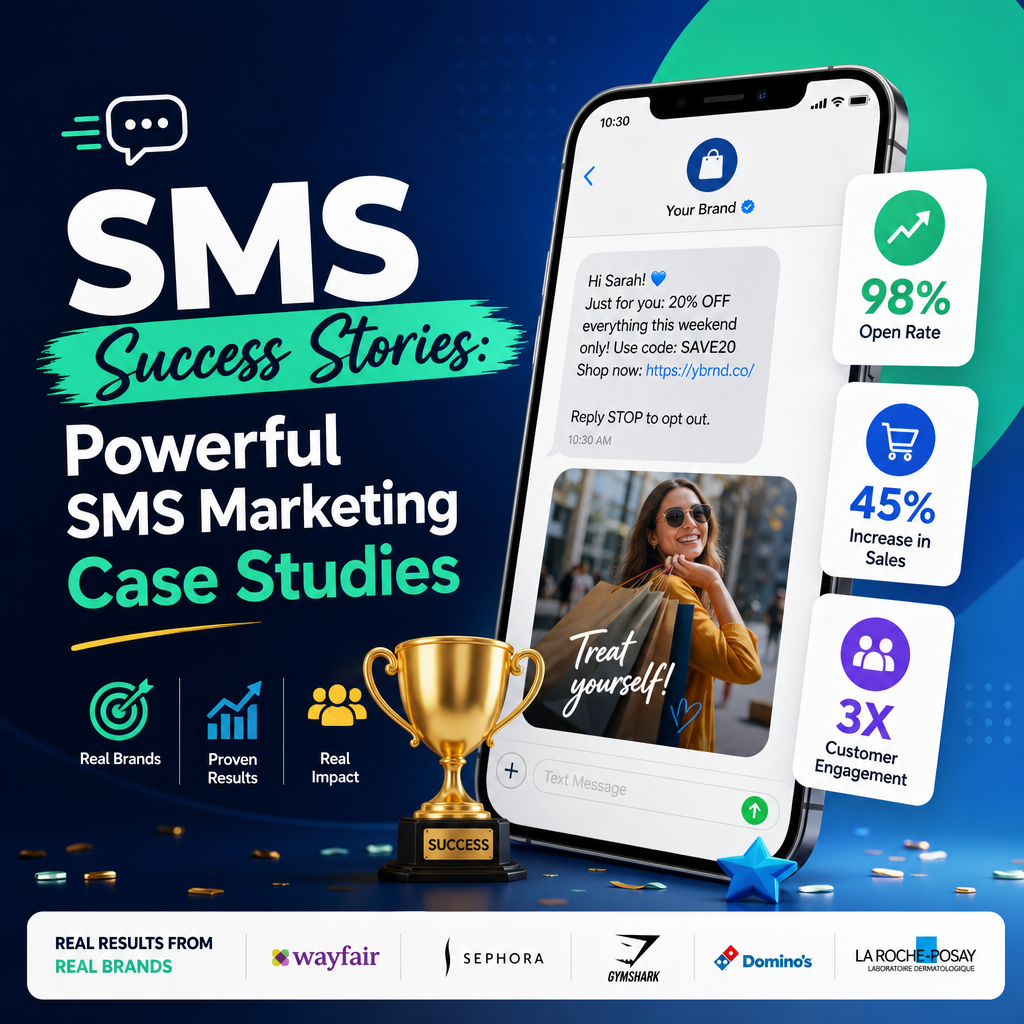
SMS Marketing Case Studies: Real-World Lessons from SMS Success Stories
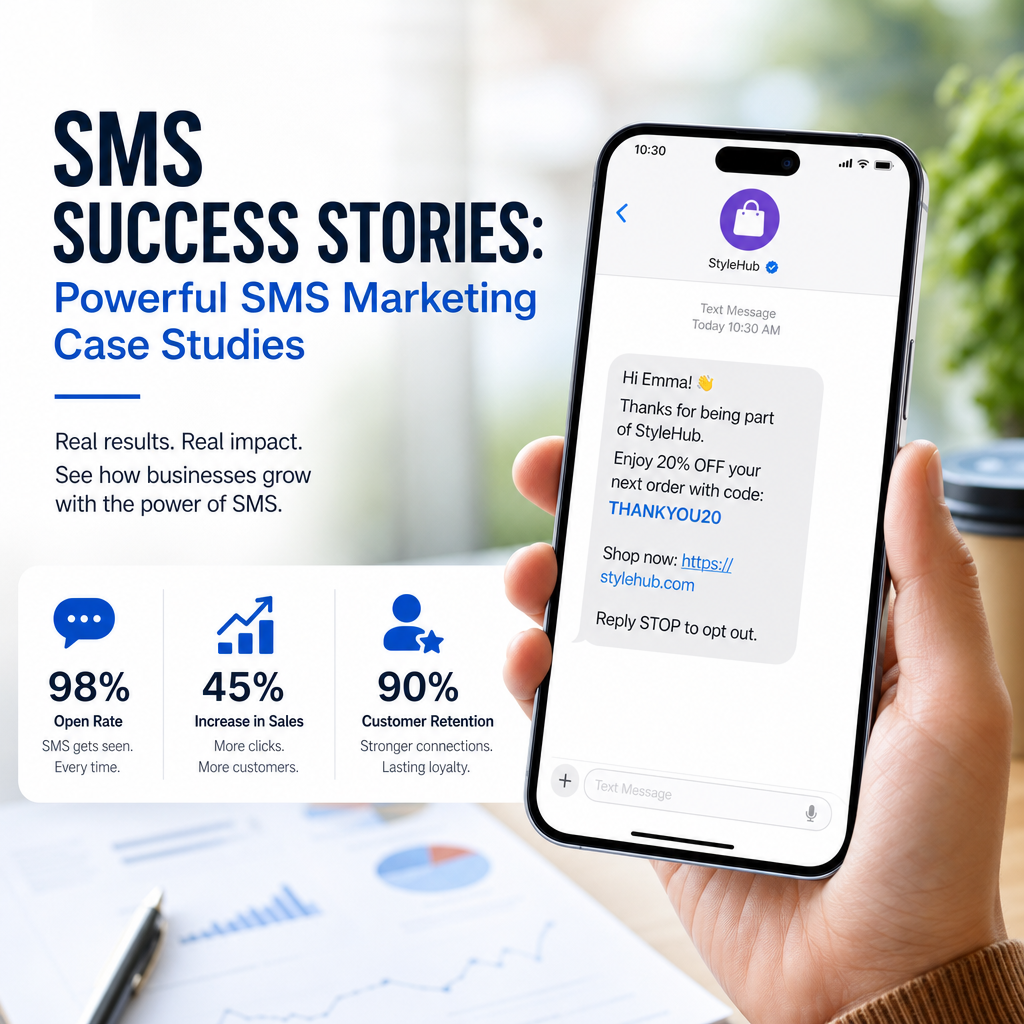
SMS marketing has a reputation for being simple, but the best campaigns are anything but basic. When done well, text messaging can drive immediate attention, prompt fast action, and create measurable revenue in a way few other channels can match. The most persuasive proof comes from sms success stories—case studies that show how brands used short, timely messages to boost conversions, recover abandoned carts, increase repeat purchases, and improve customer engagement.
This article looks at practical SMS marketing case studies and the lessons behind them. Whether you’re running an eCommerce store, a local service business, or a subscription brand, these examples show how text messaging can be used strategically rather than just as another promotional tool.
Why SMS Marketing Works So Well
Before diving into case studies, it helps to understand why SMS often outperforms other channels.
Text messages have a few built-in advantages:
- High open rates: SMS messages are typically read quickly after delivery.
- Direct delivery: Messages go straight to a customer’s phone, without battling inbox clutter or social algorithms.
- Fast response times: People tend to act on text messages sooner than on email.
- Personal feel: SMS can feel more conversational and immediate when used correctly.
That combination makes SMS especially powerful for time-sensitive offers, reminders, alerts, and follow-ups.
Case Study 1: Recovering Abandoned Carts for an Online Retailer
One of the most common SMS success stories comes from abandoned cart recovery. A mid-sized fashion retailer wanted to reduce lost sales from shoppers who added items to their cart but left before checkout.
The challenge
The brand was already using email reminders, but the results were modest. Many customers simply ignored the emails or never opened them in time. The team needed a faster, more visible channel.
The SMS strategy
They introduced a simple abandoned cart text sequence:
-
First message after one hour
A polite reminder that items were still waiting in the cart. -
Second message after 24 hours
Included a small incentive, such as free shipping or a limited-time discount. -
Final message after 48 hours
Added urgency, such as “Your cart expires soon.”
Messages were personalized with the customer’s first name and linked directly to checkout.
The results
The retailer saw a noticeable lift in recovered revenue. Customers who ignored email often responded to SMS because the message was shorter, more immediate, and easier to act on.
Key takeaway
Abandoned cart SMS works best when it is:
- Timely
- Personalized
- Short and direct
- Focused on one clear next step
The biggest lesson here is that SMS should complement email, not replace it. Together, the two channels can recover significantly more sales than email alone.
Case Study 2: Driving Flash Sale Sales for a Beauty Brand
A beauty brand launching limited-time promotions needed a way to generate immediate traffic and conversions. Email campaigns were performing adequately, but the team wanted a channel that could create urgency within minutes.
The challenge
Their audience liked discounts, but many promotions were being buried in crowded inboxes and social feeds. When the sale started, not enough customers saw it quickly enough.
The SMS strategy
The brand used SMS to announce flash sales in real time. Their approach included:
- Sending messages only to opted-in subscribers
- Promoting a clear time window, such as “Today only” or “Ends at midnight”
- Highlighting the strongest offer upfront
- Using a direct link to a landing page with featured products
They also segmented subscribers by interest, sending different product categories to different customer groups. For example, skincare buyers received skincare-specific offers rather than generic promotions.
The results
Because the messages were delivered instantly and read quickly, the brand saw a strong spike in traffic in the first hour of each campaign. In many cases, sales peaked shortly after the message went out.
Key takeaway
Flash sale SMS works because it turns a promotion into an event. It works even better when:
- The offer is easy to understand
- The time frame is short
- The audience is segmented
- The landing page matches the message
This is one of the clearest sms success stories for brands that rely on urgency and limited inventory.
Case Study 3: Boosting Appointment Attendance for a Dental Clinic
SMS marketing is not just for retail. A dental clinic used text messaging to reduce missed appointments and improve schedule efficiency.
The challenge
The clinic frequently dealt with no-shows, which led to lost revenue and wasted staff time. Reminder calls were inconsistent, and email reminders weren’t always seen in time.
The SMS strategy
The clinic implemented automated appointment reminders:
- A confirmation text immediately after booking
- A reminder 48 hours before the appointment
- A final reminder the day before the visit
- A rescheduling link for patients who needed to change their time
The messages were concise, professional, and helpful. They included the date, time, location, and a quick reply option for questions.
The results
The clinic reduced missed appointments and made it easier for patients to confirm or reschedule. This not only improved operational efficiency but also increased patient satisfaction, since the reminders were convenient and unobtrusive.
Key takeaway
For service businesses, SMS is extremely effective when used for utility rather than promotion. Appointment reminders, confirmations, and status updates create value for the customer while protecting business revenue.
Case Study 4: Increasing Repeat Purchases for a Subscription Food Brand
A subscription food brand wanted to improve retention and drive repeat orders between subscription cycles. Customers liked the product but sometimes failed to reorder when their supply ran out.
The challenge
The brand had solid acquisition numbers but weaker repeat purchase behavior. Email replenishment reminders were not converting well enough, especially among busy customers.
The SMS strategy
The company built a replenishment and loyalty text campaign:
- A reminder before the typical re-order window
- Product usage tips to reinforce value
- A one-tap reorder link
- Exclusive offers for repeat customers
They also tested friendly messaging that felt more like a helpful reminder than a hard sell.
The results
Repeat orders increased because customers were reminded at the right time and given a simple path to buy again. The campaign also helped the brand deepen customer relationships by keeping the experience useful and relevant.
Key takeaway
Subscription businesses can use SMS to stay top of mind during the gap between purchases. The more predictable the purchase cycle, the easier it is to design helpful reminders that drive action.
Case Study 5: Improving Event Attendance for a Fitness Studio
A boutique fitness studio used SMS marketing to fill last-minute class spots and reduce no-shows.
The challenge
Class attendance was inconsistent, and empty spots were difficult to fill on short notice. The business needed a way to communicate openings immediately.
The SMS strategy
They created a live text list for members who opted in to receive availability alerts. When a class had open spots, members got a message such as:
- “2 spots opened for tonight’s yoga class”
- “Sign up now to reserve your spot”
- “Reply YES to book”
The studio also sent reminders for booked sessions and follow-up messages after classes to encourage future attendance.
The results
Classes filled faster, and no-shows dropped because people were reminded in advance. The text alerts created a sense of exclusivity and convenience, making members feel like they had access to early opportunities.
Key takeaway
SMS works especially well when timing matters. In industries where availability changes quickly, text messaging can move inventory—in this case, class spots—faster than email or social media.
What These SMS Success Stories Have in Common
Although each case study serves a different industry, several patterns show up again and again.
1. They are timely
The best SMS campaigns reach people at the moment when action is most likely. That might be after cart abandonment, before an appointment, or right when a sale starts.
2. They are relevant
Successful brands avoid blasting the same message to everyone. Instead, they segment by behavior, purchase history, or interest.
3. They are concise
SMS is not the place for long explanations. The strongest messages are short, clear, and easy to act on.
4. They include one obvious call to action
Whether it’s “complete your purchase,” “book now,” or “reorder here,” the next step should be immediately clear.
5. They respect the customer
The most effective brands use SMS to be helpful, not intrusive. They keep frequency reasonable, provide value, and make opting out easy.
Practical SMS Marketing Lessons You Can Apply
