
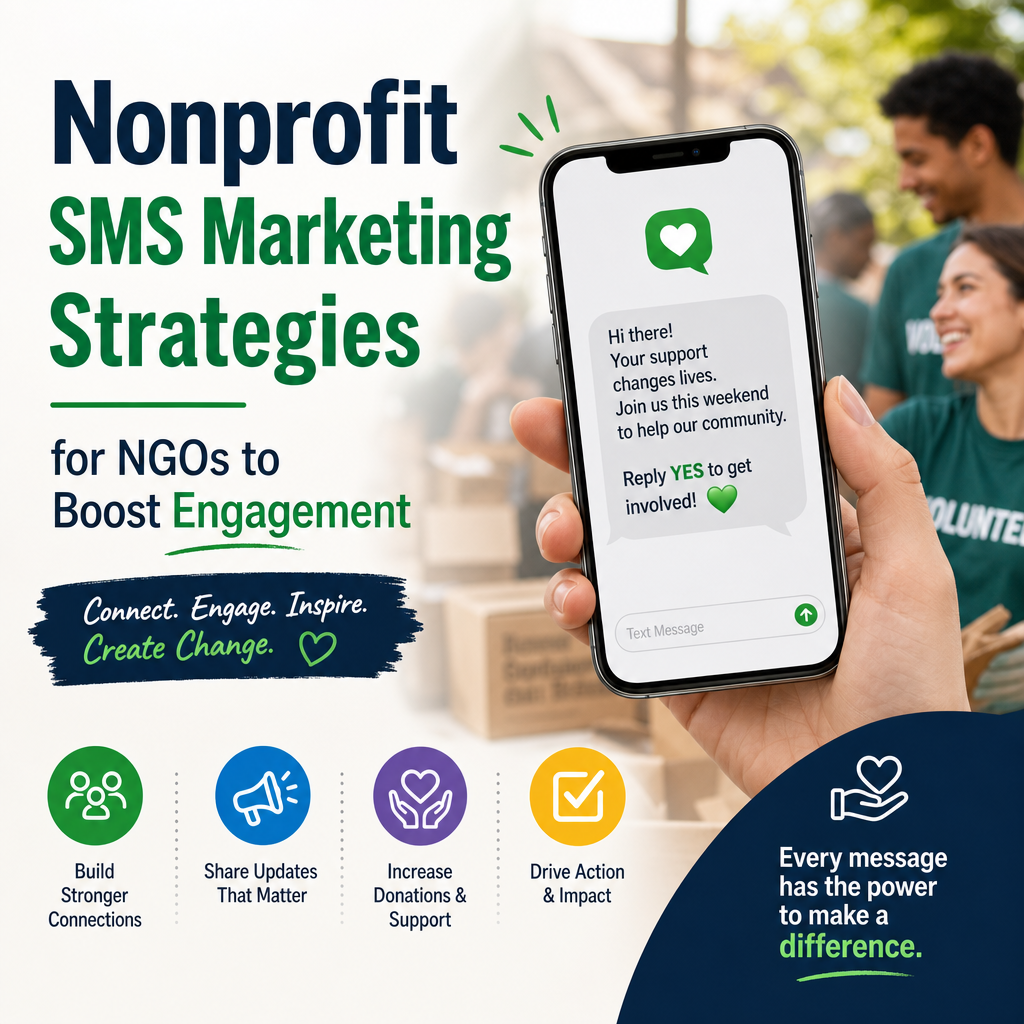
SMS Marketing for NGOs: A Practical Guide to Reaching Supporters Fast
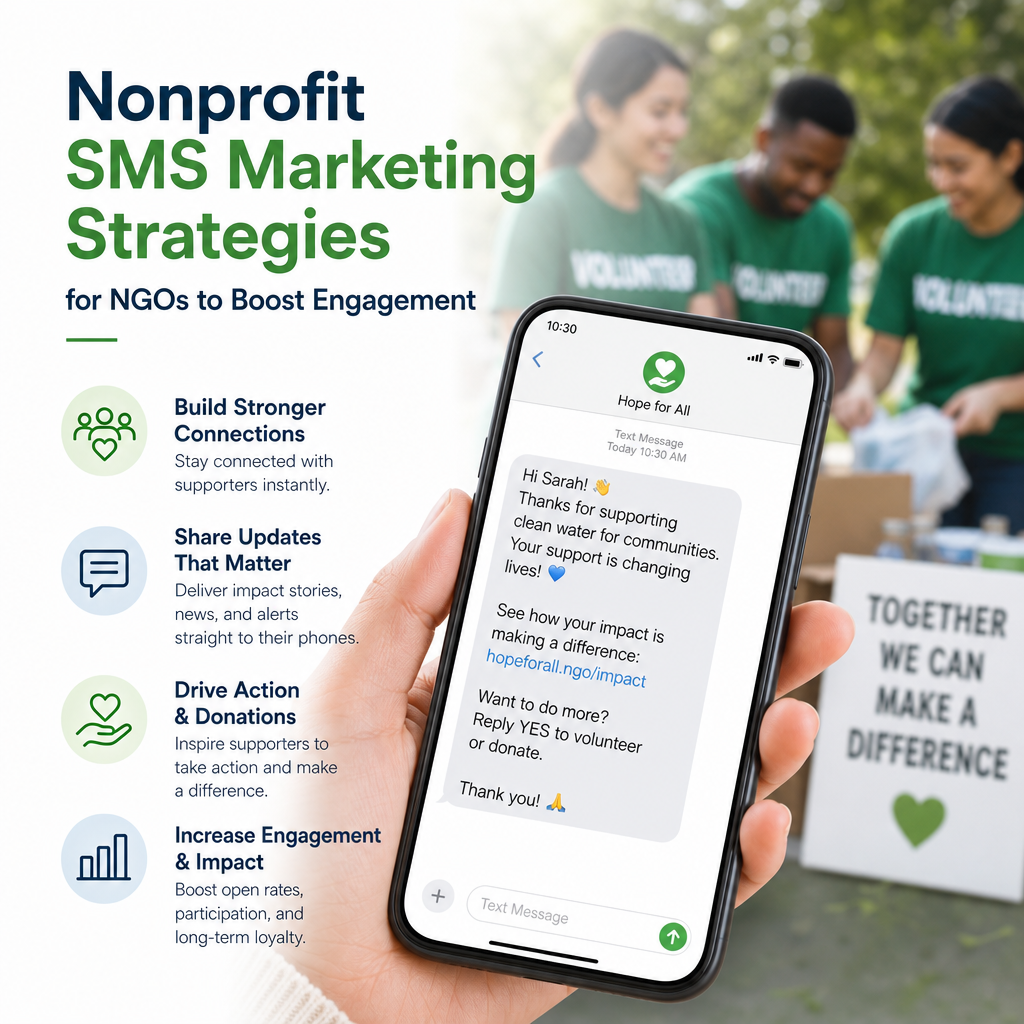
For NGOs, communication is everything. Whether you are launching a fundraising campaign, sharing urgent updates, recruiting volunteers, or reminding donors about an event, the ability to reach people quickly can make a major difference. That is where SMS marketing comes in.
Unlike email or social media, text messages are read almost immediately and usually within minutes. For mission-driven organizations, that speed can help increase engagement, improve response rates, and keep supporters connected to your cause. When used well, nonprofit sms can become one of the most effective tools in your communication strategy.
This guide explains what SMS marketing for NGOs is, why it matters, how to use it effectively, and what best practices to follow.
What Is SMS Marketing for NGOs?
SMS marketing is the use of text messages to communicate with a group of people who have opted in to receive updates from your organization. For NGOs, this may include donors, volunteers, beneficiaries, event attendees, or community members.
Typical nonprofit sms campaigns may include:
- Donation appeals
- Event reminders
- Volunteer coordination messages
- Emergency alerts
- Advocacy or petition updates
- Thank-you messages after a donation or action
- Monthly impact summaries
Because texts are short and direct, they work especially well for urgent or time-sensitive communication.
Why SMS Works So Well for NGOs
SMS stands out because it is simple, immediate, and personal. For organizations working with limited budgets and limited attention spans, that combination is powerful.
High open rates
Text messages are usually opened far more often than emails. Many people read SMS notifications within a few minutes of receiving them. This makes texting ideal for urgent announcements or time-sensitive calls to action.
Direct and personal communication
A text message feels more personal than a mass email or social media post. It lands on a device people check constantly, which can create a stronger sense of connection between your NGO and its supporters.
Useful for urgent needs
If your NGO needs to share a last-minute event change, weather-related cancellation, emergency appeal, or disaster update, SMS is one of the fastest ways to reach your audience.
Better engagement with mobile-first audiences
Many communities rely heavily on mobile phones rather than desktop computers. In such cases, nonprofit sms can be a more accessible channel than email or website updates.
Cost-effective
Compared to some other outreach methods, SMS can be relatively affordable. This is important for NGOs that need to maximize every dollar spent on communications.
Common Use Cases for SMS in NGOs
SMS can support many parts of your organization’s work. The best results usually come from using it strategically, not sending texts for everything.
Fundraising campaigns
Text messages can be used to ask supporters to donate during a campaign launch, a matching-gift window, or a year-end giving drive.
Example:
“Your support can help provide meals for 100 families this week. Donate today: [link]”
This type of message is short, urgent, and action-oriented.
Volunteer coordination
NGOs often depend on volunteers, and SMS is excellent for reminders and scheduling updates.
Example:
“Reminder: Volunteer orientation starts tomorrow at 5 PM at our downtown office. Reply YES to confirm.”
Event reminders
Text reminders can reduce no-shows for fundraising dinners, workshops, community cleanups, and training sessions.
Example:
“We look forward to seeing you at today’s community health workshop at 3 PM. Venue: Riverside Hall.”
Advocacy and awareness campaigns
If your organization runs petitions, awareness drives, or policy campaigns, SMS can help supporters act quickly.
Example:
“Join our advocacy campaign today. Add your name to support safe water access for all: [link]”
Emergency communication
In humanitarian work, rapid communication can be essential. SMS can help notify communities about aid distribution times, weather disruptions, safety instructions, or service changes.
Thank-you and stewardship messages
SMS is not only for asking. It is also useful for thanking people, confirming donations, and sharing quick impact updates.
Example:
“Thank you for your donation to our education program. You are helping children stay in school.”
This kind of message strengthens donor relationships and encourages future support.
How to Build an Effective SMS Strategy
A successful nonprofit sms strategy starts with clear goals. Without a plan, text messaging can become noisy or ineffective.
1. Define your objective
Before sending anything, decide what you want SMS to achieve. Are you trying to raise donations, increase event attendance, or improve volunteer response rates?
A clear objective helps you choose the right message, timing, and audience.
2. Segment your audience
Not every supporter should receive the same text. Segmenting your list helps you send messages that are relevant and useful.
You might group contacts by:
- Donor type
- Volunteer status
- Geographic location
- Event attendance
- Advocacy interests
- Language preference
For example, volunteers do not need donation appeals as often as donors, and local supporters may need neighborhood-specific updates.
3. Keep messages short and focused
Text messages should get to the point quickly. A strong SMS message usually includes:
- Who is sending it
- Why it matters
- What the recipient should do next
- A link or reply option if needed
Avoid long paragraphs or too many details. If you need to share more information, include a link to a landing page.
4. Use a strong call to action
Every message should guide the supporter toward one clear next step.
Examples of effective CTAs:
- Donate now
- Register today
- Reply YES
- Sign the petition
- Learn more
- Confirm attendance
If you ask for too many actions at once, people may do nothing.
5. Choose the right timing
Timing can affect whether a message gets attention or ignored. Send texts during reasonable hours and at moments when people are most likely to respond.
Good times often include:
- Late morning
- Early afternoon
- A few days before an event
- Right before a campaign deadline
- Immediately after a donation or action for a thank-you message
Avoid sending texts too early, too late, or too frequently.
Best Practices for SMS Marketing in NGOs
To get the most from SMS and maintain trust, follow a few core best practices.
Get explicit consent
Only send messages to people who have agreed to receive them. This is essential for compliance and trust. Supporters should know what kind of messages they will get and how often.
Consent can be collected through:
- Website sign-up forms
- Event registration forms
- Donation forms
- Volunteer applications
- Keyword opt-ins such as “Text JOIN to 12345”
Make opting out easy
Every campaign should include a clear way to unsubscribe. This protects your organization and gives supporters control over their communication preferences.
A common phrase is:
“Reply STOP to opt out.”
Personalize when possible
Using a supporter’s first name or tailoring content to their interests can improve response rates. Personalization should feel helpful, not invasive.
Example:
“Hi Amina, your support helped us plant 250 trees last month. Join this weekend’s cleanup here: [link]”
Be respectful of frequency
Too many messages can frustrate supporters and increase opt-outs. It is better to send fewer, more useful messages than many low-value texts.
A good practice is to define a sending frequency based on audience expectations. For example, donors may want monthly updates, while volunteers might appreciate weekly reminders during an active project.
Test before launching
Always review your message for spelling errors, broken links, and unclear wording. Test the text on different devices if possible, and make sure your links are mobile-friendly.
Track results
Measure the performance of your SMS campaigns so you can improve over time. Useful metrics include:
- Delivery rate
- Open rate
- Click-through rate
- Reply rate
- Donation conversions
- Event attendance
- Opt-out rate
If a campaign performs well, study what worked. If it does not, adjust the message, timing, or audience segment.
Examples of SMS Messages for NGOs
Below are some simple examples that show how SMS can be used effectively.
Fundraising appeal
“Help us provide clean water to 300 families this month. Your gift makes an immediate difference. Donate here: [link]”
Volunteer reminder
“Reminder: Your volunteer shift starts at 10 AM tomorrow at Green Park. Reply YES to confirm.”
Event invitation
“You’re invited to our annual fundraiser on Saturday at 6 PM. Reserve your spot today: [link]”
Impact update
“Thanks to supporters like you, 1,200 children received school supplies this year. We appreciate your commitment.”
Emergency notice
“Due to heavy rain, today’s community clinic is postponed. We will share the new date soon. Stay safe.”
These examples are short, direct, and action-oriented. They also show that SMS can be used for more than fundraising alone.
Tools and Features NGOs Should Look For
If your NGO is considering SMS marketing, it helps to choose a platform with the right features.
Look for tools that offer:
- Contact list management
- Audience segmentation
- Automation and scheduling
- Personalization options
- Two-way messaging
- Link tracking
- Compliance support
- Donation integrations
- Easy opt-in and opt-out handling
For example, automation can be especially useful. You may want to send an automatic welcome text when someone joins your list, a reminder before an event, or a thank-you message after a donation.
How SMS Fits into a Larger NGO Communication Plan
SMS works best when it is part of a broader communication strategy. It should not replace email, social media, your website, or in-person outreach. Instead, it should complement them.
A smart multi-channel approach might look like this:
- Email for detailed storytelling and newsletters
- SMS for urgent reminders and quick action
- Social media for awareness and public engagement
- Website for donation pages and detailed information
- Phone calls or meetings for deeper relationship building
For instance, you might announce a campaign on social media, send full details by email, and use SMS to remind people on the final day. This layered approach helps you reach more people without overwhelming any one channel.
Common Mistakes to Avoid
Even a useful channel like SMS can fail if it is handled poorly. Watch out for these common mistakes.
Sending too many messages
This is one of the fastest ways to lose trust. Keep your texts relevant and purposeful.
Using vague language
People should immediately understand who the message is from and why it matters. Avoid unclear wording like “Important update inside!”
Forgetting the audience
A donor, volunteer, and beneficiary may each need different messages. Sending the same text to everyone can reduce relevance.
Not including a clear action
SMS should always have a purpose. Even a simple update should tell people what to do next, if anything.
Ignoring compliance rules
If you collect phone numbers without permission or fail to provide an opt-out option, you risk damaging your reputation and violating regulations.
Conclusion
SMS marketing can be a highly effective way for NGOs to communicate with supporters, mobilize action, and respond quickly when it matters most. Its speed, simplicity, and high visibility make it especially valuable for fundraising, volunteer coordination, event reminders, and urgent updates.
The key to success is using nonprofit sms thoughtfully: get consent, segment your audience, keep messages short, and always provide value. When integrated into a larger communication strategy, SMS can help your NGO build stronger relationships and drive meaningful action for your cause.
