
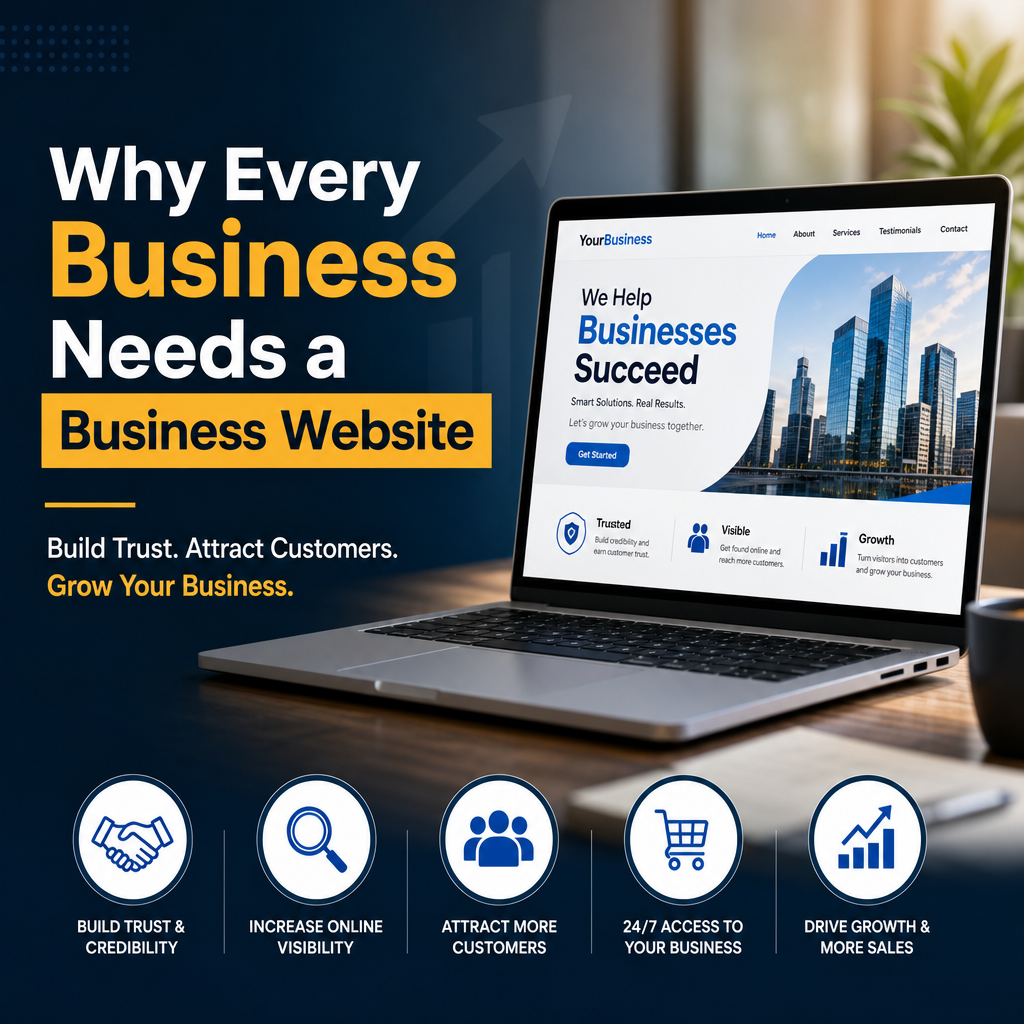
Why Every Business Needs a Website
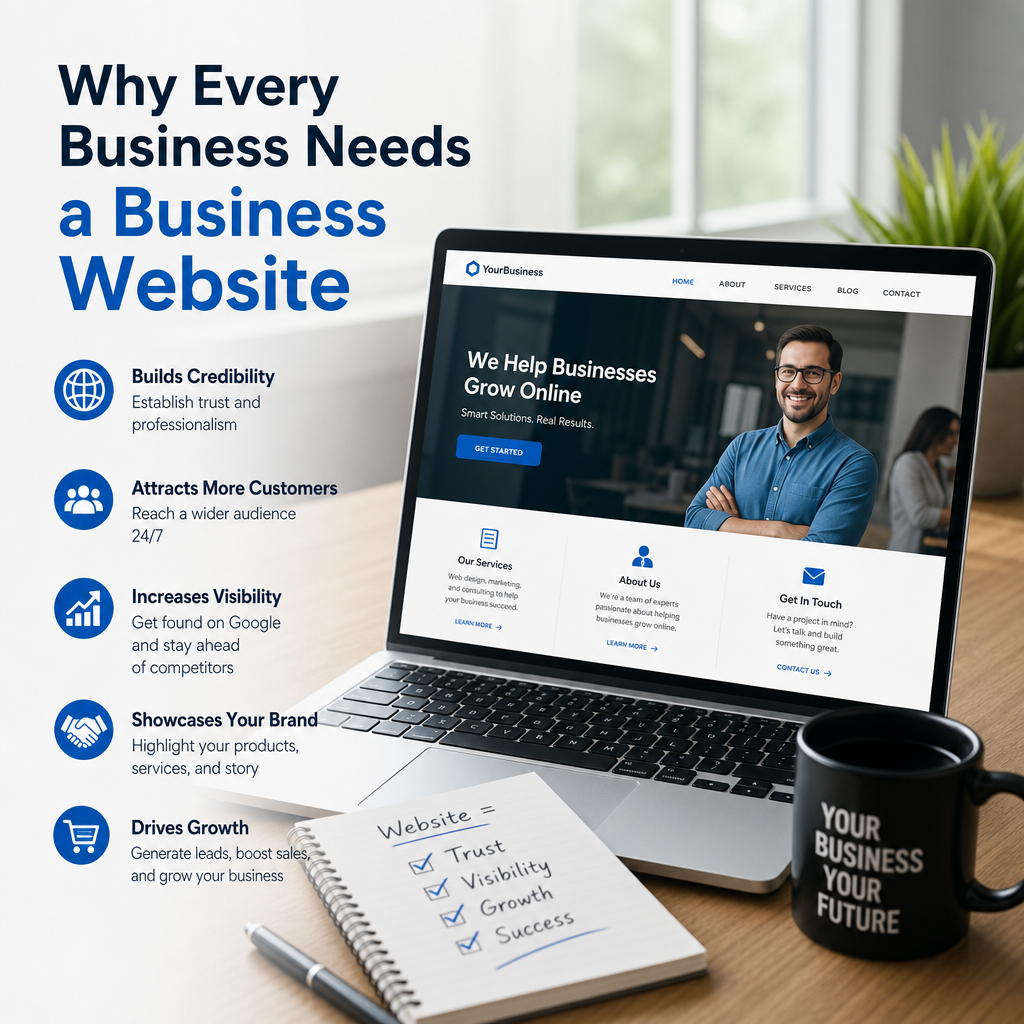
In today’s digital-first world, a business website is no longer optional. Whether you run a local bakery, a consulting firm, a repair service, or an online brand, your website is often the first place people go to learn who you are and what you offer. If your business doesn’t have a website, potential customers may question your credibility, your professionalism, or even whether your business is still active.
A well-built website does more than “exist online.” It works as a 24/7 salesperson, a customer service tool, a marketing hub, and a trust-building asset all at once. In this article, we’ll explore why every business needs a website, how it helps you grow, and what makes it one of the most important investments you can make.
Your Website Builds Credibility
One of the biggest reasons every business needs a website is trust. Customers expect legitimate businesses to have an online presence. In fact, many people will search for a company online before they decide to call, visit, or buy.
Without a website, your business may seem less established than competitors who have one. Even if you do excellent work, a lack of online presence can create doubt.
What customers look for on a business website
Visitors often want to see:
- Your services or products
- Your contact information
- Your business hours
- Reviews or testimonials
- Your location
- Your story and brand personality
A professional business website gives customers these details instantly. Instead of making them search across social media posts or third-party directories, you provide a reliable source of information in one place.
Example
Imagine two plumbing companies. One has a clear website with service pages, pricing guidance, testimonials, and a booking form. The other only has a phone number listed in an online directory. Which one feels more trustworthy? Most customers will choose the one that looks organized, transparent, and easy to contact.
A Website Helps Customers Find You
People use search engines every day to find local businesses, compare options, and solve problems. If your business doesn’t have a website, you miss out on a huge number of potential customers searching online.
A business website helps you show up when people search for terms related to your products or services. This is especially important for local businesses. Someone searching “best accountant near me” or “coffee shop open now” is already interested in buying. Your website can help you appear in those searches.
Search visibility matters
A strong business website gives you the opportunity to appear in:
- Organic search results
- Local search results
- Map listings
- Branded searches
- Search queries related to your services
The more useful and optimized your website is, the easier it is for search engines to understand what your business offers.
Example
A landscaping company can create pages for lawn care, garden design, seasonal cleanup, and irrigation services. These pages help the company appear in search results for each specific service. Without a website, that company relies entirely on word of mouth or paid ads to be discovered.
Your Website Works 24/7
Unlike a physical storefront or office, your website never closes. It continues working even when you’re asleep, on vacation, or busy helping other customers. That makes it one of the most efficient tools in your business.
A business website can answer common questions, display products, accept inquiries, and guide customers to the next step at any time of day.
Around-the-clock benefits
Your website can:
- Show your services after business hours
- Collect leads while you’re unavailable
- Provide directions and contact details
- Accept bookings or quote requests
- Answer frequently asked questions
- Sell products automatically
This is especially useful for small businesses with limited staff. Instead of spending all day responding to repetitive questions, your website can do some of that work for you.
Example
A small bakery may close at 6 p.m., but customers often think about ordering birthday cakes in the evening. A website with a cake order form, sample gallery, and pickup details lets customers take action whenever it’s convenient for them.
It Helps You Control Your Brand
Social media platforms are helpful, but they are not enough on their own. Algorithms change, accounts can lose reach, and platforms can disappear or become less effective over time. A website gives you a space that you fully own and control.
Your business website is the digital home of your brand. You decide how it looks, what it says, and how it guides visitors. This allows you to present your business in a consistent and professional way.
Brand control includes:
- Your logo and colors
- Your tone of voice
- Your messaging
- Your service descriptions
- Your photos and videos
- Your customer journey
With a website, you can shape how people see your business rather than depending on a social platform’s layout or limitations.
Example
A photography studio can create a polished website that showcases its portfolio, pricing, client testimonials, and booking process. The website reflects the business’s style and quality in a way that social posts alone cannot.
A Website Makes Marketing More Effective
Every modern marketing strategy works better when it leads to a website. Whether you’re using email marketing, social media, paid ads, referrals, or local SEO, your website is often the place where interest becomes action.
If you’re spending money on ads or time on social media, you need somewhere to send people. A business website acts as the central destination for all your marketing efforts.
Common marketing channels that rely on websites
- Google Ads
- Facebook and Instagram ads
- Email campaigns
- Blog content
- Search engine optimization
- Influencer campaigns
- QR codes on print materials
Without a website, marketing efforts become fragmented. With a website, every channel can support the same goal: converting visitors into customers.
Example
A fitness coach might run Instagram ads promoting a free consultation. Instead of sending people to a social profile where they have to hunt for details, the ad leads them to a landing page on the website where they can immediately book a session.
It Helps Generate Leads and Sales
A good website doesn’t just attract visitors. It helps turn those visitors into leads and customers. By adding the right calls to action, forms, and content, your website can support the entire sales process.
Your business website can guide users from awareness to decision-making. That journey may include reading about your services, seeing testimonials, reviewing pricing, and submitting a contact form.
Useful website features for conversion
- Contact forms
- Quote request forms
- Booking systems
- Product pages
- Clear calls to action
- Live chat
- Downloadable lead magnets
A website gives customers a simple path to action. Instead of having to call during office hours or wait for a reply on social media, they can take the next step immediately.
Example
A law firm might use a website to offer consultation requests, explain practice areas, and provide helpful articles about legal issues. A visitor may arrive looking for information, but leave ready to schedule an appointment.
It Answers Customer Questions Before They Ask
A lot of customer service time is spent answering the same questions over and over. A website can reduce that burden by providing helpful information upfront.
A well-structured business website can answer questions about pricing, service areas, timelines, return policies, appointment availability, or product details. This saves time for both your team and your customers.
Helpful content to include
- FAQ pages
- Service descriptions
- Pricing or starting rates
- Shipping and return policies
- Hours of operation
- Contact details
- Location maps
- Step-by-step process explanations
When customers can find answers quickly, they are more likely to move forward. Clear information also reduces confusion and builds confidence.
Example
A cleaning service can create an FAQ page explaining whether supplies are included, how long appointments take, and whether it serves residential or commercial clients. This makes it easier for prospects to decide whether the service is a good fit.
A Website Gives You a Competitive Advantage
If your competitors have websites and you don’t, you may already be at a disadvantage. If they have strong websites and you have a weak or outdated one, the gap becomes even more obvious.
A professional business website helps you compete by showing your strengths, highlighting your uniqueness, and making it easier for customers to choose you.
Ways your website can set you apart
- Better design
- Faster loading speed
- Easier navigation
- Clearer pricing
- Stronger reviews
- More helpful content
- Easier booking or checkout
Customers often compare several businesses before making a decision. If your site provides a better experience, that can be the deciding factor.
Example
Two wedding florists may offer similar products. One has a dated website with broken links and no portfolio. The other has beautiful galleries, clear package options, and an easy inquiry form. The second florist is much more likely to win the customer’s attention.
It Supports Local Businesses Too
Some business owners think websites are only important for online stores or large companies. That’s not true. Local businesses often benefit the most from a website because local customers rely heavily on online searches.
A business website can help a neighborhood restaurant, dental practice, gym, salon, auto shop, or retail store attract nearby customers who are actively looking for their services.
Local website benefits
- Appear in local search results
- Display your address and hours
- Provide directions and maps
- Highlight local reviews
- Promote events or special offers
- Show service areas
Local consumers often research before visiting a business. If they can’t quickly find your information online, they may move on to someone else.
Example
A family-owned restaurant with a website can post menus, reservation details, hours, and seasonal specials. That makes it easier for nearby customers to decide to dine there instead of choosing another option.
It Provides Valuable Data and Insights
A website doesn’t just attract customers. It also gives you useful data about how people interact with your business online. This information can help you make better decisions.
With website analytics, you can learn:
- How many people visit your site
- Which pages they view most
- Where visitors come from
- How long they stay
- Which forms get the most submissions
- What devices they use
This kind of insight is hard to get from traditional marketing alone. A business website helps you measure what’s working so you can improve over time.
Example
If a service page gets lots of traffic but few inquiries, you may need to improve the call to action or clarify the offer. If one blog post brings in many new visitors, you can create more content on that topic.
It Grows With Your Business
Your website can start simple and expand as your business grows. That makes it a flexible and scalable asset. You don’t need a huge site on day one, but you do need a foundation you can build on.
A business website can evolve to include more services, online booking, e-commerce features, blog content, customer portals, and more.
Ways a website can grow with you
- Add new service pages
- Launch an online store
- Create a resource library
- Publish blog posts
- Build a client login area
- Expand into new locations
- Integrate with marketing tools
As your business changes, your website can change with it. This makes it one of the most future-proof investments you can make.
What Makes a Good Business Website?
Not all websites deliver the same results. A business website should be more than just a digital brochure. It needs to be clear, fast, useful, and easy to navigate.
Key elements of an effective website
- Clean design that matches your brand
- Mobile-friendly layout
- Clear service or product pages
- Easy navigation
- Prominent contact information
- Strong calls to action
- Fast loading speed
- Trust signals like reviews and testimonials
- SEO-friendly content
- Secure hosting and HTTPS
A website that looks good but is hard to use won’t perform well. Focus on helping visitors find information and take action quickly.
Conclusion
Every business needs a website because it builds trust, improves visibility, supports marketing, and helps turn visitors into customers. It works around the clock, gives you control over your brand, and provides a reliable home for your online presence. Whether you’re a small local company or a growing brand, a strong business website is one of the smartest investments you can make.
In a world where customers search online before they buy, your website is often your first impression. Make it count.
