
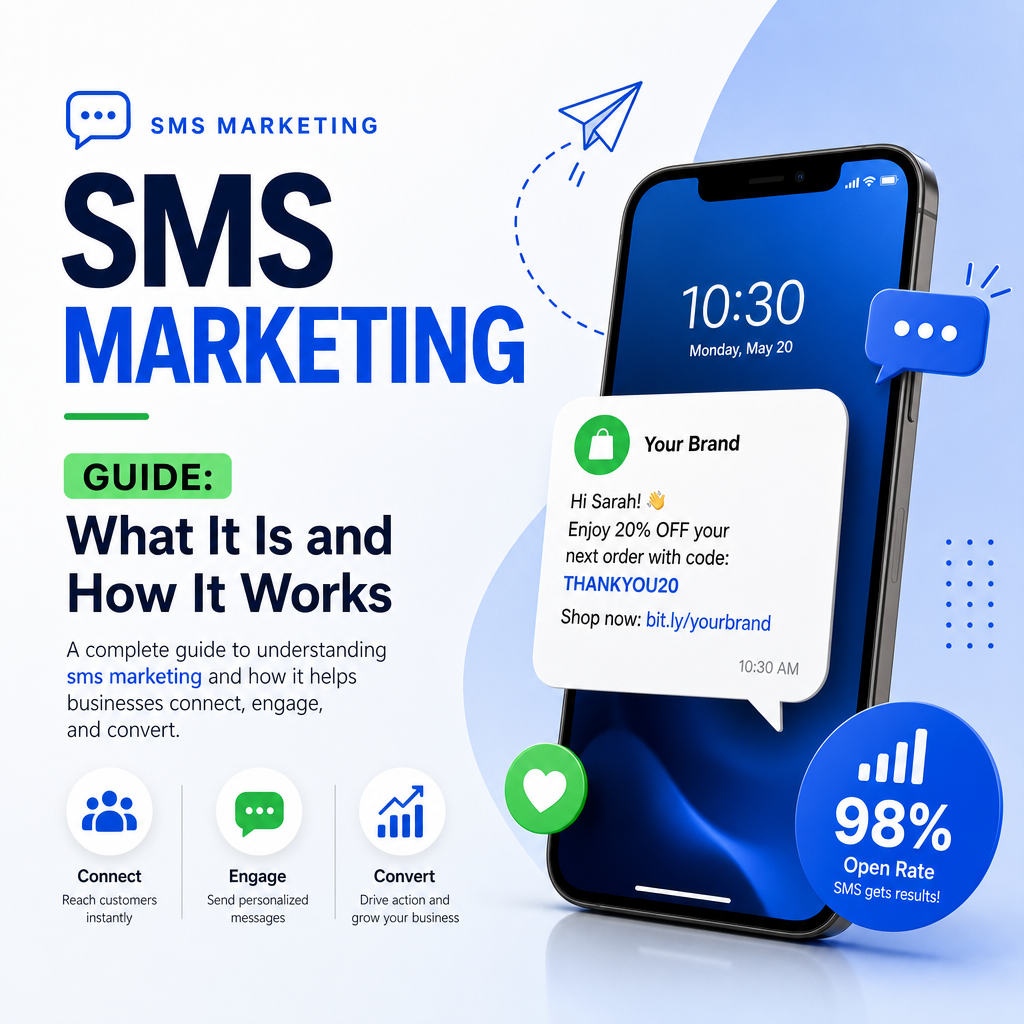
What Is SMS Marketing? A Complete Beginner’s Guide
If you’ve ever received a text message from a store about a flash sale, a delivery update, or a password verification code, you’ve already experienced SMS marketing in action. It’s one of the simplest and most direct forms of mobile marketing, and despite the rise of email, social media, and messaging apps, text messaging remains an incredibly effective channel for businesses of all sizes.
In this beginner’s guide, we’ll break down what SMS marketing is, how it works, why it matters, and how you can use it responsibly to connect with customers.
What Is SMS Marketing?
SMS marketing is the practice of sending promotional or informational messages to customers via text message. SMS stands for Short Message Service, which is the standard system used for sending texts to mobile phones.
Businesses use SMS marketing to:
- Promote sales, discounts, and product launches
- Send reminders and alerts
- Share updates about orders or appointments
- Deliver loyalty program messages
- Re-engage customers who haven’t purchased in a while
Unlike email marketing, which can sit unread in a crowded inbox, text messages are usually seen within minutes. That makes SMS one of the most immediate and high-impact communication channels available.
Why SMS Marketing Works So Well
SMS marketing has a few major advantages that make it stand out from other forms of digital marketing.
1. Text Messages Are Read Quickly
Most people check their phones constantly. Texts often have extremely high open rates, and many are read within the first few minutes of delivery. That gives businesses a better chance of getting noticed fast.
2. It’s Direct and Personal
A text lands right on a customer’s phone. There’s no algorithm hiding the message, no crowded feed, and no spam-heavy inbox. This directness makes SMS feel more personal and immediate.
3. It Works on Almost Every Phone
You don’t need a smartphone, an app, or an internet connection to receive SMS messages. That makes it one of the most accessible forms of mobile marketing.
4. It Can Drive Fast Action
Because text messages are short and urgent by nature, they’re great for time-sensitive campaigns. For example:
- “Flash sale ends at midnight”
- “Your table is ready”
- “Appointment tomorrow at 3 PM”
- “Your order has shipped”
These messages encourage quick responses and immediate action.
How SMS Marketing Works
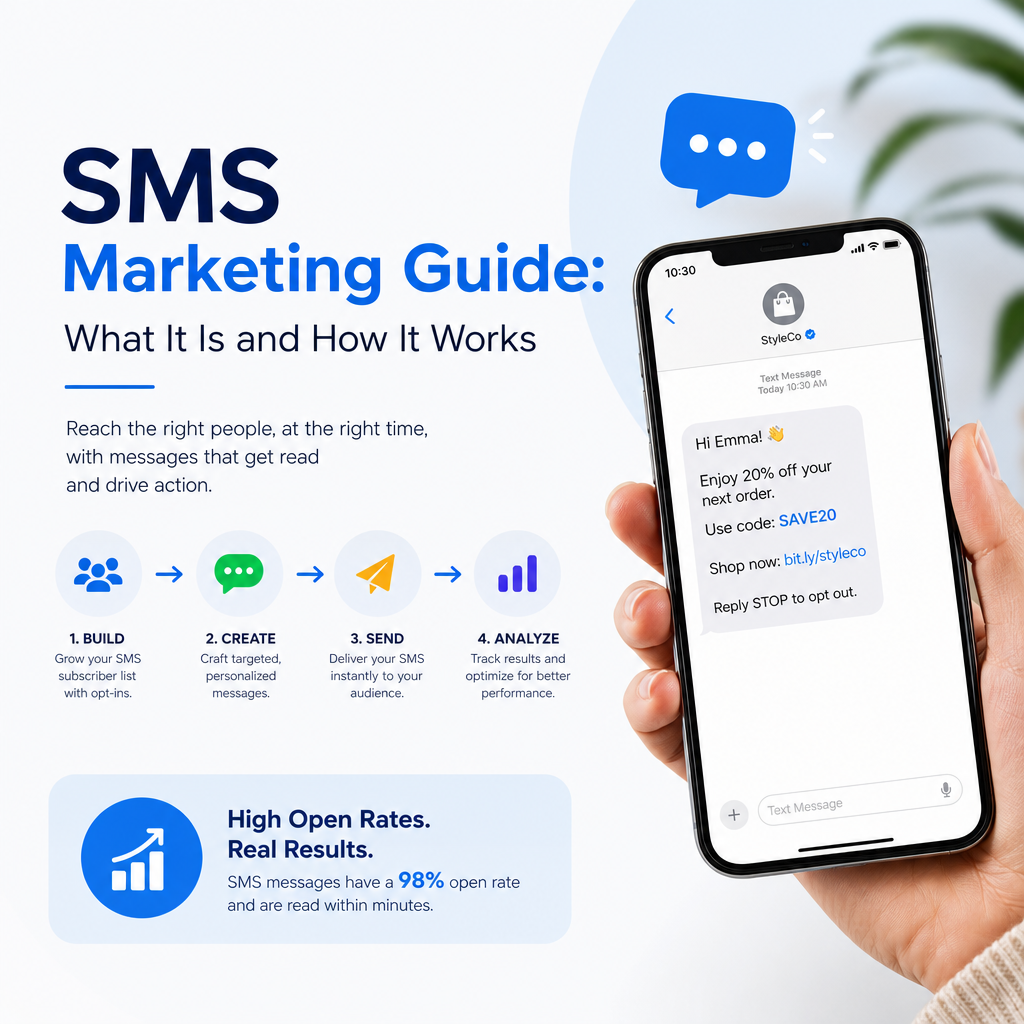
At its core, SMS marketing is simple: a business collects phone numbers from customers who opt in, then sends them relevant text messages using an SMS platform or service.
Here’s the usual process:
- A customer opts in to receive messages.
- The business stores the number in its SMS platform.
- Messages are created and scheduled based on a campaign or trigger.
- Texts are sent automatically or manually to individuals or groups.
- Businesses track results such as delivery rates, click-throughs, and responses.
Many companies use bulk SMS tools to send one message to many subscribers at once. This is useful for promotions, announcements, and seasonal campaigns. Others use automated SMS flows for reminders, confirmations, or follow-ups.
Types of SMS Marketing Messages
SMS marketing isn’t just about sales promotions. Different types of messages can support different business goals.
Promotional Messages
These are sales-driven texts designed to increase revenue. Examples include:
- “20% off all orders today only”
- “Buy one, get one free until 6 PM”
- “New collection now available”
Promotional SMS works best when messages are short, relevant, and time-sensitive.
Transactional Messages
Transactional texts provide useful information related to a customer’s action. Examples include:
- Order confirmations
- Shipping updates
- Appointment reminders
- Password reset codes
While these messages aren’t always promotional, they improve the customer experience and build trust.
Conversational Messages
Some businesses use SMS for two-way communication. Customers can reply with questions, confirmations, or feedback. This is common in service-based businesses like salons, clinics, and restaurants.
Loyalty and Retention Messages
Text campaigns can also reward repeat customers. Examples include:
- Birthday discounts
- Loyalty point updates
- VIP-only offers
- Re-engagement messages for inactive customers
These messages help strengthen customer relationships over time.
Bulk SMS vs. Personalized SMS
One of the most common ways businesses use SMS marketing is through bulk SMS, which means sending one message to a large group of subscribers at the same time.
Bulk SMS
Bulk SMS is ideal for:
- Flash sales
- Event announcements
- Product launches
- Storewide updates
It’s efficient, fast, and easy to scale. However, bulk SMS should still feel relevant and not overly generic.
Personalized SMS
Personalized SMS messages include customer-specific details like first names, purchase history, or location. For example:
- “Hi Sarah, your favorite moisturizer is back in stock.”
- “John, your appointment is confirmed for Tuesday at 2 PM.”
Personalization often improves engagement because the message feels tailored rather than mass-produced.
The best SMS marketing strategies often combine both approaches: bulk messages for broad campaigns and personalized texts for more targeted communication.
The Benefits of SMS Marketing
Businesses use SMS marketing because it can deliver real results when done correctly.
High Engagement
Text messages are highly visible and often read quickly, which makes them a strong engagement channel.
Fast Communication
Need to send a same-day update? SMS is perfect for urgent or time-sensitive communication.
Strong ROI
Because SMS campaigns are relatively low-cost compared with many other channels, they can offer a strong return on investment, especially for local businesses and e-commerce stores.
Better Customer Experience
Useful texts such as delivery alerts, reminders, and confirmations make life easier for customers. That improves satisfaction and trust.
Easy to Automate
Many SMS platforms let you automate messages based on actions like sign-ups, purchases, or appointment bookings. This saves time and keeps communication consistent.
Common Use Cases for SMS Marketing
SMS marketing can work across many industries. Here are some common examples.
Retail and E-Commerce
Online and in-store retailers use SMS to promote:
- Sales and discount codes
- New arrivals
- Cart abandonment reminders
- Order and shipping notifications
For example:
“Your 15% off code expires tonight: SAVE15”
Restaurants and Cafes
Restaurants often use text messaging for:
- Reservation confirmations
- Daily specials
- Loyalty rewards
- Event invitations
For example:
“Happy hour starts at 4 PM today! Show this text for 2-for-1 drinks.”
Healthcare and Wellness
Clinics, dentists, and wellness centers use SMS for:
- Appointment reminders
- Prescription pickup notices
- Rescheduling alerts
- Follow-up care instructions
These messages reduce missed appointments and improve communication.
Real Estate
Agents can use SMS to share:
- Open house reminders
- New listings
- Appointment confirmations
- Property updates
Event Marketing
SMS is excellent for event-related communication:
- Ticket confirmations
- Venue changes
- Countdown reminders
- Last-minute announcements
Because event messages are often time-sensitive, SMS can be more effective than email.
Best Practices for Effective SMS Marketing
To get the most out of SMS marketing, it’s important to follow a few best practices.
1. Get Permission First
Never send marketing texts without consent. Customers should opt in clearly and knowingly. This is not only good practice but also important for legal compliance in many countries.
2. Keep Messages Short and Clear
Text messages are meant to be brief. Get to the point quickly and include only the most important information.
Good example:
“Weekend sale: 25% off all shoes through Sunday. Shop now: [link]”
Too long:
“Hello valued customer, we are excited to inform you that due to our special weekend event, we are offering a broad range of discounts on many products in our shoe department…”
3. Include a Clear Call to Action
Tell the reader exactly what to do next:
- Shop now
- Reply YES
- Book today
- Click the link
- Show this text in-store
Without a clear action, the message may not lead to results.
4. Send at the Right Time
Timing matters. A promotion sent at 2 AM is unlikely to perform well and may annoy customers. Consider your audience’s local time and daily routines.
5. Segment Your Audience
Not every message should go to every subscriber. Segmenting helps you send relevant texts to specific groups, such as:
- New customers
- Repeat buyers
- Lapsed customers
- VIP members
- Local store subscribers
Relevant messages are more likely to convert.
6. Don’t Overdo It
Too many texts can lead to opt-outs. Send messages often enough to stay relevant, but not so often that customers feel overwhelmed.
7. Track Performance
Use your SMS platform’s analytics to monitor:
- Delivery rate
- Click-through rate
- Response rate
- Conversion rate
- Opt-out rate
Tracking helps you learn what works and improve future campaigns.
SMS Marketing Examples You Can Learn From
Here are a few simple examples of SMS marketing messages in action.
Promotional Example
“Flash sale: 30% off sitewide for the next 6 hours. Use code FLASH30 at checkout.”
This works because it is short, urgent, and action-oriented.
Order Update Example
“Good news! Your order #4821 has shipped and should arrive by Friday.”
This builds trust and improves the post-purchase experience.
Appointment Reminder Example
“Reminder: Your hair appointment is tomorrow at 11:00 AM. Reply YES to confirm or call to reschedule.”
This reduces no-shows and makes communication easy.
Re-Engagement Example
“We miss you! Come back this week and enjoy 15% off your next purchase.”
This encourages inactive customers to return.
SMS Marketing Compliance and Customer Trust
Because SMS is so direct, businesses need to be careful about privacy and compliance. Customers should always know what they’re signing up for, how often they’ll receive messages, and how to unsubscribe.
A few important compliance principles include:
- Always collect explicit consent
- Provide a simple way to opt out
- Avoid misleading or spammy language
- Respect local messaging laws and regulations
- Protect customer data securely
Trust is essential in mobile marketing. If customers feel their phone numbers are being misused, they’re likely to unsubscribe quickly.
Is SMS Marketing Right for Your Business?
SMS marketing can work for almost any business that values timely communication and customer engagement. It’s especially useful if you need to:
- Reach people quickly
- Send reminders or alerts
- Promote limited-time offers
- Improve repeat purchases
- Offer personalized support
If your customers are mobile-first and responsive to direct communication, SMS can become one of your most effective channels.
That said, it should usually be part of a broader marketing strategy, not your only one. It works best when combined with email, social media, and other forms of mobile marketing.
Conclusion
SMS marketing is a powerful, direct, and cost-effective way to communicate with customers. Whether you’re sending promotions, reminders, or updates, text messaging helps you reach people where they are most likely to pay attention: their phones.
By using bulk SMS wisely, keeping messages short and relevant, and respecting customer consent, you can build a strong SMS strategy that supports sales and improves customer relationships. For beginners, it’s one of the easiest marketing channels to start with—and one of the fastest to deliver results.
