
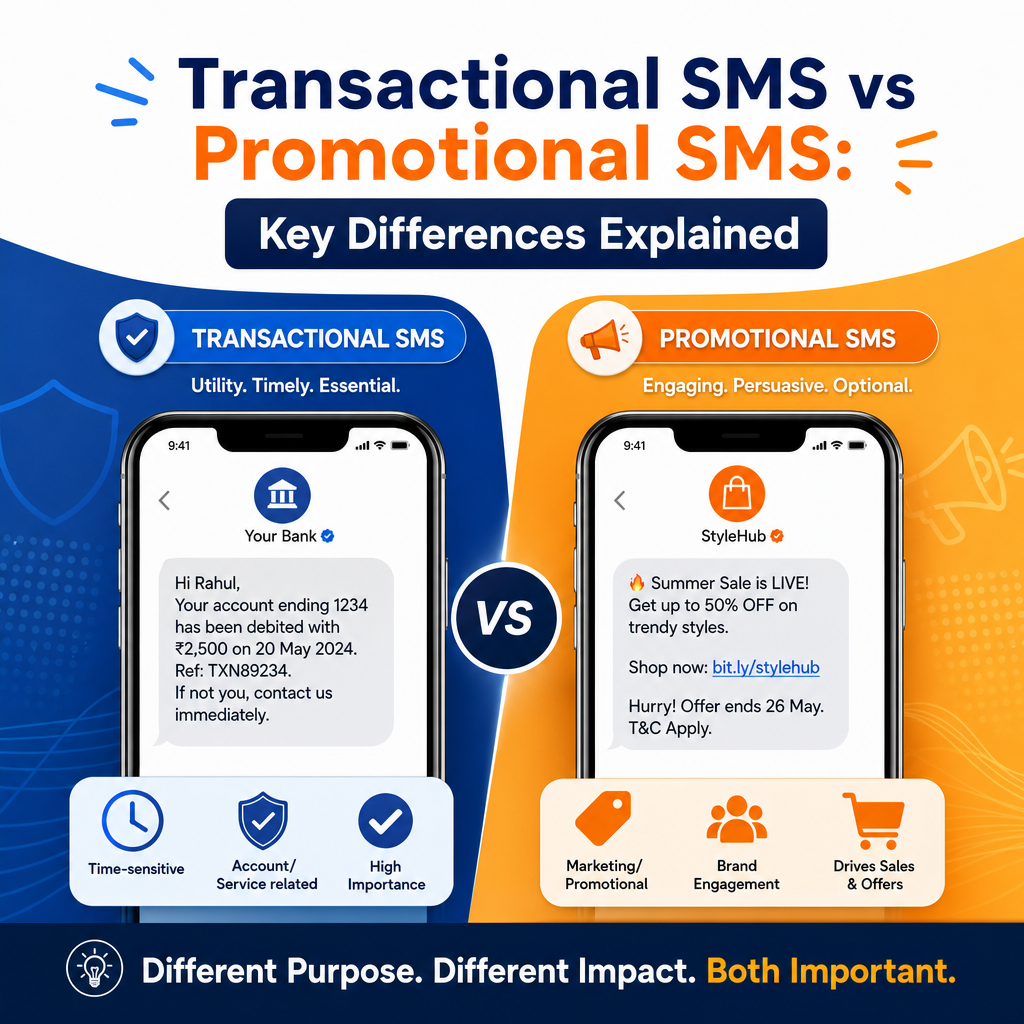
Transactional vs Promotional SMS: What’s the Difference and Why It Matters
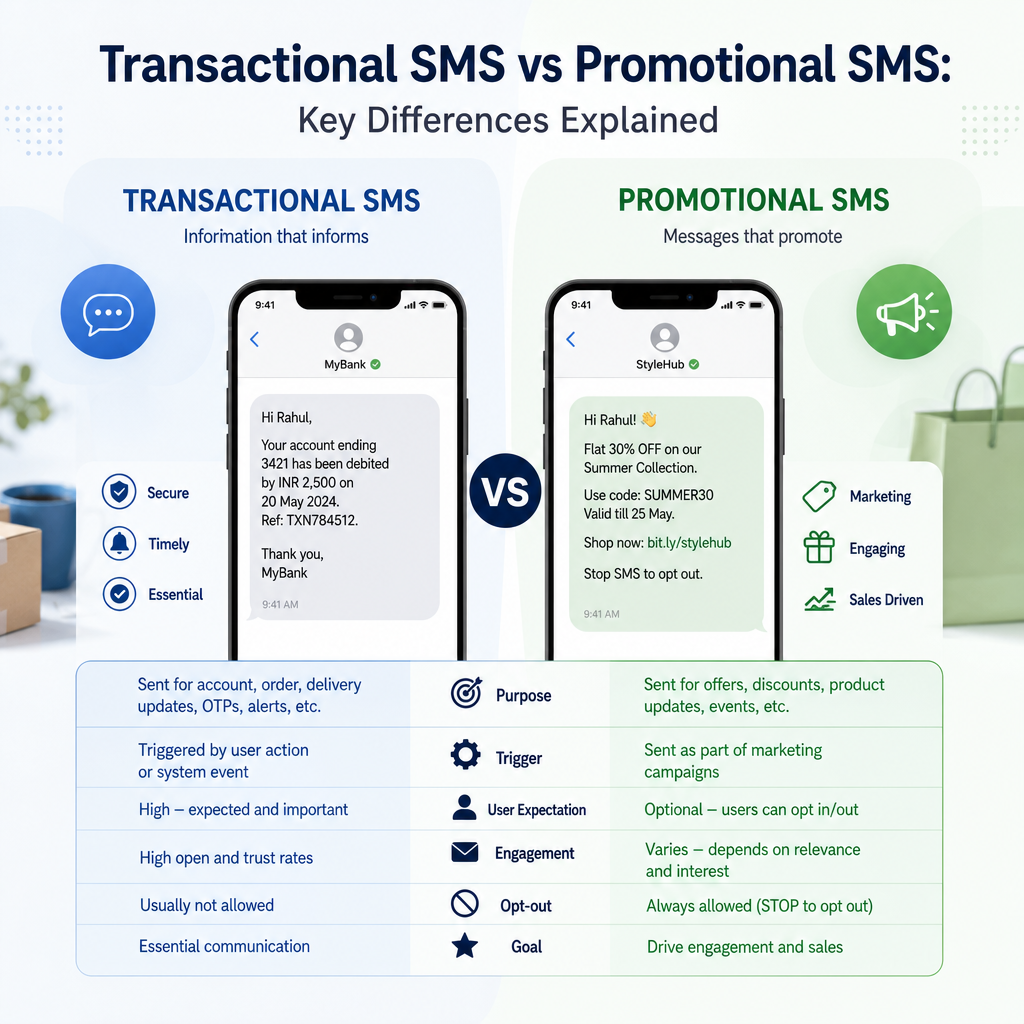
SMS remains one of the most effective communication channels for businesses. With open rates far higher than email and near-instant delivery, text messaging is ideal for reaching customers quickly and directly. But not all SMS messages serve the same purpose. In marketing and customer communications, it is important to understand the difference between transactional sms and promotional sms.
These two message types may look similar on the surface, but they are used for very different goals, follow different rules, and create different customer experiences. Choosing the right type of SMS for the right moment can improve trust, compliance, engagement, and overall business performance.
What Is Transactional SMS?
Transactional sms refers to messages sent to provide important, time-sensitive information related to a customer’s interaction with a business. These messages are usually triggered by an action the customer has taken or a system event that affects the customer directly.
Common examples include:
- Order confirmations
- Shipping updates
- Appointment reminders
- Password reset codes
- Account alerts
- Payment receipts
- Two-factor authentication codes
The main purpose of transactional messages is to inform, confirm, or support a specific transaction or service. They are not primarily meant to sell, promote, or upsell.
Example of a Transactional SMS
“Your order #45821 has been shipped and is expected to arrive on Thursday. Track your package here: [link]”
This message is informational. It helps the customer track an order they already placed, so it qualifies as transactional.
What Is Promotional SMS?
Promotional sms is used to market products, services, discounts, events, or special offers. These messages are designed to drive sales, encourage engagement, or build awareness around a brand’s promotions.
Examples include:
- Flash sale announcements
- Coupon codes
- New product launches
- Holiday offers
- Event invitations
- Limited-time discounts
- Referral campaigns
Promotional messaging is more marketing-focused and is usually sent to a broader audience rather than being triggered by a specific customer action.
Example of a Promotional SMS
“Weekend sale: Get 20% off all shoes until Sunday night. Use code SAVE20 at checkout.”
This message is intended to generate sales. It promotes a limited-time offer and encourages the customer to take action.
Key Differences Between Transactional and Promotional SMS
Although both message types are delivered through text, they serve different business goals and customer needs. Understanding the differences helps businesses avoid compliance issues and send more relevant messages.
1. Purpose
The biggest difference is intent.
- Transactional sms is functional and informational.
- Promotional sms is commercial and persuasive.
A transactional message supports the customer’s existing relationship or activity. A promotional message tries to create interest and drive a purchase.
2. Trigger
Transactional messages are usually sent automatically based on an event.
Examples:
- A customer places an order
- A shipment status changes
- A user requests a password reset
Promotional messages are usually scheduled or campaign-based.
Examples:
- Sending a seasonal sale announcement
- Running a weekend discount campaign
- Promoting a new product launch
3. Audience
Transactional SMS is sent to a specific customer who has taken an action or needs a specific update. Promotional SMS may go to an opt-in subscriber list, segmented audience, or targeted group of prospects and customers.
4. Consent Requirements
Consent rules often differ depending on your region and messaging platform. In general, promotional messages require explicit marketing consent from recipients. Transactional messages may be allowed under service-related communications, but they still often require appropriate opt-in or a business relationship.
It is important to follow local laws and carrier guidelines so that messages are legally delivered and not blocked.
5. Content Style
Transactional SMS is usually brief, clear, and direct.
Example:
- “Your verification code is 482911. It expires in 10 minutes.”
Promotional SMS is more persuasive and benefit-driven.
Example:
- “Exclusive offer: Buy one get one free on all summer essentials today only.”
6. Frequency
Transactional messages are sent when necessary and often in response to customer activity. Promotional messages may be sent regularly as part of a marketing calendar, but too much frequency can lead to unsubscribes and reduced engagement.
Why the Difference Matters
Knowing the difference between transactional sms and promotional sms is not just a technical detail. It affects customer trust, deliverability, legal compliance, and message performance.
Better Customer Experience
Customers expect transactional messages to be useful and timely. When an order confirmation, delivery update, or verification code arrives quickly, it builds confidence in the brand.
Promotional messages, on the other hand, are expected to be marketing-oriented. If a customer receives an unexpected sales pitch in place of an important service alert, it can create frustration.
Compliance and Carrier Rules
SMS is a regulated channel, and messaging rules can vary by country and carrier. Sending promotional content through a transactional route, or mixing the two in one message, may lead to compliance problems or delivery issues.
Some carriers and platforms have strict rules about separating service messages from marketing messages. Violating those rules can result in message filtering, blocked numbers, or penalties.
Deliverability
Deliverability is critical for both message types, but it works differently for each.
- Transactional messages should have a high delivery priority because they are often urgent.
- Promotional messages may be filtered more aggressively by carriers, especially if they include heavy sales language, shortened links, or repeated campaigns.
If you blend the two incorrectly, you may weaken the reliability of your entire SMS program.
Trust and Engagement
Customers are more likely to engage with SMS when messages are relevant and expected. Transactional messages create trust by providing useful information. Promotional messages can boost sales when they are targeted and not overly frequent.
Sending the wrong type of message at the wrong time can damage trust quickly. For example, if a customer expects a shipping update but receives a discount ad instead, the experience feels unhelpful and intrusive.
When to Use Transactional SMS
Transactional messaging is best used when the customer needs immediate, practical information.
Good Use Cases
- Order and shipping notifications
- Appointment confirmations and reminders
- Security alerts and login codes
- Subscription renewals
- Billing confirmations
- Service updates and outage alerts
Example Scenarios
E-commerce
A customer places an online order and receives a confirmation text with order details, followed by a shipping notification when the package is dispatched.
Healthcare
A clinic sends an appointment reminder the day before a visit, including the date, time, and location.
Financial Services
A bank sends an alert about a suspicious login attempt or a one-time code for secure access.
SaaS and Apps
A software platform sends a password reset code when a user requests it.
In each case, the message is useful, expected, and tied directly to a customer action or service event.
When to Use Promotional SMS
Promotional SMS is ideal when the goal is to increase sales, promote awareness, or encourage action around a marketing campaign.
Good Use Cases
- Holiday sales
- New collection announcements
- Loyalty program promotions
- Event registrations
- Flash deals
- Restock alerts
- Referral incentives
Example Scenarios
Retail
A clothing store sends a message announcing a 24-hour clearance sale.
Restaurants
A restaurant promotes a special weekend offer on family meal bundles.
Beauty and Wellness
A spa advertises a discounted first-time service package for new customers.
Online Learning
An education platform promotes a limited-time discount on course enrollment.
Promotional campaigns work best when they are targeted, relevant, and time-sensitive. The more specific the offer, the better the response tends to be.
Can Transactional and Promotional SMS Be Combined?
In some cases, businesses try to include a promotional offer inside a transactional message. For example:
“Your order has shipped. Also, enjoy 15% off your next purchase with code WELCOME15.”
This kind of message may seem efficient, but it can create problems.
Why Mixing Them Can Be Risky
If a message is primarily transactional but includes promotional content, it may no longer qualify as a pure service message under certain rules. This can lead to:
- Compliance concerns
- Carrier filtering
- Lower trust from recipients
- Confusion about the purpose of the message
Best Practice
Keep transactional and promotional messaging separate whenever possible. If you need to include a marketing offer, ensure that the message complies with the relevant regulations and that the recipient has opted in to receive promotional content.
A clean separation makes your SMS program easier to manage and more effective overall.
Best Practices for Transactional SMS
To get the most out of transactional messaging, focus on clarity, timing, and reliability.
1. Keep It Short and Clear
Transactional messages should provide essential information quickly. Avoid extra wording that could distract from the main purpose.
2. Send It Immediately
Timing matters. A verification code or shipping update is only useful if it arrives when expected.
3. Include the Important Details
Make sure the message contains what the customer needs to know, such as:
- Order number
- Date and time
- Tracking link
- Expiration time
- Support contact information
4. Use Trusted Sender IDs
Customers should recognize who the message is from. A consistent brand name or sender ID helps improve trust and reduce confusion.
5. Test Links and Timing
Before sending at scale, test that your links work and that messages are triggered correctly. A broken link or delayed alert can undermine the value of the message.
Best Practices for Promotional SMS
Promotional SMS can be highly effective, but only when it is used thoughtfully.
1. Get Proper Consent
Only send marketing messages to people who have opted in. Consent is critical for both compliance and customer trust.
2. Make the Offer Valuable
A promotion should feel worth the customer’s attention. Weak offers often lead to ignored messages or unsubscribes.
3. Be Specific
Clearly state what the customer gains and how long the offer lasts.
Example:
- “Get 25% off all accessories through Friday at midnight.”
4. Segment Your Audience
Not every promotion should go to every contact. Segment by purchase history, interests, location, or engagement level to improve relevance.
5. Avoid Over-Messaging
Too many promotional texts can annoy subscribers. A balanced schedule helps preserve long-term engagement.
Common Mistakes Businesses Make
Even experienced teams can make mistakes when managing SMS campaigns. Some of the most common include:
- Using promotional language in transactional messages
- Sending marketing texts without proper consent
- Delaying important service messages
- Overloading customers with too many promotions
- Failing to personalize or segment messages
- Not tracking results and unsubscribe trends
A well-structured SMS strategy avoids these pitfalls by defining message types clearly from the start.
How to Build a Smarter SMS Strategy
A successful SMS program usually includes both transactional and promotional messaging, but each should have a distinct role.
Build Around Customer Needs
Ask what the customer needs to know, when they need to know it, and whether the message is informational or promotional.
Separate Campaign Flows
Use different workflows for service alerts and marketing campaigns. This helps maintain compliance and keeps messages relevant.
Monitor Performance
Track metrics such as:
- Delivery rate
- Click-through rate
- Response rate
- Unsubscribe rate
- Conversion rate
These metrics reveal how well each type of message is performing and where improvements are needed.
Use the Right Tools
A reliable SMS platform should let you manage opt-ins, automate triggers, segment audiences, and distinguish between transactional and promotional sending.
Conclusion
Understanding the difference between transactional sms and promotional sms is essential for any business using text messaging. Transactional messages keep customers informed, secure, and confident. Promotional messages help generate interest, traffic, and sales.
When each type is used correctly, SMS becomes a powerful communication tool that supports both customer satisfaction and business growth. The key is to keep messages relevant, timely, compliant, and clearly tied to their purpose.
