
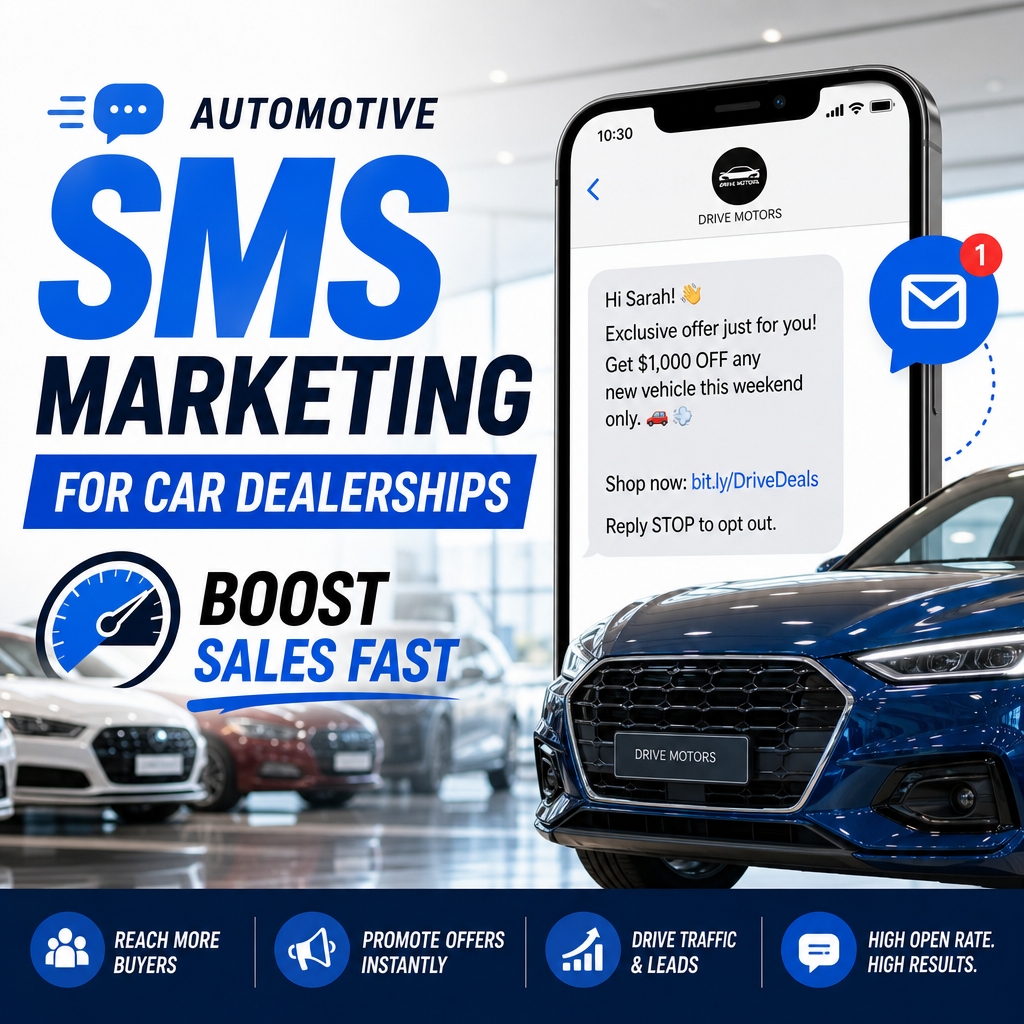
SMS Marketing for Car Dealerships: A Practical Guide to Driving More Sales
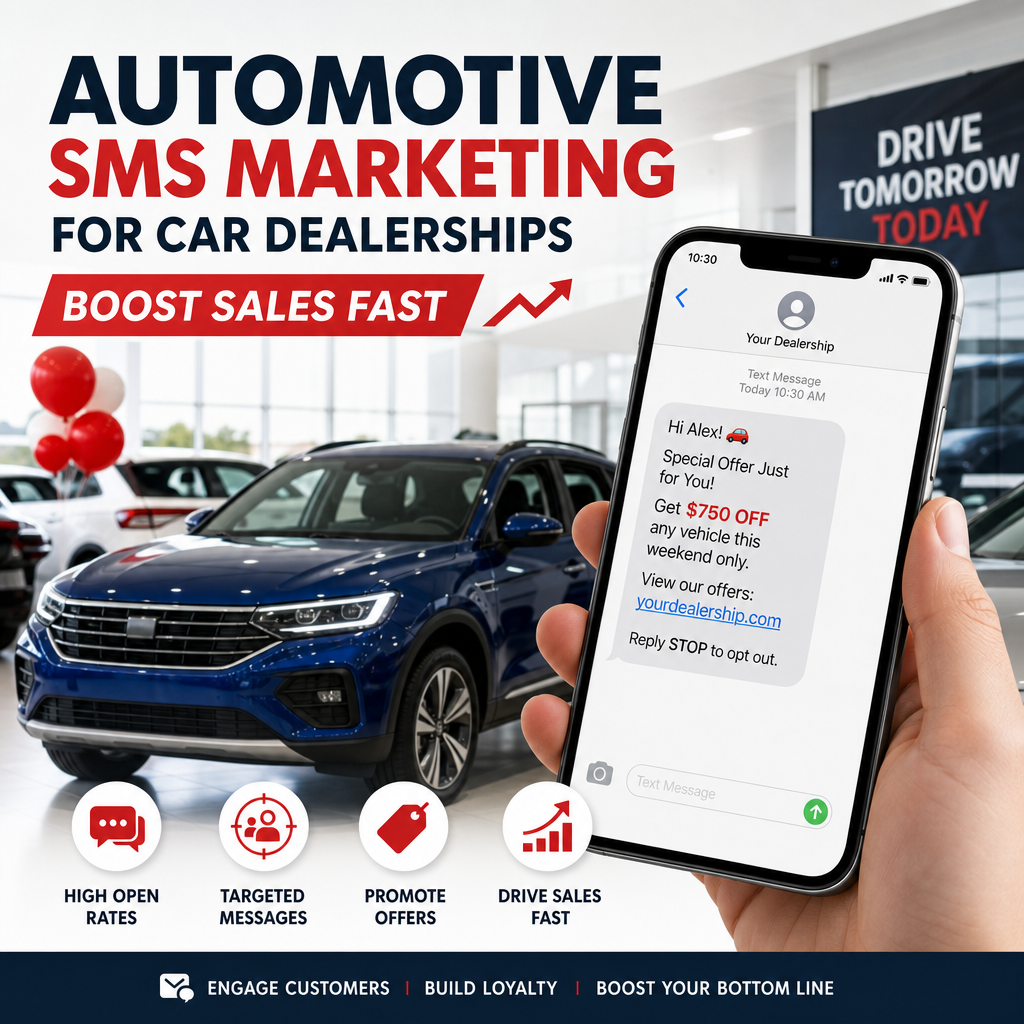
Car dealerships compete in a fast-moving market where timing, follow-up, and customer experience can make the difference between a sale and a missed opportunity. Shoppers often browse online, visit multiple lots, and compare financing options before making a decision. In that environment, SMS marketing has become one of the most effective ways for dealerships to stay connected with prospects and customers.
Unlike email, which may sit unread for hours or days, text messages are typically opened within minutes. That makes SMS a powerful channel for appointment reminders, special offers, service updates, test drive confirmations, and more. For dealerships that want to improve response rates and strengthen relationships, automotive sms marketing can be a game-changer.
This guide explains how SMS marketing works for car dealerships, the benefits it offers, the types of messages that perform best, and the best practices to follow for compliance and results.
Why SMS Works So Well for Car Dealerships
Car buying is often emotional, time-sensitive, and highly competitive. Customers may inquire about a vehicle online in the morning and expect a response before the end of the day. If a dealership takes too long to reply, the lead may move on to a competitor.
SMS fits this environment because it is:
- Immediate – Texts are usually read quickly.
- Personal – A short message feels direct and conversational.
- Convenient – Customers can reply from their phones without making a call.
- High converting – SMS often gets stronger engagement than email or social posts.
For dealerships, that means faster lead follow-up, better appointment attendance, and stronger customer retention after the sale.
A Real-World Example
Imagine a shopper fills out a web form asking about a used SUV. Instead of waiting for an email response, the dealership sends a text within five minutes:
Hi Sarah, thanks for your interest in the 2021 Toyota Highlander. It’s still available. Would you like to schedule a test drive today or tomorrow?
That message is quick, personal, and actionable. It moves the conversation forward while the customer is still interested.
Key Uses of SMS Marketing in Dealerships
SMS marketing can support many parts of the sales and service process. The most successful dealerships use it at multiple stages of the customer journey.
1. Lead Follow-Up
Speed matters when responding to new leads. A text message can help sales teams connect with customers right away, especially after online form submissions, ad clicks, or chat inquiries.
Use SMS to:
- Confirm receipt of an inquiry
- Ask whether the customer prefers a call or text
- Share inventory details
- Offer a test drive appointment
Quick follow-up shows professionalism and helps keep leads from going cold.
2. Test Drive Reminders
When a customer books a test drive, a reminder text can reduce no-shows. A simple reminder the day before or a few hours before the appointment keeps the visit top of mind.
Example:
Reminder: Your test drive of the 2024 Honda CR-V is scheduled for tomorrow at 2:00 PM at Main Street Motors. Reply YES to confirm or RESCHEDULE if needed.
This kind of message is short, helpful, and easy to respond to.
3. Service Department Updates
SMS is also valuable after the sale. Service departments can use it for appointment confirmations, repair updates, and pickup notifications.
Examples include:
- “Your vehicle is ready for pickup.”
- “Your oil change appointment is confirmed for Friday at 10 AM.”
- “We’ve completed the inspection and found an issue with your brakes. Reply YES to approve the repair.”
These messages improve the customer experience and reduce phone call volume for staff.
4. Promotional Offers
Dealerships can use SMS to promote limited-time offers, end-of-month sales, lease specials, and trade-in events. Because texts are timely, they work especially well for urgent campaigns.
Examples:
- Weekend sales event alerts
- Price drop notifications
- New vehicle arrival announcements
- Holiday service specials
Promotional messages should always be concise and relevant. Sending too many sales texts can cause customers to opt out, so use this strategy carefully.
5. Trade-In and Renewal Reminders
SMS can also support vehicle replacement and lease renewal campaigns. If a customer’s lease is ending or their vehicle is due for service, a timely text can encourage them to come back to the dealership.
Example:
Hi Marcus, your lease on the 2022 Nissan Altima ends next month. Would you like to explore upgrade options before your return date?
This type of message can create a natural next step and help generate repeat business.
Benefits of Automotive SMS Marketing
When implemented well, automotive sms marketing offers several important advantages for dealerships.
Better Response Rates
Text messages are more likely to be read quickly than emails. That means dealerships can get faster responses from prospects and customers, which is especially useful for time-sensitive opportunities.
Higher Appointment Show Rates
Appointment reminders help reduce missed test drives, service visits, and showroom appointments. Even one simple reminder can improve attendance.
More Efficient Communication
SMS makes it easier to handle brief updates without relying on phone calls. Customers appreciate the convenience, and staff can manage more conversations at once.
Improved Customer Experience
A timely text can make a dealership feel organized, responsive, and attentive. Whether the message is about a repair update or a follow-up on a car inquiry, it helps build trust.
Stronger Retention
SMS keeps the dealership connected after the sale. That makes it easier to drive repeat service visits, trade-ins, and future purchases.
Best Practices for SMS Marketing Success
To get results from SMS, dealerships need more than just a phone number and a message list. Successful campaigns require strategy, relevance, and compliance.
Get Clear Consent
Before sending marketing texts, always get permission from the customer. This is essential for legal compliance and for maintaining trust. Customers should know what types of messages they are agreeing to receive.
Consent can be collected through:
- Website forms
- Lead capture pages
- In-store sign-up forms
- Service desk opt-ins
- Keyword-based opt-in campaigns
Make the opt-in process transparent and easy to understand.
Keep Messages Short and Useful
Text messages should be direct. Most customers do not want long paragraphs in their inbox. Focus on one main point and one clear action.
Good SMS messages:
- State the purpose quickly
- Include relevant details
- Offer an easy next step
- Avoid unnecessary wording
For example:
Hi Lisa, your 2024 Subaru Outback is ready for pickup. We’re open until 7 PM today. Reply PICKUP if you need directions.
Personalize When Possible
People respond better to messages that feel relevant. Use the customer’s name, mention the specific vehicle they asked about, or reference a service appointment. Personalization makes the message feel more human and less like mass marketing.
Instead of:
We have special deals this weekend.
Try:
Hi James, we have a weekend offer on the Ford F-150 you viewed last week. Would you like details?
Time Messages Appropriately
Timing matters. Don’t send texts too early in the morning or too late at night. For most dealership communication, business hours are best unless the message is urgent or customer-approved.
Also consider timing based on customer intent. A lead inquiry should receive a fast response. A promotional sale text may perform better on Thursday or Friday when shoppers are planning their weekend.
Include a Clear Call to Action
Every SMS should have a purpose. Whether you want the customer to reply, click a link, schedule a visit, or confirm an appointment, make the next step obvious.
Examples of strong calls to action:
- Reply YES to confirm
- Click here to view inventory
- Schedule your test drive
- Call us to lock in this offer
Segment Your Audience
Not every customer should receive the same message. Segmenting your list improves relevance and reduces opt-outs. Dealerships can segment contacts based on:
- New leads
- Service customers
- Past buyers
- Lease customers
- Used car shoppers
- Luxury vehicle prospects
A service reminder should not be sent to someone who only asked about a new truck. Relevant messaging leads to better engagement.
SMS Campaign Ideas for Dealerships
If you are building a text strategy from scratch, it helps to start with a few campaign types that are easy to execute and likely to perform well.
New Lead Response Campaign
When a new lead comes in, send a short welcome text with a helpful next step.
Example:
Hi Taylor, thanks for reaching out about the 2023 Mazda CX-5. It’s available now. Would you like to schedule a test drive or get payment details?
Appointment Reminder Campaign
Send an automatic reminder before a showroom or service appointment.
Example:
Reminder: Your service appointment is tomorrow at 9:30 AM at Valley Auto. Reply C to confirm or R to reschedule.
Inventory Alert Campaign
Let interested shoppers know when a specific vehicle arrives or returns to stock.
Example:
Good news, Alex — the black 2024 Chevrolet Silverado you asked about is now back in stock. Want to come see it today?
Seasonal Promotion Campaign
Use seasonal events to drive foot traffic and online leads.
Examples:
- End-of-year clearance events
- Summer road trip service specials
- Back-to-school vehicle deals
- Holiday trade-in bonuses
Post-Sale Follow-Up Campaign
After a vehicle is sold, SMS can support satisfaction and future service relationships.
Example:
Thanks for choosing Premier Auto Group, Maria. We appreciate your business. If you need anything during your first month of ownership, just reply to this text.
Common Mistakes to Avoid
Even good SMS campaigns can underperform if dealerships make a few common mistakes.
Sending Too Many Messages
Too many texts can annoy customers and lead to opt-outs. Keep your messaging focused and value-driven. Quality matters more than volume.
Being Too Salesy
SMS should feel helpful, not pushy. If every text is a hard sell, people will ignore them. Mix promotional messages with reminders, updates, and useful communication.
Ignoring Compliance Rules
Text marketing is subject to laws and carrier guidelines. Dealerships should only message customers who have opted in and should always honor opt-out requests promptly.
Using Vague Messages
A text like “We have something for you” is not very effective. Be specific about the vehicle, offer, appointment, or action you want the customer to take.
Forgetting to Track Results
Without tracking, it is hard to know what works. Dealerships should monitor delivery rates, response rates, click-through rates, appointment confirmations, and conversions.
Measuring SMS Marketing Performance
To improve your campaigns, track performance over time. Useful metrics include:
- Open and read rate – Most texts are read quickly, but engagement still matters.
- Response rate – How many people reply to your messages.
- Click-through rate – If you include links, are customers clicking?
- Appointment show rate – Are reminders reducing no-shows?
- Conversion rate – Are texts leading to sales or service visits?
- Opt-out rate – Are people unsubscribing after certain messages?
These numbers reveal whether your content is relevant and whether your timing and frequency are working.
How SMS Supports the Full Dealership Funnel
The most effective dealerships do not treat SMS as a standalone channel. They use it alongside email, phone calls, digital ads, and CRM automation.
Here is how SMS can fit into the funnel:
- Lead generation – A shopper submits a form.
- Immediate follow-up – A text acknowledges the inquiry.
- Appointment setting – The prospect books a visit.
- Reminder messages – SMS reduces no-shows.
- Sale completion – The customer receives delivery updates.
- Post-sale retention – SMS drives service visits and future purchases.
This full-funnel approach makes SMS more than just a promotional tool. It becomes part of the dealership’s customer communication system.
Conclusion
SMS is one of the most effective communication tools available to modern dealerships. It helps sales teams respond faster, service departments stay organized, and customers receive timely, relevant updates. When used responsibly, automotive sms marketing can increase appointments, improve customer satisfaction, and support long-term loyalty.
The key is to keep messages short, useful, personalized, and permission-based. Dealerships that use SMS strategically will be better positioned to connect with today’s mobile-first car shoppers and turn interest into action.
