
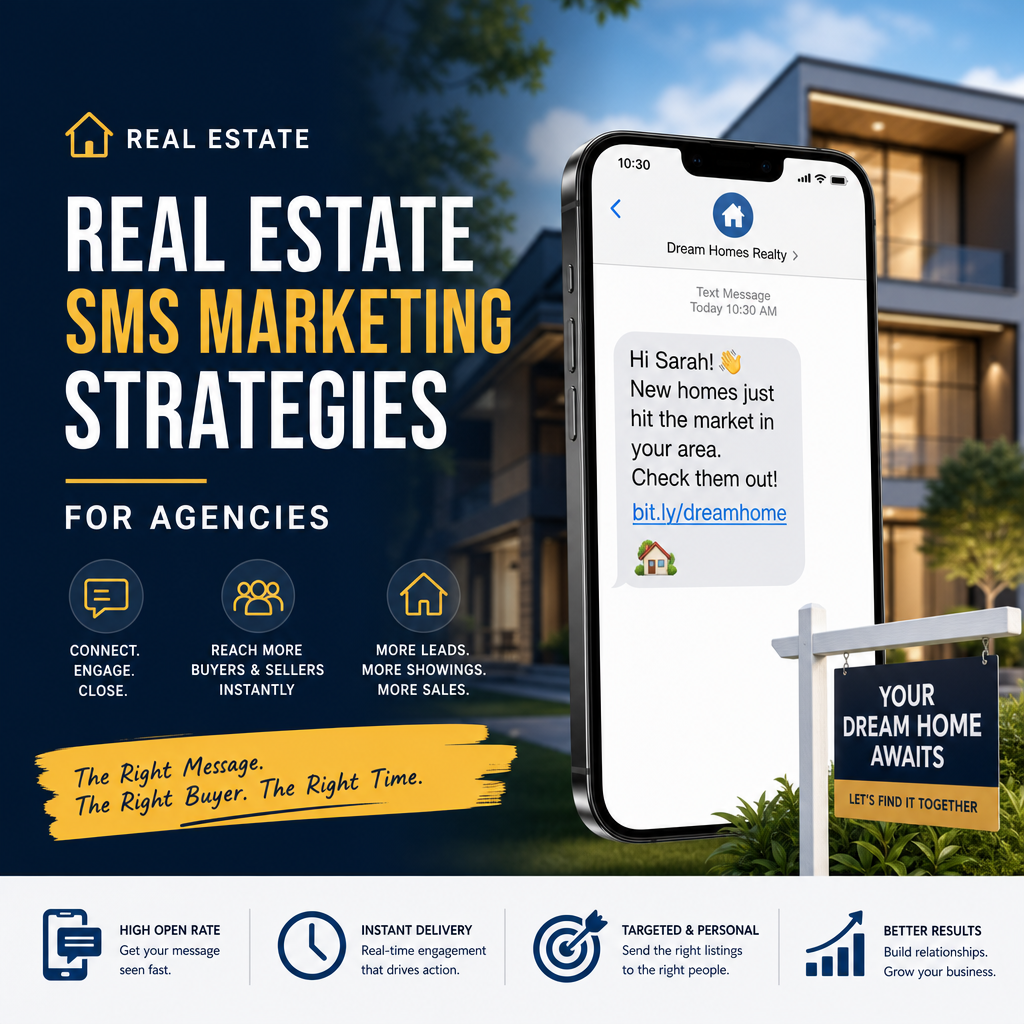
SMS Marketing for Real Estate Agencies
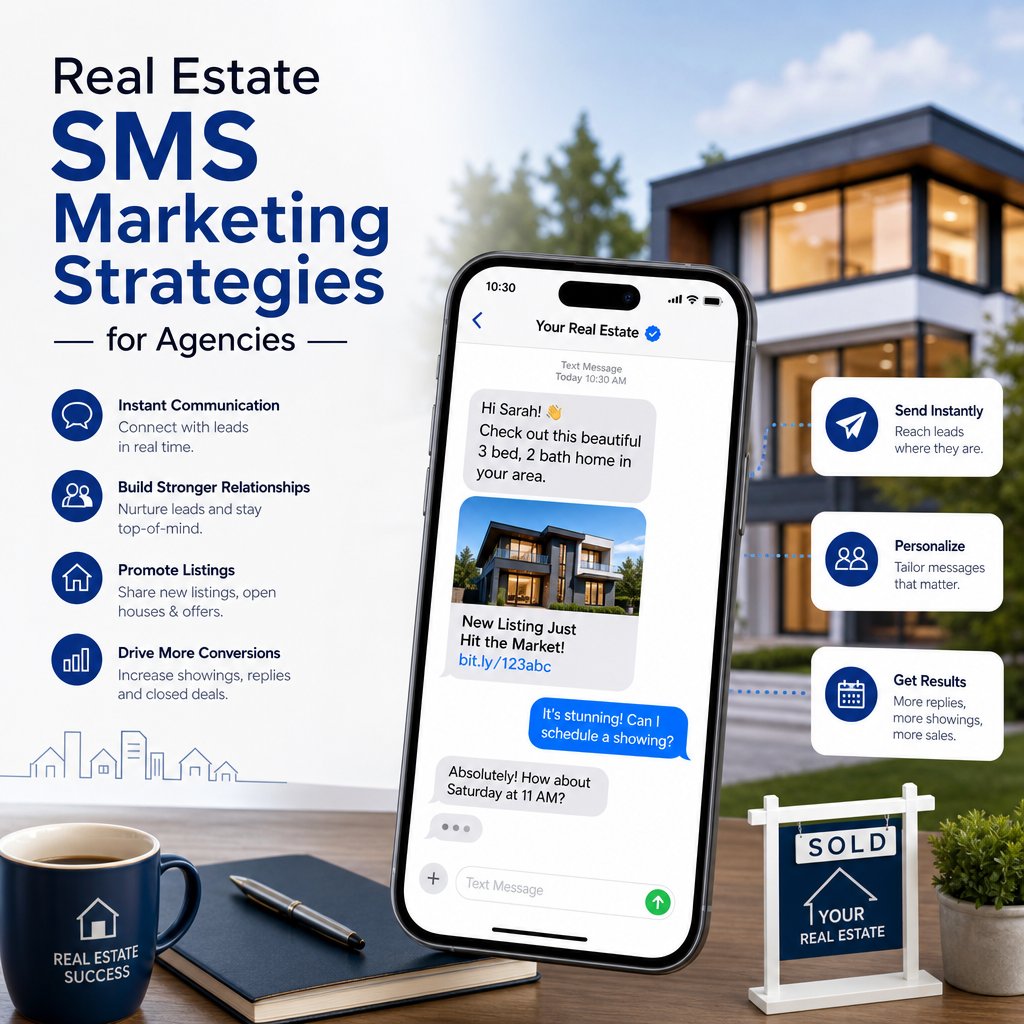
In real estate, timing matters. A new listing goes live, a showing is scheduled, a price changes, or a buyer finally says yes—and all of it can happen fast. That is one reason SMS marketing has become such a valuable tool for agents and brokers. Unlike email, which may sit unread for hours or days, text messages are usually opened within minutes. For agencies trying to keep leads warm, move deals forward, and stay top of mind, real estate SMS can be one of the most effective communication channels available.
SMS marketing is not about spamming people with generic promotions. When used well, it helps real estate teams deliver timely, relevant, and personal updates that improve response rates and build trust. In this article, we will explore how real estate agencies can use SMS marketing effectively, what types of messages work best, and how to stay compliant while maximizing results.
Why SMS Marketing Works So Well in Real Estate
Real estate is a relationship-driven business, but it is also fast-paced and competitive. Leads often compare multiple agents, browse several listings, and expect quick responses. SMS gives agencies a direct line of communication that fits these expectations.
High open rates and fast responses
Text messages are read quickly. In many cases, a recipient opens a text within a few minutes of receiving it. That speed is especially useful when:
- A hot lead requests more information
- A property becomes available unexpectedly
- A showing needs confirmation
- A price reduction should be shared immediately
When compared to email, SMS often generates much faster engagement. That means fewer missed opportunities and better follow-up timing.
Personal and convenient
People are already comfortable using text messaging in their daily lives. Because SMS feels familiar and simple, it is easier for agents to get a response without asking prospects to log in, check an inbox, or fill out a form.
A short message such as “Hi Sarah, the 3-bedroom home in Oakwood is still available. Would you like the brochure or a showing this week?” can feel more conversational and immediate than a long email.
Ideal for mobile-first prospects
Most buyers and sellers are searching on their phones. They browse listings during commutes, lunch breaks, and evenings. SMS fits into that mobile-first behavior naturally, making it ideal for sending alerts and reminders that need quick attention.
Best Ways Real Estate Agencies Can Use SMS
Real estate SMS marketing works best when it is tied to specific actions or stages in the client journey. Below are some of the most effective use cases.
1. New listing alerts
One of the most practical uses for SMS is notifying subscribers when a relevant new property is listed. Since inventory can move quickly, a text alert can help interested buyers act before the listing gets crowded.
Example:
New listing: 4-bedroom home in Brookside, 2 baths, updated kitchen, $485,000. Reply YES for photos or a private showing.
This type of message is short, useful, and action-oriented.
2. Open house invitations
Open house campaigns work well with SMS because they depend on timeliness. A reminder the day before or a follow-up text the morning of the event can increase attendance.
Example:
Reminder: Open house at 14 Maple Ave tomorrow from 1–3 PM. Parking available on Pine St. Reply for the full listing details.
Sending this type of real estate SMS helps reduce no-shows and keeps your event top of mind.
3. Appointment confirmations and reminders
Agents often juggle multiple showings, listing appointments, inspections, and calls. SMS is a reliable way to confirm meetings and reduce scheduling confusion.
Example:
Hi James, confirming your home tour at 4:30 PM today at 88 River Road. Reply C to confirm or let us know if you need to reschedule.
This simple message can save time and prevent missed appointments.
4. Lead follow-up
Many real estate leads go cold because follow-up is inconsistent. SMS can help agents reconnect quickly after a property inquiry, website registration, or open house visit.
Example:
Thanks for visiting our site today. Are you still looking in the downtown area, or would you prefer homes in the north side?
This kind of message opens a conversation without feeling too salesy.
5. Price changes and urgent updates
If a listing price drops or a property receives multiple offers, SMS is the fastest way to notify qualified buyers. Urgency is a major advantage in real estate, and text messaging is ideal for time-sensitive updates.
Example:
Update: The condo at 221 Elm St is now $25,000 less. Would you like to schedule another look?
6. Client check-ins and relationship nurturing
SMS does not need to be used only for promotions. It can also support relationship building by helping agents stay in touch with past clients.
Examples include:
- Checking in after a home purchase
- Sending reminders about lease renewals
- Following up after closing
- Wishing clients happy holidays or home anniversaries
These small touches can keep your agency memorable long after the transaction ends.
Building an Effective Real Estate SMS Strategy
A successful SMS campaign needs more than a list of phone numbers. It requires planning, segmentation, and a clear message strategy. Here are the essentials.
Segment your audience
Not every contact should receive the same text. Buyers, sellers, landlords, tenants, and past clients all have different needs. Segmenting your list allows you to send more relevant messages.
For example:
- New buyers may want listing alerts and open house invitations
- Sellers may want market updates and showing confirmations
- Past clients may respond well to referral requests and home maintenance tips
- Renters may prefer availability alerts and lease renewal reminders
The more targeted your message, the higher the engagement.
Keep messages short and clear
SMS is not the place for long explanations. A good text should be direct, useful, and easy to understand at a glance.
A strong real estate SMS typically includes:
- Who you are
- Why you are texting
- The key detail or offer
- A clear call to action
Example:
Hi Maria, this is Aiden from CityNest Realty. The townhouse you asked about is still available. Want the floor plan or a showing time?
This message is short but still personal and actionable.
Use a clear call to action
Every text should lead the recipient toward the next step. That might be:
- Replying with a keyword
- Clicking a listing link
- Booking a showing
- Calling the office
- Confirming attendance
Without a call to action, the message may be informative but not effective.
Time your messages carefully
Sending texts at the wrong time can reduce engagement or annoy recipients. In general, it is best to avoid very early mornings, late nights, and overly frequent messaging.
Good timing examples:
- Mid-morning for listing alerts
- Afternoon for open house reminders
- Early evening for follow-ups after work hours
Always consider the local time zone and the urgency of the message.
SMS Automation for Real Estate Agencies
Automation can make SMS marketing more efficient, especially for agencies handling multiple leads and listings at once. With the right setup, texts can be sent automatically based on user behavior or scheduled events.
Automated lead responses
When someone fills out a contact form on your website, automation can send an immediate text confirming the inquiry.
Example:
Thanks for contacting us about homes in West Hills. An agent will reach out shortly. In the meantime, would you like similar listings by text?
This quick response improves lead experience and helps prevent delays.
Drip campaigns
SMS drip campaigns allow agencies to nurture leads over time with a series of short, relevant messages. This can be especially useful for prospects who are not ready to buy immediately.
A simple drip sequence might include:
- A welcome message after signup
- A list of preferred property matches
- A follow-up question about budget or timeline
- An invitation to schedule a call or tour
This keeps your agency in touch without overwhelming the lead.
Event-based automation
You can also trigger texts based on specific events, such as:
- New listing published
- Showing booked
- Open house RSVP
- Offer submitted
- Closing date approaching
These automated workflows save time while keeping clients informed.
Compliance and Best Practices
SMS marketing is powerful, but it must be done responsibly. Since texts are direct and personal, recipients should always have a reason to trust your agency.
Get explicit consent
Before sending marketing texts, make sure recipients have opted in. Consent is not just a best practice; in many regions, it is a legal requirement. Use signup forms, website checkboxes, or written permission collected during meetings or open houses.
Provide an easy opt-out
Every marketing text should give recipients a simple way to stop receiving messages. This protects your agency and helps maintain a healthy contact list.
Example:
Reply STOP to opt out.
Respect frequency
Too many texts can lead to unsubscribes. Send only messages that offer genuine value. For most agencies, quality matters much more than volume.
Personalize when possible
Adding the recipient’s name, referring to a property they viewed, or mentioning their preferred neighborhood makes the message feel thoughtful instead of mass-produced.
Compare these two examples:
- Generic: New homes just listed. Check them out now.
- Personalized: Hi David, three new homes in your preferred area just hit the market. Want the links?
The second message is more likely to get a response because it feels relevant.
Track performance
To improve results, monitor metrics such as:
- Delivery rate
- Reply rate
- Click-through rate
- Opt-out rate
- Appointment bookings from SMS
These insights show what works and where your campaign needs refinement.
Examples of Effective Real Estate SMS Messages
Sometimes the best way to understand SMS marketing is to see examples. Here are a few message types that real estate agencies can adapt.
New listing alert
Hi Jenna, a new 2-bedroom condo in your target area just became available for $398,000. Would you like photos or a tour link?
Open house reminder
Reminder: Open house at 42 Cedar Lane today from 12–2 PM. Let us know if you’d like parking details.
Showing confirmation
Hi Marcus, your property tour at 6:00 PM is confirmed. Reply if you need directions or must reschedule.
Follow-up after inquiry
Thanks for reaching out about the Lakeside home. Are you buying soon, or just starting your search?
Client nurturing message
Hi Olivia, it’s been one year since your closing. Hope you’re enjoying your home! Let us know if you ever need local market advice.
These examples show that effective real estate SMS messages are brief, specific, and useful.
Common Mistakes to Avoid
Even a strong SMS strategy can underperform if common mistakes get in the way.
Sending too many generic messages
If every text sounds like a sales pitch, people may stop reading. SMS should feel helpful, not intrusive.
Using unclear language
Avoid vague messages such as “Check this out” or “Important update.” Be specific so the recipient knows why the text matters.
Ignoring segmentation
A message about luxury listings may not be relevant to first-time buyers. Sending the wrong message to the wrong audience can reduce trust and engagement.
Forgetting the human touch
Automation is useful, but real estate is still a relationship business. Use SMS to support personal communication, not replace it entirely.
Conclusion
SMS marketing gives real estate agencies a fast, direct, and personal way to connect with leads and clients. From listing alerts and open house reminders to follow-ups and appointment confirmations, real estate sms campaigns can improve response times, strengthen relationships, and help agents stay competitive in a crowded market.
The key is to keep messages relevant, concise, and permission-based. When combined with good segmentation, smart automation, and careful timing, SMS can become one of the most effective tools in your real estate marketing strategy.
