
Drip SMS Campaigns Explained
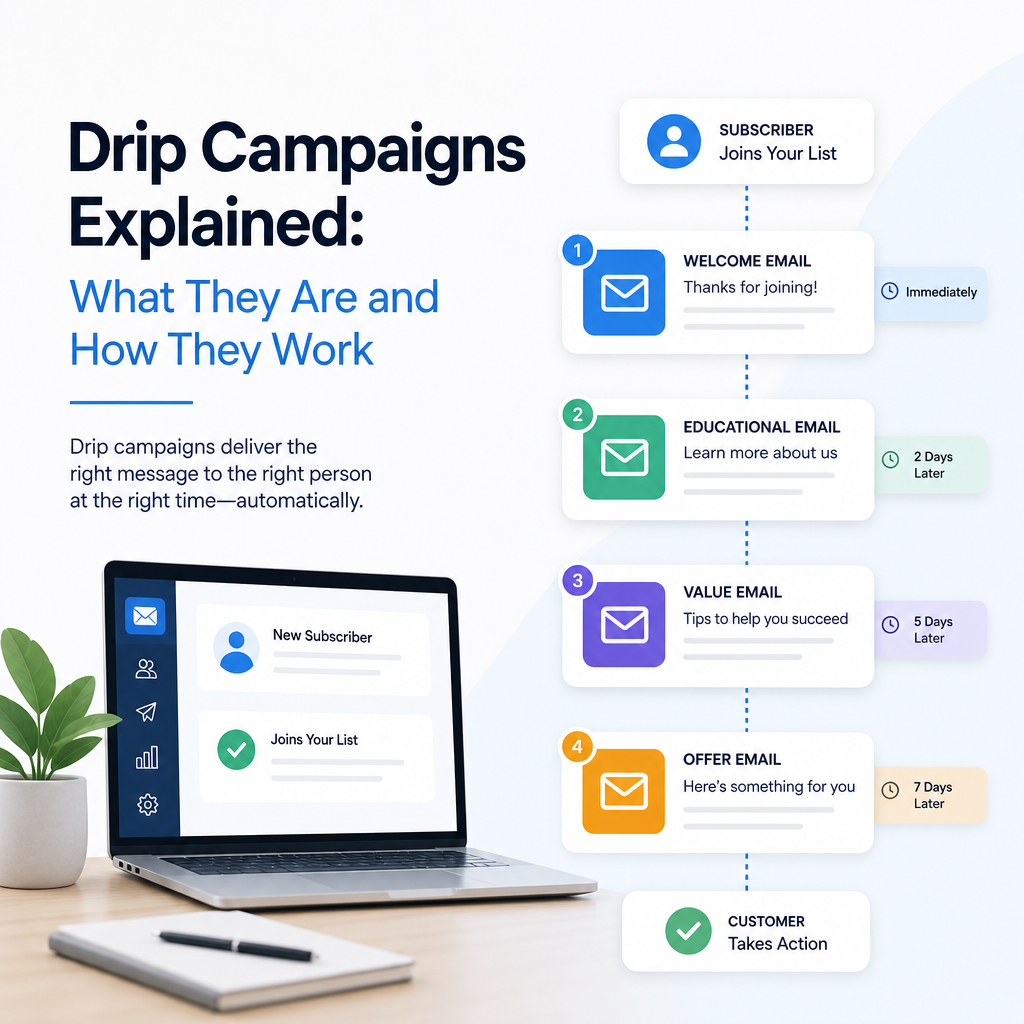
Drip SMS campaigns are one of the most effective ways to stay in touch with customers without overwhelming them. Instead of sending one large blast to everyone at once, a drip campaign delivers a planned series of text messages over time. Each message is triggered by a timeline, a customer action, or a specific stage in the buyer journey.
For businesses that want to build trust, nurture leads, and encourage repeat action, drip SMS campaigns can be a powerful tool. They combine the immediacy of text messaging with the structure of automated marketing. In other words, they help you send the right message at the right time—without manually texting every contact.
In this article, we’ll break down what drip SMS campaigns are, how they work, why they matter, and how to build one that actually gets results.
What Is a Drip SMS Campaign?
A drip SMS campaign is a sequence of automated text messages sent to subscribers over a period of time. The messages are “dripped” out gradually based on a schedule or customer behavior.
For example, a new subscriber might receive:
- A welcome text immediately after signing up
- A product introduction two days later
- A reminder or offer five days later
- A follow-up message a week later
This kind of messaging helps guide people through a journey without feeling pushy. It’s especially useful for onboarding, lead nurturing, abandoned cart recovery, appointment reminders, and re-engagement campaigns.
Unlike one-off text blasts, drip campaigns are built around timing and relevance. The goal is not just to send messages, but to create a sequence that feels helpful and natural.
Why Drip SMS Campaigns Work So Well
Text messages are read quickly, often within minutes. That makes SMS a strong channel for communication when timing matters. But speed alone is not what makes drip campaigns effective. The real value comes from consistency, personalization, and automation.
1. They keep your brand top of mind
People forget quickly. A single message may be seen and then forgotten, but a series of well-timed texts reinforces your brand and keeps the conversation going.
2. They improve engagement
Drip SMS campaigns can increase open rates and response rates because they feel timely and relevant. If someone just downloaded a guide, signed up for a webinar, or left items in a cart, a related text is more likely to prompt action.
3. They reduce manual work
Once set up, drip campaigns run automatically. That means fewer repetitive tasks for your team and more consistency in how leads and customers are contacted.
4. They support different stages of the customer journey
Not every subscriber is ready to buy immediately. Some need information, some need reassurance, and some need a reminder. Drip campaigns let you send the right content at the right stage.
Common Uses for Drip SMS Campaigns
Drip SMS campaigns can be adapted to many business goals. Here are some of the most common ways businesses use them.
Lead nurturing
When someone shows interest but isn’t ready to purchase, a drip sequence can provide useful information over time. For example:
- Day 1: Thank them for signing up
- Day 3: Share a helpful resource
- Day 6: Explain a key benefit
- Day 10: Invite them to book a call or request a demo
This approach works well because it educates instead of pressuring.
Welcome sequences
A welcome campaign helps new subscribers understand who you are and what to expect. It can include a greeting, a brand introduction, and a simple next step such as exploring your website or using a new customer discount.
Abandoned cart recovery
If a shopper adds items to their cart but doesn’t complete checkout, a drip SMS sequence can bring them back.
Example:
- 1 hour later: “You left something behind”
- 24 hours later: A reminder with a product link
- 48 hours later: A limited-time incentive
This type of campaign is popular because it targets people who already showed buying intent.
Appointment reminders
Service businesses often use SMS drip campaigns to reduce no-shows. A sequence might include:
- Booking confirmation
- Reminder 24 hours before the appointment
- Reminder 2 hours before the appointment
- Follow-up after the visit
Re-engagement campaigns
If subscribers go quiet, a drip campaign can help bring them back. You might send a check-in message, a special offer, or a request for feedback.
Post-purchase follow-up
After someone buys, SMS can be used to thank them, share product tips, request a review, or suggest related products. This helps improve customer satisfaction and repeat sales.
How Drip SMS Campaigns Differ from Regular SMS Marketing
A regular SMS campaign is usually a single message or a one-time blast sent to a list. Drip campaigns are different because they follow a sequence and are often automated based on triggers.
Here’s a simple comparison:
| Feature | Regular SMS Campaign | Drip SMS Campaign |
|---|---|---|
| Message type | One-time | Series of messages |
| Timing | Sent at once | Sent over time |
| Personalization | Often broad | More tailored |
| Automation | Sometimes | Usually automated |
| Goal | Immediate reach | Ongoing engagement |
That doesn’t mean one is better than the other. In many cases, the best strategy uses both. A blast can announce a sale, while a drip campaign can nurture leads who don’t convert right away.
Building an Effective Drip SMS Campaign
A good drip campaign is more than just a handful of scheduled texts. It needs a clear goal, a logical flow, and messages that offer real value.
Step 1: Define the goal
Start by asking what you want the campaign to accomplish. Common goals include:
- Converting new leads
- Recovering abandoned carts
- Booking appointments
- Encouraging repeat purchases
- Re-engaging inactive contacts
Your goal determines the message sequence, timing, and call to action.
Step 2: Segment your audience
Not every contact should receive the same messages. Segment your audience based on behavior, interests, purchase history, or sign-up source.
For example:
- New subscribers may need education
- Returning customers may respond to loyalty offers
- Leads from a webinar may need follow-up content
- Cart abandoners may need product-specific reminders
Segmentation makes your drip campaigns more relevant and effective.
Step 3: Map the message sequence
Plan each message in the series before you write it. Think about the journey your audience should take.
A simple sequence might look like this:
- Welcome message
- Educational message
- Social proof or testimonial
- Offer or call to action
- Final reminder
Each text should have a purpose and move the recipient one step closer to the desired outcome.
Step 4: Write concise, useful texts
SMS is not the place for long paragraphs. Messages should be short, clear, and action-oriented.
A strong text usually includes:
- A clear purpose
- A friendly tone
- One main call to action
- A link or next step, if needed
Example:
“Hi Maya, thanks for joining us! Here’s a quick guide to help you get started: [link]. Reply with any questions.”
This message is short, useful, and easy to act on.
Step 5: Choose the right timing
Timing can make or break a drip campaign. Messages should arrive when they are most relevant, not when they are most annoying.
For example:
- A welcome message should be immediate
- A follow-up after a purchase may work best after 2–3 days
- Abandoned cart reminders should be spaced out thoughtfully
- Appointment reminders should come when the customer still has time to act
Avoid sending too many texts in a short period. A well-paced campaign feels helpful, while an overly aggressive one feels spammy.
Step 6: Add personalization where possible
Even simple personalization can improve results. Using a recipient’s name, referencing a product they viewed, or tailoring the offer to their behavior can make the text feel more relevant.
Examples:
- “Hi Jordan, your free consultation is confirmed for tomorrow at 2 PM.”
- “Still thinking about the running shoes you viewed? Here’s a quick reminder.”
- “Thanks for your purchase, Priya. Here’s how to get the most from your new kit.”
Step 7: Include a clear call to action
Every message should tell the recipient what to do next. Without a clear action, even a good message can fall flat.
Examples of strong calls to action include:
- “Book your appointment here”
- “Complete your checkout”
- “Read the full guide”
- “Reply YES to confirm”
- “Claim your discount before Friday”
Keep the action simple and specific.
Best Practices for Drip SMS Campaigns
To get the most from your campaigns, follow a few proven best practices.
Keep it short
Text messages should be easy to scan. Aim for clarity over cleverness. If a message is too long, the main point gets lost.
Respect timing and frequency
Too many messages can lead to unsubscribes. Use thoughtful spacing and avoid sending texts late at night or too early in the morning unless the situation truly calls for it.
Make every message valuable
Each text should offer something useful, whether that’s a reminder, a tip, a discount, or a next step. If a message has no clear benefit, it probably doesn’t belong in the sequence.
Test different versions
A/B testing can help you improve performance. You might test:
- Different opening lines
- Different calls to action
- Different send times
- Different offers
Small improvements can make a big difference over time.
Track results
Monitor important metrics such as:
- Delivery rate
- Open rate
- Click-through rate
- Response rate
- Conversion rate
- Unsubscribe rate
These numbers show what is working and where the sequence needs improvement.
Make opting out easy
SMS marketing must be permission-based. Always give contacts a simple way to opt out, and honor those requests quickly. A good drip campaign should be effective without being intrusive.
Example Drip SMS Campaigns
Here are a few simple examples to show how drip campaigns can work in practice.
Example 1: New lead nurture sequence
Day 1:
“Hi Alex, thanks for downloading our guide. Here’s a quick overview of how we help businesses grow: [link]”
Day 3:
“Want to see how it works in real life? Check out this customer success story: [link]”
Day 6:
“If you’re ready, book a free consultation here: [link]”
Example 2: Abandoned cart sequence
1 hour later:
“Looks like you left a few items in your cart. They’re still waiting for you: [link]”
24 hours later:
“Need help deciding? Here are answers to common questions about the product: [link]”
48 hours later:
“Last chance: complete your order today and save 10% with code SAVE10.”
Example 3: Post-purchase sequence
Day 1:
“Thanks for your order, Sam! Your confirmation and tracking details are here: [link]”
Day 4:
“Need help getting started? Here are a few tips for using your new product: [link]”
Day 10:
“We’d love your feedback. Leave a quick review here: [link]”
These examples show how drip campaigns can guide people through different stages without overwhelming them.
Mistakes to Avoid
Even a solid campaign can fail if the basics are off. Watch out for these common mistakes:
- Sending too many messages too quickly
- Using vague or generic text
- Failing to segment the audience
- Forgetting a clear call to action
- Ignoring compliance requirements
- Not testing or reviewing results
- Treating every contact the same
A drip SMS campaign should feel like a helpful conversation, not a mass announcement.
Conclusion
Drip SMS campaigns are a smart way to automate timely, relevant communication with your audience. By sending a sequence of well-planned messages, you can nurture leads, recover lost sales, improve customer experience, and keep your brand top of mind.
The key is to keep the campaign focused, useful, and well-timed. When done correctly, drip campaigns can turn simple text messages into meaningful customer journeys that drive real results.
