
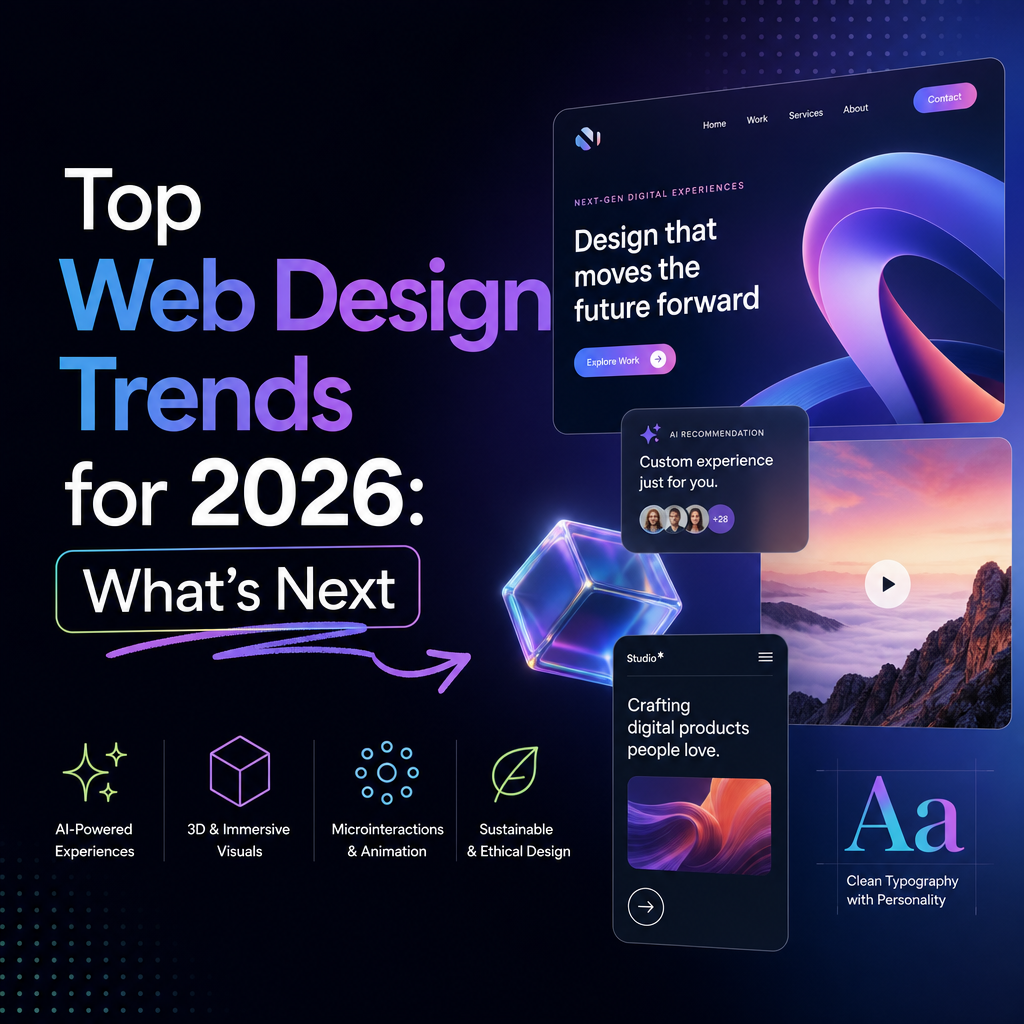
Top Web Design Trends for 2026
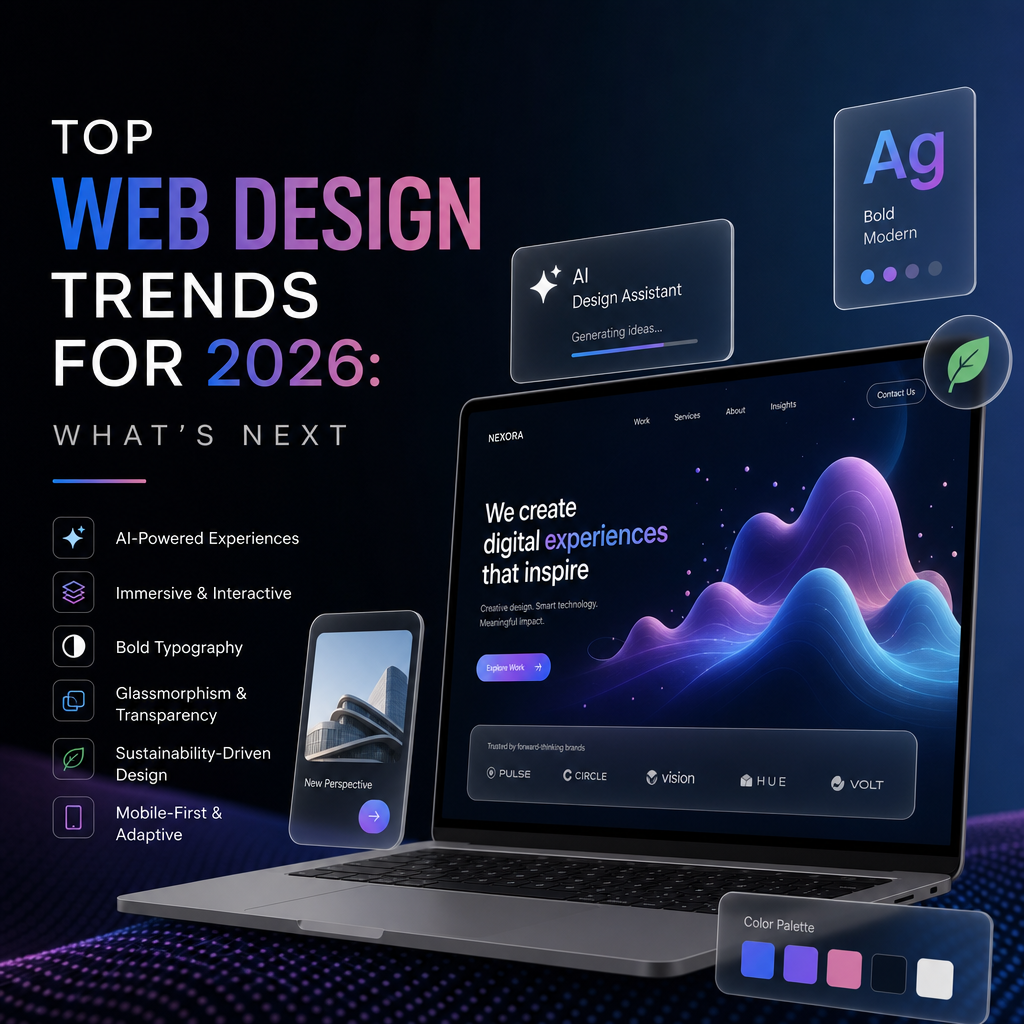
Web design is changing faster than ever. As user expectations rise and digital experiences become more personalized, brands can no longer rely on clean layouts alone. In 2026, the best websites will combine visual clarity, smart interaction, accessibility, and performance in ways that feel seamless and human.
The latest web design trends are not just about looking modern. They are about building websites that are easier to use, more engaging, and more effective at converting visitors. From AI-driven interfaces to immersive motion and sustainable design choices, 2026 is shaping up to be a year where design becomes more adaptive and purposeful.
Below, we’ll explore the top web design trends for 2026 and what they mean for businesses, designers, and users.
1. AI-Powered Personalization Becomes Standard
Artificial intelligence is moving from a nice-to-have feature to a core part of website design. In 2026, websites will increasingly adapt in real time based on user behavior, preferences, and context.
Instead of showing the same homepage to every visitor, sites may adjust:
- Hero messages based on industry or location
- Product recommendations based on browsing behavior
- Calls to action depending on the visitor’s stage in the customer journey
- Navigation paths tailored to user intent
For example, an e-commerce site might highlight winter gear for visitors in cold climates while showing summer collections to users elsewhere. A SaaS website could display different feature sets to small businesses and enterprise visitors.
This trend is powerful because it reduces friction. Users find what they need faster, and brands present more relevant content without requiring extra effort from the visitor.
Why it matters
Personalization helps improve engagement, bounce rates, and conversions. But the key in 2026 will be using AI in a way that feels helpful, not intrusive. The best designs will be subtle, transparent, and user-controlled.
2. Minimalism Evolves Into Functional Simplicity
Minimalist design is not going away, but it is becoming more strategic. In 2026, the trend is shifting from visually empty layouts to functional simplicity. This means reducing clutter while still giving users enough guidance, context, and visual interest.
Designers are learning that “less” should not mean “bare.” The goal is to create interfaces that feel clean and focused without becoming cold or confusing.
What functional simplicity looks like
- Fewer but more meaningful design elements
- Strong hierarchy with clear contrast
- Generous spacing that improves readability
- Intentional use of color to guide attention
- Simplified navigation with fewer decision points
A good example is a landing page that uses one strong headline, one supporting image, and one clear CTA instead of multiple competing messages. The page feels calm, but it still leads users toward action.
In 2026, simplicity will be valued not just for aesthetics, but for usability.
3. Motion Design Gets Smarter and More Purposeful
Animation has been popular for years, but in 2026, motion design is becoming more refined. Rather than flashy effects everywhere, websites are using motion to guide attention, explain actions, and improve flow.
This includes:
- Micro-interactions on buttons and forms
- Scroll-triggered animations that reveal content gradually
- Smooth transitions between pages or sections
- Hover effects that provide feedback
- Motion cues that help users understand what changed
For example, when a user adds an item to a shopping cart, a small animation can confirm the action instantly. When navigating a portfolio site, subtle transitions can make the experience feel polished and professional.
Best practices for motion in 2026
Motion should support the user, not distract them. Too much animation can slow a site down or overwhelm visitors. The best web design trends around motion will prioritize purpose, speed, and accessibility.
Designers should also consider users who prefer reduced motion and make sure the experience remains comfortable for everyone.
4. AI-Generated and Dynamic Visual Content
As AI tools become more sophisticated, designers are increasingly using AI-generated visuals to speed up workflows and create dynamic content. In 2026, this trend will continue, but with more emphasis on quality control and brand consistency.
Businesses may use AI to generate:
- Custom illustrations
- Background images
- Product mockups
- Social media-style graphics
- Variant visuals for A/B testing
This can be especially useful for startups or smaller teams that need strong visuals without large production budgets. A marketing team, for example, might use AI-assisted imagery to quickly create campaign-specific assets that match seasonal themes or regional promotions.
The challenge
The risk is that AI visuals can feel generic if they are not carefully directed. In 2026, successful brands will blend AI efficiency with human creativity. The result should look intentional, not automated.
5. Dark Mode and Adaptive Color Systems Expand
Dark mode has become widely accepted, but in 2026, websites are moving toward more adaptive color systems. Rather than offering only light and dark modes, some sites will use flexible palettes that adjust for user preferences, device settings, and environmental conditions.
This is part of a broader trend toward comfort and personalization. Users now expect interfaces to be easier on the eyes and more responsive to different contexts.
Common features of adaptive color systems
- Light and dark theme toggles
- Contrast adjustments for accessibility
- Color palettes optimized for different brand experiences
- Dynamic backgrounds that respond to time of day or device settings
For example, a news platform might use a softer nighttime reading mode with lower contrast, while a finance dashboard may use a high-contrast interface for clarity during work hours.
Adaptive color is becoming one of the more practical web design trends because it improves both aesthetics and usability.
6. Accessibility-First Design Takes Center Stage
Accessibility is no longer just a compliance concern. In 2026, it is a foundational part of good web design. More teams are designing with accessibility in mind from the beginning rather than treating it as a final checklist item.
This trend includes:
- Stronger color contrast
- Keyboard-friendly navigation
- Clear semantic structure
- Descriptive link text and labels
- Alt text and media captions
- Layouts that work across devices and assistive technologies
A website that is visually impressive but difficult to navigate is no longer competitive. Users expect content to be usable by everyone, including people with visual, auditory, cognitive, and motor differences.
Example
A restaurant website with accessible design might include:
- Large, readable typography
- A menu that works on screen readers
- Clear reservation buttons
- High-contrast text over images
- Forms that explain errors clearly
In 2026, accessibility is not just the right thing to do. It is also a smart business decision that expands reach and improves user satisfaction.
7. Immersive 3D and Interactive Elements Become More Common
As browsers and devices become more capable, 3D and interactive elements are finding their way into more mainstream websites. In 2026, these features will be used more selectively, but they will have a strong place in industries like e-commerce, real estate, gaming, architecture, and education.
Examples include:
- 3D product previews
- Interactive product configurators
- Virtual showroom experiences
- Scroll-based storytelling with layered depth
- Hoverable models or illustrations
A furniture brand might let users rotate a chair in 3D and view it in different fabrics. A real estate company could offer an immersive walk-through of a property before an in-person visit.
What makes this trend effective
The key is relevance. Immersive design should enhance understanding or trust. If a 3D feature slows down the site or adds confusion, it will do more harm than good. Used well, however, it can create memorable digital experiences.
8. Typography Becomes a Bigger Brand Asset
Typography is playing a larger role in web identity. In 2026, more brands are using bold, expressive typography to stand out and create stronger emotional impact.
Instead of relying heavily on large images or decorative graphics, many websites will use typography as the main visual element. This allows for cleaner layouts while still making a statement.
Typography trends to watch
- Oversized headlines
- Variable fonts with flexible weights
- Custom typefaces for brand distinction
- Strong typographic hierarchy
- Editorial-style layouts
For example, a fashion brand might use a large serif headline to convey elegance, while a tech startup might use a clean sans-serif paired with dynamic weight changes for a modern feel.
Typography is one of the most powerful web design trends because it influences tone, readability, and user flow all at once.
9. Scroll-Driven Storytelling Gains Popularity
Websites are increasingly using scroll to guide users through a structured story rather than presenting all content at once. In 2026, scroll-driven storytelling will be a common way to showcase products, missions, and services.
This style works especially well for brands that want to explain something over time, such as:
- A product launch page
- A nonprofit impact story
- A company history page
- An annual report or data-driven feature
- An educational landing page
As users scroll, content can reveal itself section by section through motion, layering, and pacing. This makes the experience feel more immersive and purposeful.
Example
A travel company might create a destination page where each scroll reveals a new part of the journey: the landscape, local experiences, accommodations, and booking options. Instead of overwhelming visitors with information, the site unfolds naturally.
This trend is effective because it combines narrative structure with visual engagement.
10. Sustainable and Performance-Focused Design Matters More
Sustainability is becoming a real consideration in digital design. In 2026, websites will increasingly be evaluated not only by how they look, but by how efficiently they perform.
This means lighter page loads, fewer unnecessary scripts, optimized images, and reduced energy use. Websites that load quickly are better for users and often better for the environment.
Performance-focused design practices
- Compressing media files
- Limiting heavy animations
- Reducing unnecessary third-party plugins
- Using efficient code structures
- Prioritizing mobile performance
A lightweight site is easier to use on slower networks and older devices, which makes it more inclusive. It also supports better SEO and lower bounce rates.
Sustainability is one of those web design trends that benefits everyone: users, businesses, and the broader digital ecosystem.
11. Conversational Interfaces and Voice-Friendly Design
As users become more accustomed to chat-based tools and voice assistants, websites are beginning to reflect these behaviors. In 2026, conversational interfaces will appear more often in customer support, search, onboarding, and product discovery.
This may include:
- Chat-style guided navigation
- Smart search that understands natural language
- Voice-friendly controls and content structure
- AI assistants embedded within websites
For example, a software website might let visitors ask, “Which plan is best for a small team?” and receive a guided response. A healthcare site could use conversational prompts to help users find information faster.
Why it works
Conversational design reduces friction by meeting users where they already are. Instead of forcing them to click through several menus, it offers a more natural way to find answers.
12. Human-Centered Authenticity Replaces Over-Polished Design
As more websites become polished and automated, authenticity is becoming a valuable differentiator. In 2026, brands will increasingly use design to feel more human, relatable, and trustworthy.
This trend can appear in:
- Real photography instead of overly staged stock images
- Honest copywriting with a conversational tone
- Behind-the-scenes content
- Founder stories and team profiles
- Imperfect but genuine visual details
A small business website, for instance, might highlight real customer testimonials and behind-the-scenes photos rather than using only generic corporate visuals. This creates trust and helps the brand feel more grounded.
Users are becoming more sensitive to content that feels overly artificial. Authentic design stands out because it feels real.
Bringing It All Together
The strongest web design trends for 2026 point toward a common goal: better user experiences. Whether through AI personalization, adaptive color systems, motion design, accessibility, or storytelling, the future of web design is about making digital spaces more intuitive and responsive.
Designers and businesses that succeed in 2026 will not simply chase every trend. Instead, they will choose the ones that support their audience, reflect their brand, and improve usability.
Conclusion
Web design in 2026 is becoming smarter, more flexible, and more human. The most effective websites will combine clean structure with personalization, accessibility, performance, and authentic brand expression. While styles and tools will continue to evolve, the core goal remains the same: create experiences that help users connect, understand, and take action.
By paying attention to these web design trends, brands can build websites that feel current today and remain effective well into the future.
