
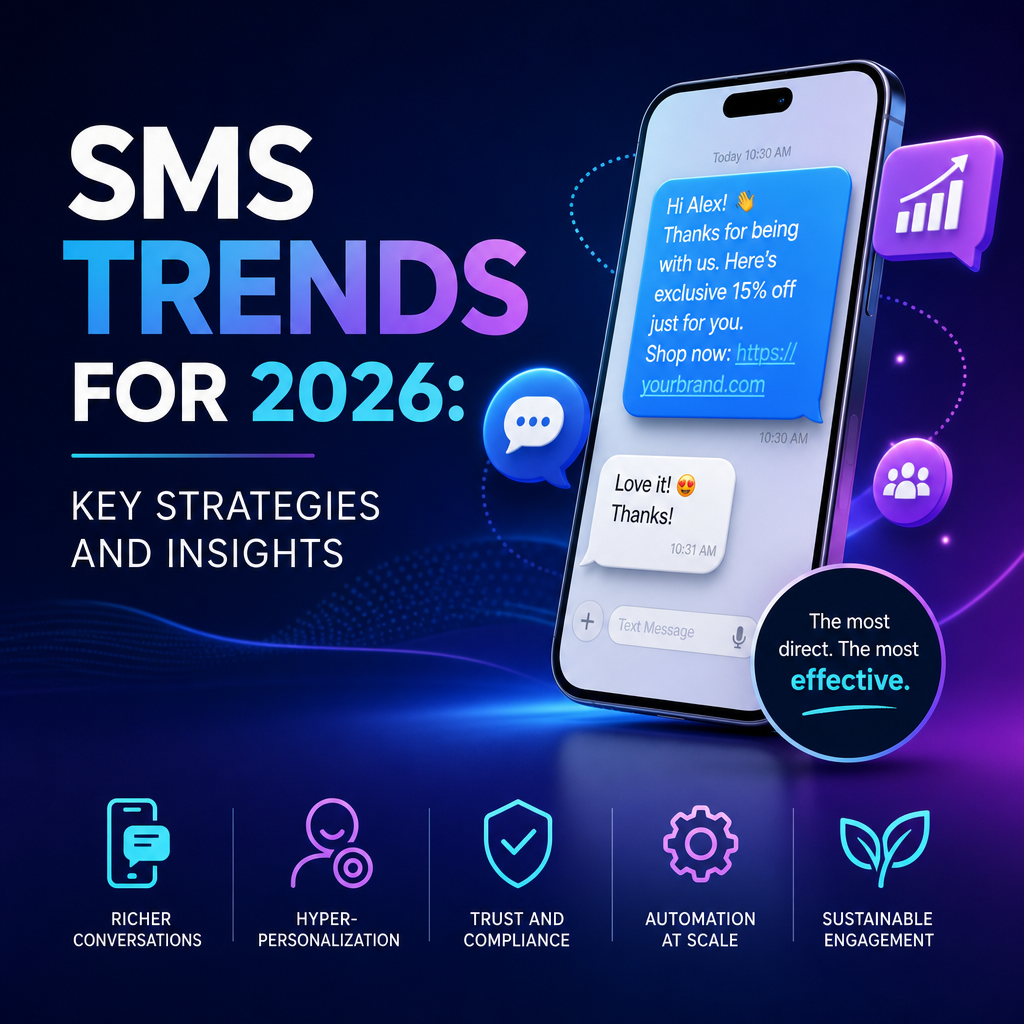
SMS Marketing Trends for 2026
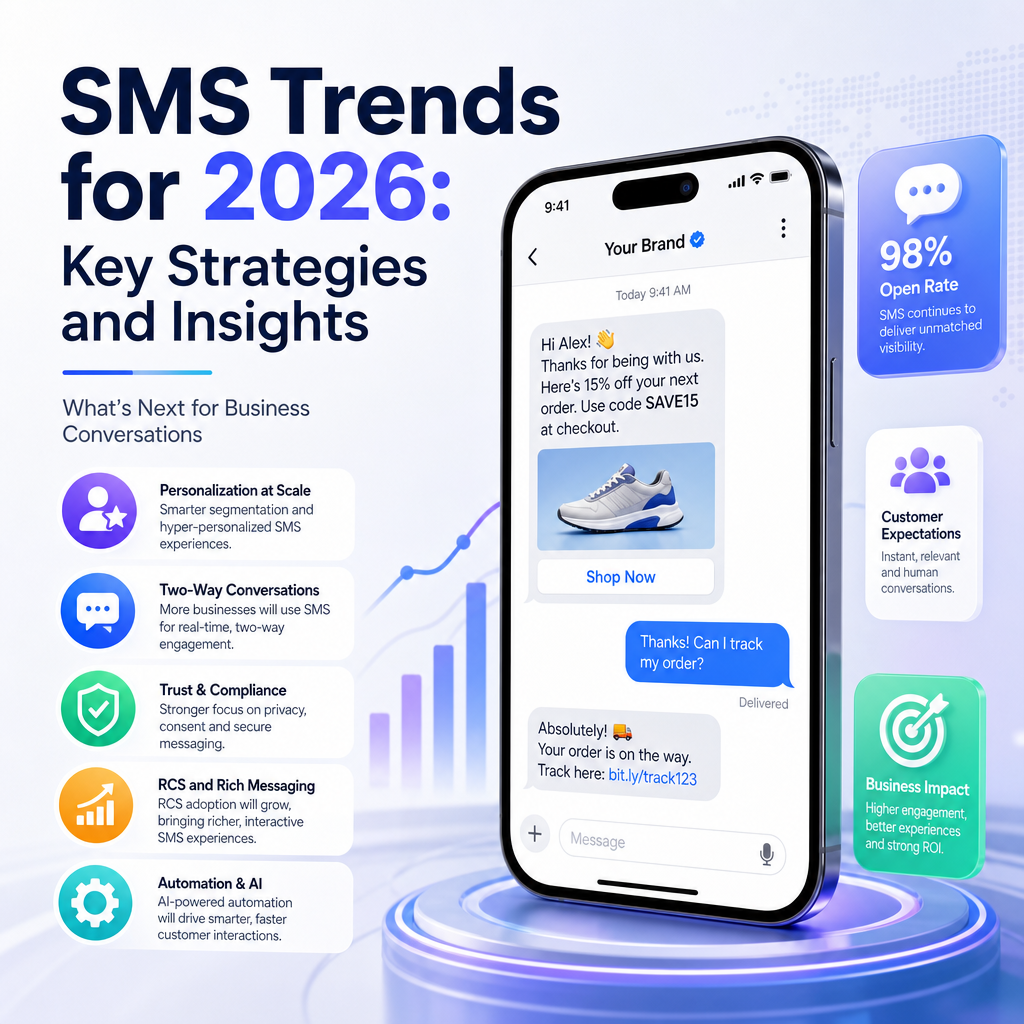
SMS marketing has been around for years, but it is far from outdated. In fact, as consumers become more selective about where they pay attention, text messaging continues to stand out as one of the fastest and most direct ways to reach an audience. Open rates remain high, response times are quick, and mobile phones are still the most personal device people own.
As we move into 2026, the next wave of sms trends is shaping up around smarter automation, stronger compliance, better personalization, and tighter integration with the rest of the customer journey. Brands that adapt early will be able to send messages that feel timely, useful, and respectful rather than intrusive.
Below, we’ll explore the most important SMS marketing trends for 2026, along with examples of how businesses can use them effectively.
Why SMS Still Matters in 2026
Before looking at the trends, it helps to understand why SMS remains such a powerful channel.
Unlike email, which can sit unopened for hours or days, SMS often gets read within minutes. Unlike social media, it does not depend on algorithms. And unlike many app-based channels, it does not require a customer to download anything extra.
SMS works because it is:
- Immediate
- Personal
- Simple
- Accessible
- Highly visible
That said, consumers now expect more from brands. A plain promotional blast is no longer enough. In 2026, SMS marketing must be more relevant, better timed, and more context-aware.
1. Hyper-Personalization Will Become the Default
One of the biggest sms trends for 2026 is the move from basic personalization to truly hyper-personalized messaging. In the past, adding a customer’s first name was often considered enough. Today, customers expect messages that reflect their preferences, behavior, and purchase history.
What hyper-personalization looks like
Instead of sending the same campaign to everyone, brands will use data to tailor messages such as:
- Product recommendations based on past purchases
- Texts triggered by browsing behavior
- Location-based offers
- Messages tied to lifecycle stage
- Personalized reminders based on customer activity
For example, a beauty brand might send a refill reminder to a customer who bought skincare products 30 days ago. A restaurant might send a lunch promo only to customers within a certain radius during midday hours.
Why it matters
Personalized SMS feels more helpful and less promotional. It also improves conversion rates because the message fits the customer’s immediate needs. In 2026, the brands that win with SMS will be those that make each message feel like it was written for one person, not one audience list.
2. AI Will Power Smarter Campaigns
Artificial intelligence is already influencing digital marketing, but in 2026 it will play an even bigger role in SMS strategy. AI can help brands decide what to send, when to send it, and how to improve future campaigns based on real-time performance.
Common AI use cases in SMS marketing
AI will be used to:
- Predict the best send time
- Segment audiences automatically
- Suggest message variations
- Optimize reply handling in two-way campaigns
- Detect which offers are most likely to convert
- Reduce churn by identifying customers at risk of leaving
For example, a subscription business may use AI to identify subscribers who have not opened messages in a while and send a re-engagement text at the best time of day. A retailer may use AI to test multiple CTA versions and automatically favor the one with better response rates.
The advantage of AI in SMS
The value of AI is not just speed. It is precision. SMS campaigns are short by nature, so every word matters. AI can help marketers avoid wasted messages and ensure every text has a stronger chance of success.
3. Conversational SMS Will Replace One-Way Blasts
Another major shift among sms trends is the rise of conversational messaging. Customers do not just want to receive texts; they want to reply, ask questions, and get quick answers.
What conversational SMS includes
Conversational SMS can be used for:
- Customer support
- Appointment scheduling
- Product selection
- Order updates
- Lead qualification
- Feedback collection
For example, a dental office may allow patients to confirm or reschedule appointments by text. A clothing retailer could let shoppers reply with “1” or “2” to choose between color options. A travel brand might let customers ask about itinerary changes in a thread instead of calling support.
Why it’s growing
Consumers are increasingly comfortable using text as a two-way channel. It feels easier than email and more convenient than phone calls. Businesses benefit too, because conversations can reduce friction, improve service, and capture intent in real time.
By 2026, SMS will be less about broadcasting and more about building a dialogue.
4. Rich Communication Services Will Gain Ground
While SMS itself remains highly relevant, Rich Communication Services, or RCS, is expected to gain stronger adoption in 2026. RCS offers a more advanced messaging experience with images, buttons, carousels, branding, and interactive elements.
How RCS changes the experience
Instead of a plain text message, brands can send a richer mobile experience such as:
- Product galleries
- Tap-to-buy buttons
- Branded visuals
- Interactive appointment tools
- Map previews
- Conversation-style menus
For example, a car dealership might send a message with vehicle images and buttons to schedule a test drive. A fashion brand could show a mini product catalog inside the message itself.
What this means for marketers
RCS is not replacing SMS overnight, but it is expanding what mobile messaging can do. Businesses should start preparing for a future where customers expect more than plain text, especially for visually driven campaigns and commerce-related messaging.
5. Compliance and Consent Will Be More Important Than Ever
As messaging becomes more sophisticated, privacy expectations will rise too. One of the most important sms trends for 2026 is the increasing focus on compliance, consent, and trust.
What brands will need to do
Marketers will need to be careful about:
- Clear opt-in processes
- Transparent message frequency
- Easy opt-out options
- Data privacy policies
- Proper recordkeeping
- Regional regulations and carrier requirements
Consumers do not want aggressive, confusing, or spam-like text behavior. If a brand sends too many messages or fails to explain why a person subscribed, it risks unsubscribes and damage to brand reputation.
Why trust matters
SMS feels personal because it enters the same space as family, friends, and important notifications. That makes trust essential. In 2026, successful SMS programs will prioritize consent and clarity at every step. The brands that earn permission will keep attention far longer than those trying to buy it through volume.
6. Timing and Context Will Matter More Than Frequency
For years, marketers debated how often to send SMS campaigns. In 2026, the smarter question is not “How many texts should we send?” but “When does this message add value?”
Context-driven messaging examples
A message is more effective when it is linked to a relevant moment, such as:
- A cart abandonment reminder within a few hours
- A shipping update after a customer places an order
- A weather-triggered promotion during a cold snap
- A birthday offer on the actual birthday
- A service reminder just before an appointment
These messages work because they are timely and useful.
The shift away from volume
Consumers are increasingly sensitive to over-messaging. If brands send too many texts, people unsubscribe quickly. In 2026, the best SMS programs will focus on message quality and context rather than sending more just to stay visible.
7. Omnichannel Integration Will Be Essential
SMS will not operate as a standalone tactic in 2026. Instead, it will be a key part of broader omnichannel marketing strategies. Brands will connect SMS with email, push notifications, social retargeting, CRM systems, and customer service platforms.
How SMS fits into the bigger picture
A customer journey may look like this:
- A user visits a website
- They join the email list and opt in to SMS
- They receive a welcome email
- They get a text with a time-sensitive offer
- A follow-up email provides product details
- If they abandon a cart, SMS delivers the final reminder
This layered approach works because each channel plays a different role. SMS is often best for urgency, reminders, and direct response, while email provides more room for detail.
Why integration matters
When SMS is connected to other channels, it becomes more intelligent. Messages can be based on a customer’s full journey, not just one isolated action. That creates better experiences and stronger performance.
8. SMS Will Become a Bigger Part of Customer Experience
In 2026, SMS marketing will no longer be viewed only as a promotional tool. It will increasingly support the full customer experience.
Customer experience use cases
Brands will use SMS for:
- Order confirmations
- Delivery updates
- Appointment reminders
- Subscription renewals
- Service alerts
- Feedback requests
- Loyalty program updates
For example, a salon may send a reminder 24 hours before an appointment and a thank-you message afterward with a review link. A logistics company may use SMS to alert customers about delayed deliveries. A bank may send secure notifications about account activity.
Why this matters for brands
When SMS is used to improve customer experience, it builds trust and reduces friction. The message becomes useful, not just promotional. This creates better relationships and makes customers more willing to engage with future offers.
9. Short-Form Creative Will Get Smarter
Since SMS is limited in length, copywriting will remain a critical skill in 2026. But the style of short-form creative is changing. Brands will need to write texts that are brief, clear, and compelling without feeling robotic.
What effective SMS copy will include
Strong SMS copy in 2026 will:
- Get to the point quickly
- Use a clear CTA
- Match the customer’s context
- Sound human and conversational
- Avoid vague language
- Create urgency without pressure
Example:
Weak:
“Big sale now live. Shop today.”
Stronger:
“Hi Maya, your 20% off skincare ends tonight. Shop your favorites now before midnight.”
The second example is more specific, more personal, and more action-oriented.
Why copy matters more than ever
As customers receive more branded messages, generic copy will be ignored. Better writing will help brands stand out in crowded inboxes and build stronger engagement with every text.
10. Measurement Will Focus on More Than Open Rates
SMS has always been known for strong open rates, but in 2026 marketers will look beyond that single metric. Success will be measured with a more complete set of performance indicators.
Metrics that will matter
Brands will pay closer attention to:
- Click-through rate
- Conversion rate
- Reply rate
- Opt-out rate
- Revenue per message
- Customer lifetime value
- Engagement by segment
- Response time
These metrics tell a fuller story. A message may be opened often but still fail to generate sales. Another may have fewer opens but drive high-value responses.
Why better measurement helps
When marketers analyze SMS performance more deeply, they can improve segmentation, timing, and message design. This turns SMS from a basic broadcast channel into a measurable revenue driver.
Preparing Your SMS Strategy for 2026
To keep up with these sms trends, brands should start adapting now. The goal is not to use every new feature at once, but to build a messaging strategy that is more relevant, smarter, and customer-friendly.
Practical steps to take
- Review your opt-in and consent process
- Audit your current message frequency
- Segment audiences more precisely
- Test conversational and two-way messages
- Connect SMS with CRM and email workflows
- Use AI tools where they genuinely improve outcomes
- Update your copy to sound more natural and specific
- Track conversions, not just opens
Even small improvements can make a big difference when applied consistently.
Conclusion
SMS marketing in 2026 will be smarter, more interactive, and more customer-centered than ever before. The biggest sms trends point toward personalization, AI-driven optimization, conversational messaging, richer experiences, and stronger privacy standards. At the same time, the core strength of SMS remains the same: it delivers direct communication in a channel people actually check.
Brands that treat SMS as a useful service rather than a loud sales tool will have the best results. The future of SMS is not about sending more messages. It is about sending the right message at the right moment to the right person.
