

SMS Marketing FAQ: Answers to the Most Common SMS Questions
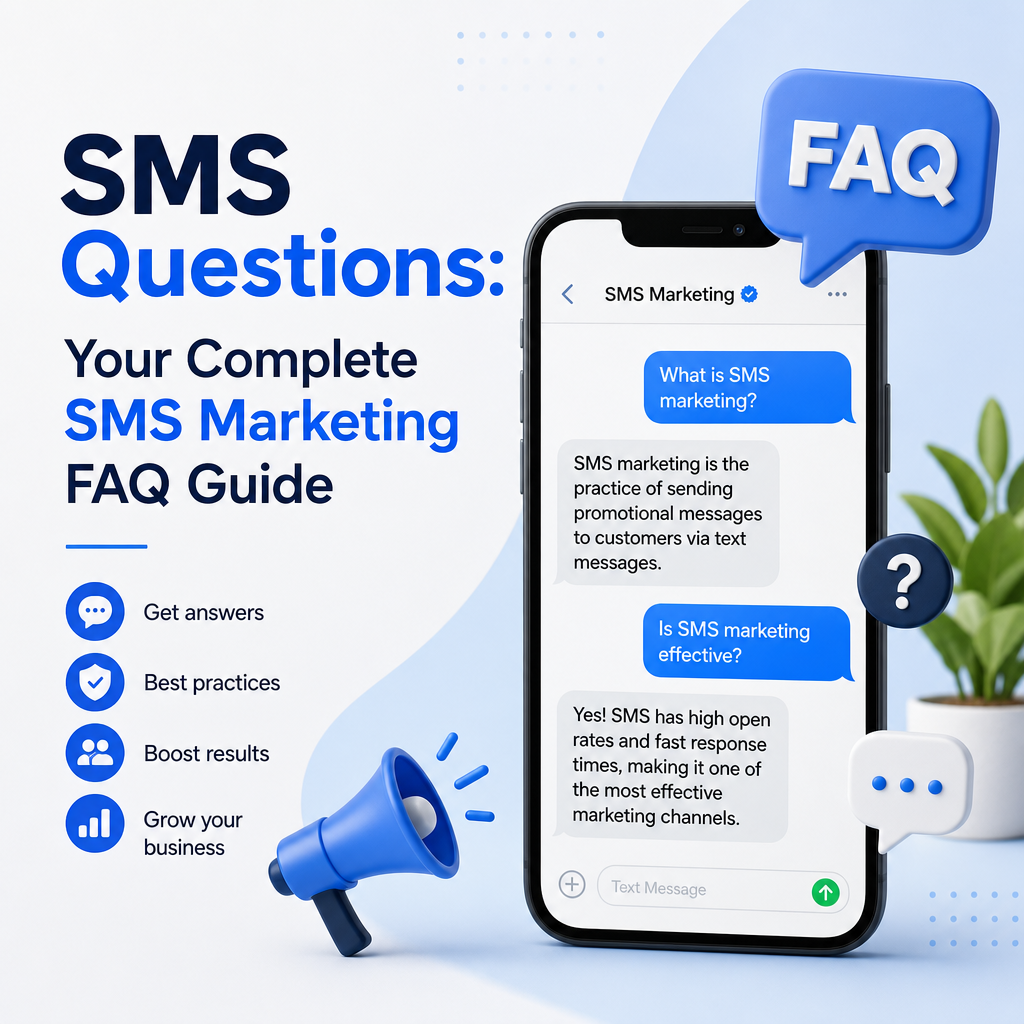
SMS marketing remains one of the most direct and effective ways to reach customers. Text messages are opened quickly, read almost immediately, and often drive fast action. But for businesses new to the channel, there are many sms questions around compliance, strategy, timing, and performance.
This FAQ-style guide covers the most common questions businesses ask about SMS marketing, with practical answers you can apply right away. Whether you are just getting started or looking to improve an existing program, these FAQs will help you understand what works and what to avoid.
What is SMS marketing?
SMS marketing is the use of text messages to promote products, share updates, send offers, or communicate with customers who have opted in to receive messages. It is typically used for:
- Promotional offers
- Flash sales
- Appointment reminders
- Order updates
- Loyalty rewards
- Event notifications
- Abandoned cart reminders
Because text messages are short, immediate, and personal, SMS marketing is often used for time-sensitive communication. It works especially well when paired with email, social media, or customer service automation.
Why is SMS marketing so effective?
One of the biggest reasons SMS marketing works is that people almost always check their text messages. Unlike email, where messages may sit unread for hours or days, texts are usually opened within minutes.
Here are a few reasons SMS performs well:
- High open rates compared to email
- Fast delivery and response times
- Direct communication with no algorithm interference
- Strong engagement for urgent or limited-time offers
- Easy to automate and personalize
For example, a clothing brand might send a text saying, “Flash sale: 20% off all jackets today only. Shop now.” Because the message is short and time-sensitive, it encourages immediate action.
What are the most common SMS questions from businesses?
Many businesses ask the same core sms questions when they begin exploring this channel. These usually fall into a few categories:
- How do I get customers to opt in?
- What kind of messages should I send?
- How often should I text subscribers?
- What legal rules do I need to follow?
- How do I measure results?
- How do I avoid annoying customers?
The answers depend on your audience and goals, but the basics are the same: get permission, send relevant messages, and make it easy for people to opt out.
Do customers have to opt in to receive marketing texts?
Yes. Customers must give consent before you send them marketing texts. This is one of the most important rules in SMS marketing.
Opt-in can happen through:
- Website sign-up forms
- Checkout checkboxes
- Keyword-based text sign-up
- Pop-ups or landing pages
- In-store sign-up forms
The key is that consent must be clear and intentional. A customer should know what they are signing up for, how often they may hear from you, and how to unsubscribe.
A simple opt-in example might say:
“Sign up for SMS updates and special offers. By joining, you agree to receive recurring automated texts. Message and data rates may apply. Reply STOP to unsubscribe.”
This protects both your business and your subscribers.
How do I build an SMS subscriber list?
Building a quality list takes time, but it is worth the effort. The best subscribers are people who genuinely want to hear from your brand.
Some effective ways to grow your list include:
Website opt-in forms
Add forms to your homepage, product pages, blog, or checkout pages. Make the value clear, such as exclusive offers or early access to sales.
Pop-ups and banners
A well-timed pop-up offering a discount or free shipping can convert visitors into SMS subscribers.
Checkout sign-up
Customers already in buying mode are often open to text updates, especially order alerts and promo offers.
Social media promotions
Use social posts to invite followers to join your SMS list for special perks.
In-store promotion
Retail businesses can collect opt-ins at the point of sale using QR codes or paper forms with mobile sign-up instructions.
To grow effectively, offer a reason to subscribe. A generic “Join our text list” message is less compelling than “Get 10% off your first order by signing up for SMS alerts.”
What kinds of messages should I send?
The best SMS campaigns are useful, timely, and concise. Not every message needs to be promotional. In fact, mixing different message types often improves engagement.
Common SMS message types include:
- Promotional texts: Sales, discounts, and product launches
- Transactional texts: Order confirmations, shipping updates, appointment reminders
- Educational texts: Tips, how-tos, or product usage guidance
- Engagement texts: Polls, surveys, or loyalty updates
- Re-engagement texts: Messages designed to win back inactive customers
For example, a skincare company might send:
- A promotional text announcing a weekend sale
- A transactional text confirming a subscription refill
- An educational text with tips for using a new serum
- A loyalty text offering points or rewards
A balanced SMS strategy helps subscribers see value beyond constant sales messages.
How often should I send SMS messages?
This is one of the most common sms questions, and the answer is: not too often. SMS is a highly personal channel, so frequency matters.
There is no universal rule, but a good starting point is:
- 1 to 4 promotional messages per month
- Transactional texts as needed
- Additional messages only when they are highly relevant
The ideal frequency depends on your audience, industry, and the type of message. A restaurant might send weekly specials, while an ecommerce brand may only text for major promotions or order updates.
A good rule of thumb is to ask: “Would this message feel useful if I received it myself?” If the answer is no, wait or revise it.
What should an effective SMS message include?
A strong SMS message is short, clear, and action-oriented. Since text messages are limited, every word matters.
An effective marketing text usually includes:
- A clear sender identity
- A concise offer or message
- A sense of urgency, if appropriate
- A link or call to action
- An opt-out option when required
Example:
“Hi Maya, your 20% off birthday reward is ready. Use code BDAY20 at checkout today. Shop now: [link] Reply STOP to opt out.”
This message works because it is personalized, relevant, and easy to understand.
Best practices for writing SMS copy
- Keep it brief
- Use plain language
- Put the most important information first
- Avoid excessive punctuation or slang
- Use one clear call to action
- Test links before sending
When is the best time to send marketing texts?
Timing can affect how well a campaign performs. Since texts are immediate, they should be sent when subscribers are most likely to act.
Generally, good times include:
- Mid-morning
- Early afternoon
- Late afternoon before the evening rush
Avoid sending texts too early in the morning, too late at night, or during unusual hours unless the message is truly urgent and appropriate.
The best time also depends on your audience. For example:
- A restaurant may perform well with lunch-time texts
- A fitness brand may see stronger engagement in the morning
- An ecommerce store may do well in the evening when people browse online
Test different send times to see what works best for your list.
How do I personalize SMS marketing?
Personalization helps texts feel more relevant and less like mass marketing. Even simple details can improve response rates.
Ways to personalize SMS include:
- Using the customer’s first name
- Referencing past purchases
- Sending birthday or anniversary offers
- Tailoring offers based on location or behavior
- Using segmentation to target specific interests
For example, a pet supply store might send one message to dog owners and a different one to cat owners. A clothing brand could segment by gender, purchase history, or seasonal preferences.
Personalization makes your SMS program feel more helpful and less generic.
How do I measure SMS marketing success?
To understand whether your SMS campaigns are working, track the right metrics. Common performance indicators include:
- Opt-in rate
- Delivery rate
- Open rate
- Click-through rate
- Conversion rate
- Unsubscribe rate
- Revenue per message
- Return on investment
If your goal is sales, look at conversions and revenue. If your goal is engagement, pay attention to click-throughs and responses. If your unsubscribe rate rises, your message frequency or relevance may need adjustment.
For example, a campaign might have a high open rate but low clicks. That could mean the message was noticed, but the offer or call to action was not strong enough.
How does SMS compare to email marketing?
SMS and email each have strengths, and the best marketers often use both together.
SMS advantages
- Faster delivery and attention
- Higher open rates
- Better for urgent offers
- More direct and personal
Email advantages
- More space for visuals and detail
- Better for longer content
- Ideal for newsletters and storytelling
- Often better for building deeper brand education
A smart strategy uses SMS for immediate action and email for richer content. For example, a store might email a full sale announcement and then send a short text reminder near the end of the promotion.
What are common SMS marketing mistakes?
Avoiding common mistakes can save your brand from poor results or even compliance issues.
Some of the biggest mistakes include:
- Sending messages without clear consent
- Texting too often
- Being too vague or overly promotional
- Forgetting to include an opt-out option
- Using broken links or bad timing
- Failing to segment your audience
- Sending the same message to everyone
Another mistake is treating SMS like email. Text messages should be shorter, more immediate, and more relevant. A long paragraph that works in an email may feel overwhelming in a text.
Is SMS marketing expensive?
SMS marketing can be cost-effective, especially when compared to traditional advertising channels. Pricing depends on the platform, number of messages sent, and carrier or usage fees.
Costs usually include:
- SMS software or platform fees
- Messaging volume costs
- Setup or automation fees, depending on the provider
- Possible compliance tools or integrations
Even if the per-message cost is higher than email, SMS can deliver strong ROI because of its high engagement rate. A small campaign with a strong offer can generate significant returns.
What industries benefit most from SMS marketing?
SMS marketing works well in many industries, especially those that rely on timing, repeat purchases, or customer appointments.
Industries that often benefit include:
- Ecommerce
- Retail
- Restaurants
- Beauty and wellness
- Healthcare
- Fitness
- Hospitality
- Events and entertainment
- Automotive services
For instance, a salon can use texts for reminders and rebooking offers, while a retailer can use SMS to promote a weekend sale or product drop.
Can I automate SMS campaigns?
Yes. Automation is one of the biggest advantages of SMS marketing. You can create workflows that send texts based on customer behavior or scheduled triggers.
Common automated SMS messages include:
- Welcome texts after signup
- Order confirmation messages
- Shipping updates
- Appointment reminders
- Abandoned cart messages
- Birthday offers
- Re-engagement campaigns
Automation helps your business stay responsive without requiring manual effort every time. It also ensures customers get timely messages at the right moment.
How do I keep SMS marketing from feeling intrusive?
Because text messages are personal, it is important to respect your subscribers’ attention. The best way to avoid being intrusive is to stay relevant and purposeful.
Helpful practices include:
- Sending only to opted-in users
- Limiting frequency
- Making offers valuable
- Segmenting by interest or behavior
- Avoiding repetitive sales blasts
- Allowing easy opt-out
Think of SMS as a privilege, not a right. If customers feel your messages help them save time or money, they are more likely to stay subscribed.
Conclusion
SMS marketing is powerful because it is immediate, personal, and highly engaging. But to use it well, businesses need to answer the most important sms questions around consent, timing, content, and frequency. The best SMS programs are built on permission, relevance, and clear value.
If you keep your messages concise, segment your audience, and respect customer preferences, SMS can become one of the most effective tools in your marketing mix.
