

Shopify vs WooCommerce: Which Ecommerce Platform Is Right for Your Store?
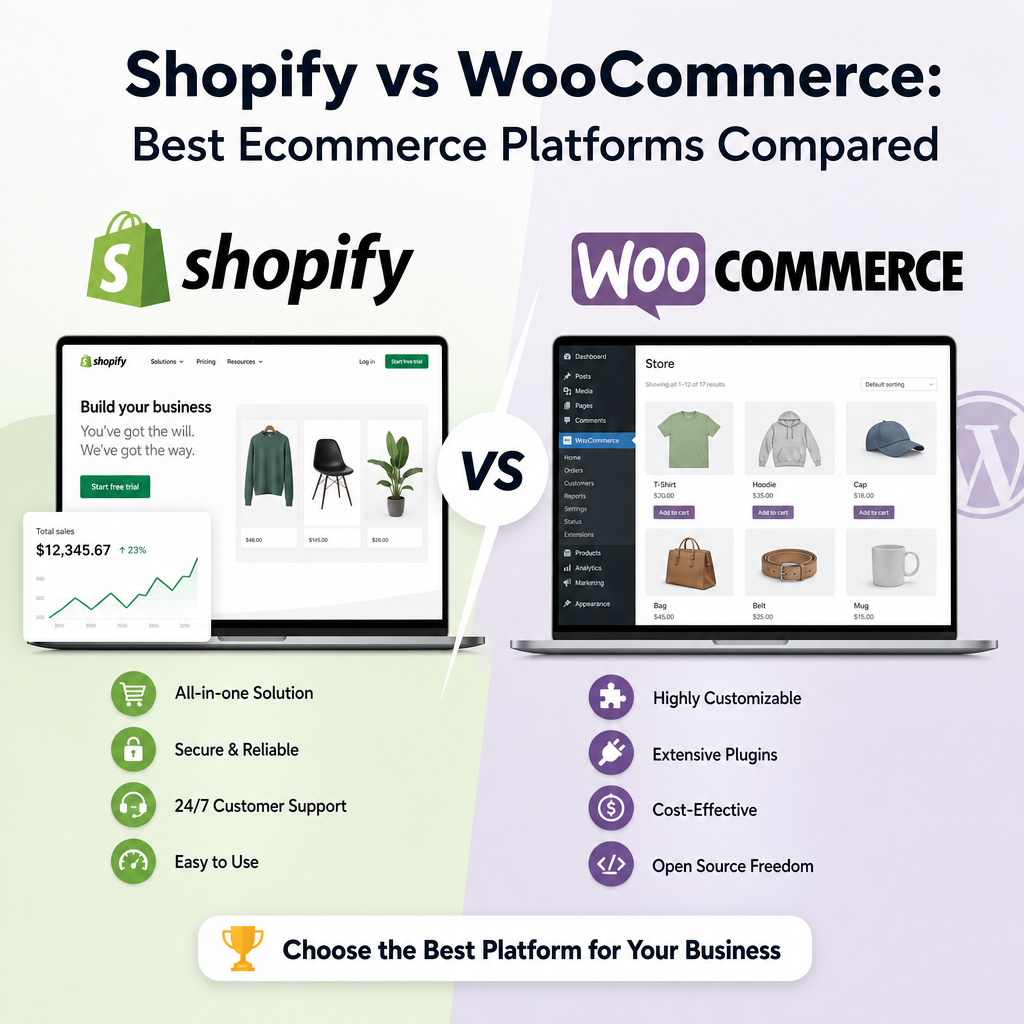
Choosing the right ecommerce platform is one of the most important decisions you will make when launching or scaling an online store. Your platform affects everything from design flexibility and checkout experience to maintenance, costs, and long-term growth. Two of the most popular options in the market are Shopify and WooCommerce.
Both are widely used by small businesses, growing brands, and established sellers, but they work in very different ways. Shopify is a hosted, all-in-one solution, while WooCommerce is a flexible WordPress plugin that lets you build a store on top of your own website. Understanding the strengths and trade-offs of each can help you choose the best fit for your business goals.
What Is Shopify?
Shopify is a fully hosted ecommerce platform that lets you build and run an online store without needing to manage web hosting, security, or software updates yourself. It is designed to simplify the selling process so store owners can focus on products, marketing, and customer service.
With Shopify, you get access to:
- Store templates and themes
- Product and inventory management
- Payment processing
- Shipping tools
- Marketing features
- App integrations for extra functionality
Because it is hosted, Shopify handles the technical side of running your store. This makes it especially appealing to entrepreneurs who want a straightforward setup and minimal maintenance.
What Is WooCommerce?
WooCommerce is an open-source ecommerce plugin built for WordPress. It transforms a WordPress website into a customizable online store. Unlike Shopify, WooCommerce is not a standalone hosted platform. Instead, it requires you to arrange your own web hosting, domain, security, and maintenance.
WooCommerce gives store owners a high degree of flexibility. Since it is built on WordPress, it benefits from the vast ecosystem of themes, plugins, and content tools already available for the world’s most popular website platform.
With WooCommerce, you can:
- Build a custom online store on WordPress
- Add products, categories, and variations
- Choose your own hosting provider
- Extend functionality with plugins
- Control the design and structure of your site
For businesses already using WordPress or wanting complete control over their store, WooCommerce is often a natural choice.
Shopify vs WooCommerce: The Core Difference
The biggest difference between Shopify and WooCommerce comes down to simplicity versus control.
- Shopify is easier to set up and maintain because it is an all-in-one service.
- WooCommerce offers more customization and ownership, but it requires more hands-on management.
This distinction affects nearly every part of the ecommerce experience, including pricing, design, scalability, and technical responsibility.
Ease of Use
Shopify: Built for Simplicity
Shopify is known for its beginner-friendly setup. You can create an account, choose a theme, add products, and start selling relatively quickly. The interface is clean, intuitive, and designed for non-technical users.
Shopify also reduces the number of decisions you need to make. Hosting, SSL certificates, and software updates are all handled for you. This convenience is a major advantage for business owners who want to launch fast.
WooCommerce: More Flexible, but More Technical
WooCommerce is not difficult to use once it is set up, but the setup process is more involved. You need:
- A WordPress website
- Hosting
- Domain configuration
- Plugin installation
- Theme setup
- Security and backup tools
For users familiar with WordPress, this may not be a problem. However, for beginners, WooCommerce can feel more technical at the start. The upside is that you gain more control over how your store works and looks.
Design and Customization
Shopify Design Options
Shopify provides a selection of professionally designed themes, both free and paid. These themes are polished, mobile-responsive, and optimized for ecommerce.
You can customize your store using Shopify’s theme editor, and advanced users can make deeper changes with code. However, Shopify’s structure is somewhat more controlled than WooCommerce’s, which means customization is powerful but still bounded by the platform’s framework.
WooCommerce Design Flexibility
WooCommerce shines when it comes to customization. Since it runs on WordPress, you can choose from thousands of themes and plugins to shape your store exactly the way you want. Developers can modify nearly every part of the customer experience.
This makes WooCommerce ideal for businesses with unique branding needs, custom product flows, or content-heavy websites. For example:
- A boutique clothing brand may want a highly visual storefront
- A B2B wholesaler may need custom pricing rules
- A membership business may want store and content access in one site
WooCommerce gives you the freedom to build these experiences without being locked into a narrow template system.
Pricing and Total Cost
Shopify Pricing
Shopify uses a subscription model. You pay a monthly fee for the platform, and depending on your plan, you get different features and transaction rates. You may also pay for:
- Premium themes
- Paid apps
- Transaction fees if you use outside payment gateways
- Additional staff accounts or advanced features on higher plans
The appeal of Shopify pricing is predictability. You know what you are paying each month, and many operational costs are included in the plan.
WooCommerce Pricing
WooCommerce itself is free, but building a store with it is not necessarily cheaper overall. You still need to pay for:
- Web hosting
- Domain registration
- SSL certificate, if not included
- Premium themes
- Paid plugins
- Developer help, if needed
This means WooCommerce can be very affordable for small stores with simple needs, but costs can rise as you add more functionality. In some cases, WooCommerce becomes more expensive than Shopify once premium extensions and technical support are factored in.
Which Is More Cost-Effective?
The answer depends on your business model.
- If you want a straightforward monthly expense and minimal maintenance, Shopify may offer better value.
- If you already have WordPress hosting or need highly specific functionality, WooCommerce may be more economical.
The right choice often depends less on the sticker price and more on the overall cost of ownership.
Features and Functionality
Both platforms are strong ecommerce platforms, but they approach functionality differently.
Shopify Features
Shopify includes many core ecommerce tools right out of the box:
- Product management
- Order tracking
- Abandoned cart recovery
- Discount codes
- Multi-channel selling
- Built-in payment processing
- Shipping calculations
Its app store also provides thousands of extensions for marketing, analytics, subscriptions, reviews, and more. Shopify’s ecosystem is streamlined, and the platform is designed to help merchants get results quickly.
WooCommerce Features
WooCommerce starts as a flexible foundation and expands through plugins. Core features include:
- Physical and digital products
- Inventory and tax management
- Shipping options
- Coupons
- Customer accounts
- Order management
Because it sits on WordPress, WooCommerce can integrate with tools for SEO, content marketing, memberships, bookings, and more. This makes it especially useful for businesses that want their store to be part of a larger website strategy.
For example, a fitness coach might use WooCommerce to sell supplements, downloadable training guides, and membership access on the same site.
SEO and Content Marketing
Shopify SEO
Shopify provides solid SEO basics, including customizable title tags, meta descriptions, image alt text, and mobile-friendly themes. It also performs well technically for most standard store needs.
However, Shopify’s blogging and content features are more limited than WordPress. If your marketing strategy relies heavily on educational content, long-form articles, or extensive content hubs, you may feel constrained.
WooCommerce and WordPress SEO Advantages
WooCommerce benefits from the SEO strength of WordPress, which is widely considered one of the best content management systems for content marketing. With the right tools, you can create:
- Blog posts
- Landing pages
- Resource libraries
- Product guides
- Internal linking structures
This gives WooCommerce an edge for businesses that want to attract organic traffic through content. A store selling home office products, for example, could publish buying guides, workspace tips, and comparison articles to drive traffic and conversions.
If SEO and content marketing are central to your strategy, WooCommerce may be the better long-term choice.
Security and Maintenance
Shopify Handles the Technical Side
One of Shopify’s biggest advantages is that it manages security, updates, and hosting for you. You do not need to worry about plugin conflicts, server maintenance, or patching vulnerabilities. This reduces risk and saves time.
For many store owners, this peace of mind is worth the monthly fee. It is especially attractive if you do not have in-house technical expertise.
WooCommerce Requires More Responsibility
With WooCommerce, you are responsible for keeping your site secure and updated. That includes:
- Updating WordPress, themes, and plugins
- Choosing reliable hosting
- Installing security tools
- Backing up your site regularly
- Managing performance optimization
This is not a downside if you want full control and have technical support available. But for merchants who want a hands-off solution, it can become a burden.
Scalability and Growth
Shopify for Fast Growth
Shopify is built to support businesses as they grow. It can handle increased traffic, larger catalogs, and more complex operations without requiring you to manage the infrastructure. For many brands, this makes scaling easier and less stressful.
Shopify is especially attractive if you expect:
- Rapid growth in orders
- Seasonal traffic spikes
- Expansion into multiple sales channels
- International selling
- A need for reliable performance at scale
WooCommerce for Custom Growth Paths
WooCommerce can also scale well, but growth depends more on the quality of your hosting and development setup. With the right infrastructure, it can support large stores and sophisticated configurations.
It is often preferred by businesses that want to scale in a highly tailored way. For example, an enterprise brand may need custom checkout logic, regional pricing, or integration with internal systems. WooCommerce can accommodate those needs more easily if you have the technical resources.
Payment Options and Checkout Experience
Shopify Payments and Simplicity
Shopify offers its own payment system, Shopify Payments, which simplifies checkout setup and reduces friction. It also supports many third-party gateways. The checkout process is optimized and trusted by customers, which can help conversion rates.
WooCommerce Payment Flexibility
WooCommerce supports many payment gateways, including major providers like PayPal, Stripe, and regional processors. Because it is open-source, you have more flexibility in choosing and configuring payment tools.
The checkout experience can be highly customized, but that also means you may need more setup work to achieve the same level of polish and consistency Shopify provides out of the box.
Support and Community
Shopify Support
Shopify offers direct customer support, documentation, and a large community of users and developers. This can be very helpful when issues arise, especially for business owners who need quick answers.
WooCommerce Support
WooCommerce has strong community support through forums, developers, agencies, and WordPress resources. However, support is more decentralized. You may need to rely on your hosting provider, plugin developers, or a WordPress expert to solve problems.
If you prefer having a single support channel, Shopify has the advantage. If you are comfortable navigating a broader ecosystem, WooCommerce offers tremendous community depth.
Which Ecommerce Platform Should You Choose?
The best choice depends on your goals, technical comfort, and growth plans.
Choose Shopify if you want:
- A fast and easy store launch
- Less technical maintenance
- Predictable monthly costs
- Reliable hosting and security
- A simple, streamlined ecommerce experience
Choose WooCommerce if you want:
- Full control over your website
- Deep customization options
- Strong content marketing and SEO capabilities
- A store built on WordPress
- Flexibility to add unique features over time
Real-World Examples
A small handmade candle business may prefer Shopify because it wants to launch quickly, avoid technical tasks, and focus on selling products through a clean storefront.
A content-driven brand, such as a home improvement blog that also sells tools and guides, may choose WooCommerce because it can combine articles, tutorials, and ecommerce in one WordPress site.
A fast-growing fashion brand might choose Shopify for its ease of scaling and dependable infrastructure.
A niche B2B supplier with custom pricing, tiered user roles, and complex product rules might favor WooCommerce because of its flexibility and open architecture.
Conclusion
When comparing Shopify vs WooCommerce, there is no universal winner. Both are excellent ecommerce platforms, but they serve different types of businesses.
Shopify is best for merchants who want simplicity, support, and a managed solution. WooCommerce is best for businesses that want control, flexibility, and the power of WordPress. The right platform is the one that matches your budget, technical comfort, and long-term strategy.
If you value ease and speed, Shopify is hard to beat. If you value customization and ownership, WooCommerce may be the better investment.
