
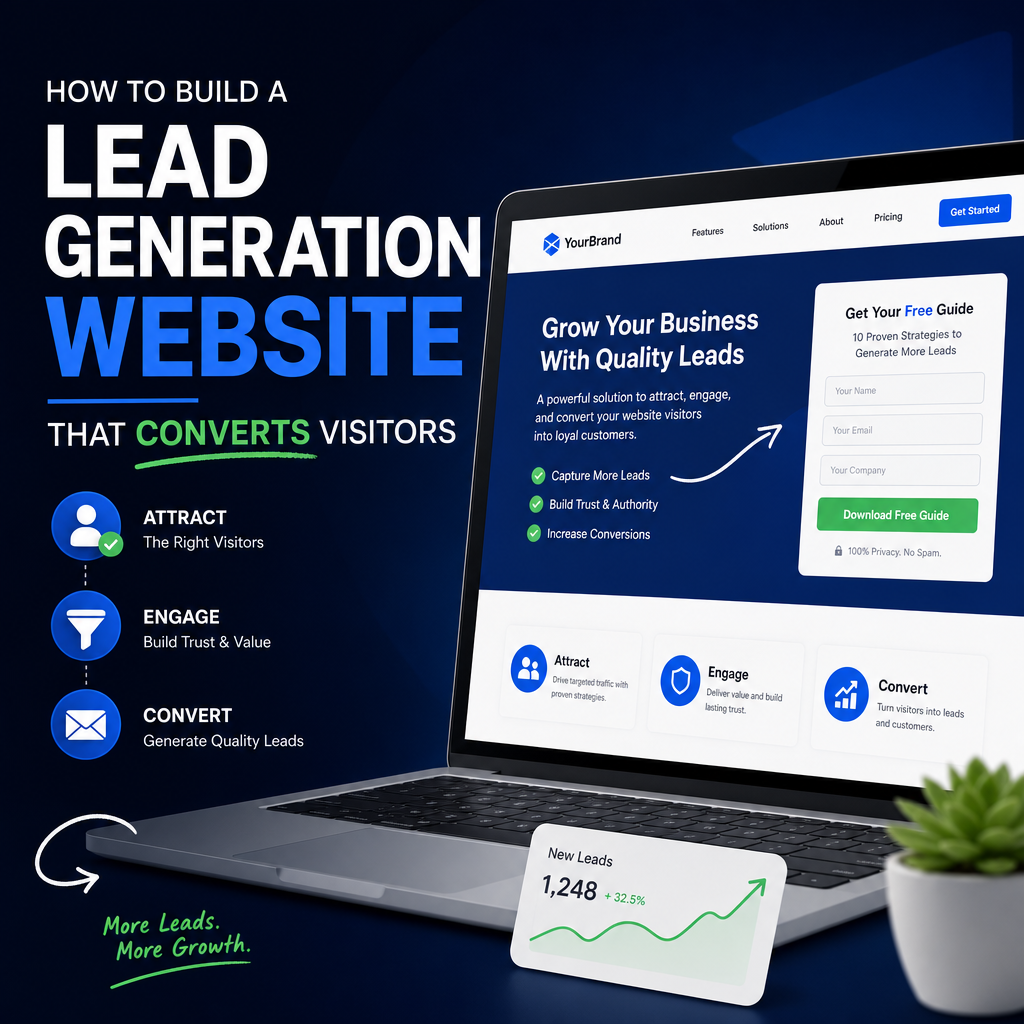
How to Build a Website That Generates Leads
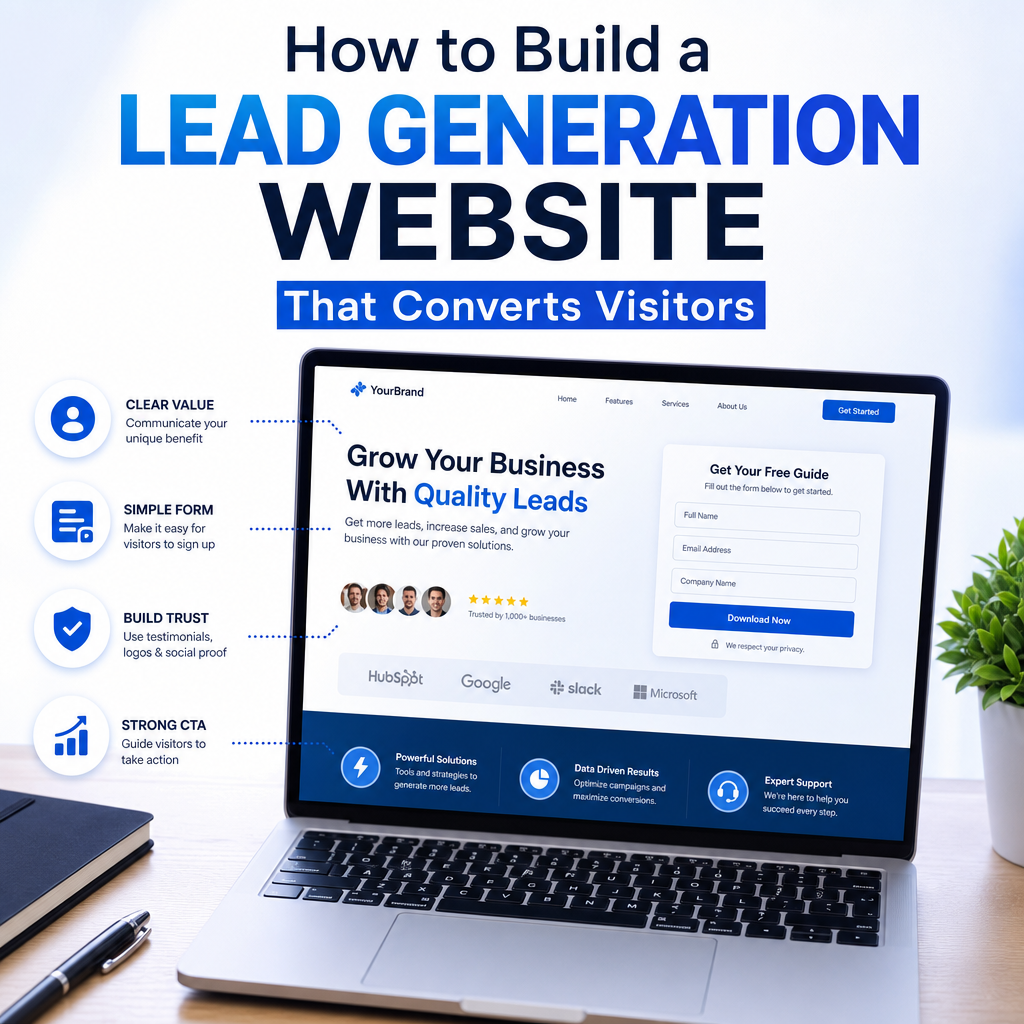
A website can do much more than look professional or explain what your business does. When built strategically, it can become one of your most reliable sales tools—a lead generation website that attracts visitors, earns trust, and turns interest into inquiries, bookings, calls, or quote requests.
The difference between a website that sits online and a website that generates leads usually comes down to structure, clarity, and user experience. Many businesses have attractive sites, but they fail to guide visitors toward the next step. A strong lead-focused website is designed with one purpose in mind: helping the right people take action.
This guide breaks down how to build a website that generates leads, from planning and messaging to calls to action, forms, and tracking.
Start With a Clear Goal
Before you design anything, define what a lead means for your business. A lead could be:
- A contact form submission
- A booked consultation
- A phone call
- A free trial sign-up
- A quote request
- A download of a guide or checklist
The goal matters because every design and content decision should support it. A law firm may want consultation calls. A home services company may want quote requests. A software company may want demo bookings or free trials.
Define Your Ideal Lead
A lead generation website works best when it speaks directly to the right audience. Ask:
- Who is the ideal customer?
- What problem are they trying to solve?
- What would make them trust your business?
- What action do you want them to take?
The more clearly you define your audience, the easier it becomes to write copy, design pages, and create offers that convert.
Build a Message That Matches Visitor Intent
Visitors arrive on your website with questions. Your job is to answer them quickly.
A lead-focused website should communicate these four things immediately:
- What you do
- Who you help
- Why you are a good choice
- What to do next
If a visitor lands on your homepage and has to scroll around to understand your offer, you may lose them. Clear messaging reduces friction and builds confidence.
Use Simple, Specific Language
Avoid vague phrases like:
- “Innovative solutions for modern businesses”
- “Helping you reach the next level”
- “We deliver excellence”
Instead, say something concrete:
- “Commercial HVAC repair for small businesses in Austin”
- “Custom Shopify websites for growing e-commerce brands”
- “Book a free 30-minute tax consultation”
Specific language helps visitors self-identify quickly. It also improves lead quality because people understand exactly what you offer.
Create a Homepage That Converts
Your homepage is often the first impression, and it should function like a guided path, not a digital brochure.
Include a Strong Hero Section
The top of the homepage should answer the most important questions fast. A strong hero section usually includes:
- A clear headline
- A short supporting sentence
- A visible call to action
- A trust-building element, such as reviews or client logos
For example:
Headline: Get More Qualified Leads With a Website Built to Convert
Subheadline: We design lead generation websites that turn traffic into calls, form submissions, and booked appointments.
CTA: Request a Free Strategy Call
This structure makes your value obvious and gives people a next step immediately.
Add Trust Signals Early
People rarely submit their contact information to a business they do not trust. Add trust signals near the top of the page and throughout the site, such as:
- Testimonials
- Case studies
- Client logos
- Ratings and reviews
- Industry certifications
- Media mentions
- Guarantees, if applicable
These elements help reduce hesitation and improve conversion rates.
Keep Navigation Simple
Too many menu items create confusion. A lead generation website should make it easy for visitors to find what matters most.
A simple navigation might include:
- Home
- Services
- About
- Case Studies
- Blog
- Contact
If a page does not help the visitor move closer to becoming a lead, it may not need to be in the main navigation.
Build Dedicated Landing Pages
One of the most effective ways to generate leads is to create dedicated landing pages for each service, product, or campaign.
Instead of sending all traffic to your homepage, direct visitors to pages built around a single offer. This works especially well for:
- Paid ads
- Email campaigns
- Seasonal promotions
- Local SEO
- Specific services
Why Landing Pages Convert Better
Landing pages perform better because they remove distractions and focus on one action. A visitor searching for “roof repair quote” should not have to browse a general company website to find the right form.
A good landing page includes:
- A clear headline
- A focused offer
- Benefits of working with you
- Social proof
- A short form
- One primary CTA
Match the Page to the Traffic Source
The message on the page should align with the ad, keyword, or link that brought the visitor there. This consistency improves trust and reduces bounce rates.
For example:
- Google Ads for “emergency dentist” should lead to an emergency dentistry page
- A Facebook ad for “free consultation” should lead to a consultation booking page
- A blog post about “best payroll software” should offer a demo or comparison guide
The more relevant the page, the more likely it is to generate leads.
Use Calls to Action Strategically
A call to action, or CTA, tells visitors what to do next. Without one, people often leave without taking action.
A lead generation website should place CTAs throughout the site, but each one should be intentional.
Examples of Strong CTAs
- Request a Quote
- Book a Free Call
- Get a Free Audit
- Download the Guide
- Schedule a Demo
- Contact Us Today
- Start Your Trial
The best CTA depends on your business model and how ready your audience is to commit. A low-friction offer works better for cold traffic, while a booking CTA may work well for visitors who are already highly interested.
Make CTAs Visible
Your CTA buttons should be easy to find and visually distinct. Use:
- Contrasting colors
- Clear wording
- Repeated placement
- Mobile-friendly button size
Avoid hiding CTAs in paragraphs or using generic text like “Submit.” The button should describe the value of taking action.
Keep Forms Short and Easy
Forms are one of the most important parts of a lead generation website. If they are too long or complicated, people may abandon them.
Ask for Only What You Need
For most businesses, a lead form should ask for the minimum information required to follow up effectively. Common fields include:
- Name
- Email address
- Phone number
- Company name
- Project details
If you ask for too much too soon, conversions can drop. You can always collect more details later in the sales process.
Use Multi-Step Forms When Needed
If your service requires more information, a multi-step form can feel less overwhelming than a long single-page form. For example, the first step might ask for name and email, followed by service preferences and budget.
This approach can improve completion rates because the process feels easier to start.
Add Microcopy That Reduces Anxiety
Short supportive text near the form can help people feel more comfortable, such as:
- “We’ll respond within one business day.”
- “Your information will never be shared.”
- “No obligation—just a quick conversation.”
These small details can remove hesitation and improve submissions.
Optimize for Mobile Users
A large share of website traffic comes from mobile devices. If your website is difficult to use on a phone, you will lose leads.
Mobile-Friendly Design Essentials
Make sure your website has:
- Responsive layouts
- Readable text without zooming
- Buttons that are easy to tap
- Short forms
- Fast load times
- Click-to-call phone numbers
Mobile users often want quick answers and immediate action. If they can’t call, fill out a form, or find key information easily, they may leave.
Prioritize Speed
Page speed affects both user experience and lead generation. A slow website frustrates visitors and reduces conversions.
To improve speed:
- Compress images
- Use caching
- Minimize unnecessary plugins
- Choose reliable hosting
- Limit heavy animations and scripts
A faster site often performs better in search engines and converts more visitors.
Use Content to Attract the Right Visitors
A lead generation website is not only about the pages visitors see when they arrive. It also needs content that attracts the right people in the first place.
Blog posts, guides, and FAQs can bring in organic traffic from search engines and establish authority in your industry.
Create Helpful, Search-Focused Content
Write content that answers questions your audience is already asking, such as:
- How much does [service] cost?
- What should I look for in a [provider]?
- How long does [process] take?
- What are common mistakes with [problem]?
These posts can bring in qualified traffic and lead readers toward a CTA.
Add Lead Magnets
A lead magnet is a valuable resource offered in exchange for contact information. Examples include:
- Checklists
- Templates
- Guides
- Calculators
- Swipe files
- Free audits
For instance, a marketing agency might offer a “Website Lead Audit Checklist,” while a financial advisor might offer a retirement planning guide.
The best lead magnets solve a specific problem and are closely related to your service. This helps attract leads who are more likely to convert later.
Build Trust With Social Proof
People want reassurance before taking action. Social proof shows that others have had a positive experience with your business.
Effective Forms of Social Proof
You can use:
- Testimonials with names and photos
- Case studies with results
- Client success metrics
- Reviews from Google or third-party platforms
- Before-and-after examples
- Short quotes from satisfied customers
For example, a landscaping company might say: “We increased quote requests by 47% in three months after launching our new site.” A business coach might share a client result such as revenue growth or time saved.
Whenever possible, use specific outcomes instead of generic praise.
Make It Easy to Contact You
Some visitors are ready to convert immediately, but only if contacting you feels simple.
Offer Multiple Contact Options
Depending on your business, you may want to include:
- Contact forms
- Phone numbers
- Email addresses
- Live chat
- Calendar booking tools
- Messaging apps
Not every visitor wants to fill out a form. Giving multiple options can help capture more leads.
Place Contact Details Where People Expect Them
Make sure contact information is visible in:
- The header
- The footer
- The contact page
- Service pages
- Landing pages
If your business relies heavily on phone calls, make the number clickable on mobile devices.
Track, Test, and Improve
A high-performing lead generation website is never truly finished. It should be monitored and improved over time.
Track the Right Metrics
Useful metrics include:
- Conversion rate
- Form completion rate
- Click-through rate on CTAs
- Bounce rate
- Time on page
- Phone call volume
- Source of leads
These numbers help you understand where visitors are dropping off and what is working well.
Test One Change at a Time
You can improve performance through simple tests, such as:
- Different headline wording
- Button color or copy
- Shorter forms
- Different CTA placement
- New testimonials
- Stronger offers
Small changes can have a big impact. If one page gets traffic but not leads, testing is often the fastest way to identify the issue.
Common Mistakes to Avoid
Even well-designed websites can fail to generate leads if they make these mistakes:
- Unclear messaging
- Too many calls to action
- Overly long forms
- Weak or missing trust signals
- Slow page speed
- Poor mobile experience
- Generic stock content
- No dedicated landing pages
- No tracking or analytics
A lead generation website should feel focused, helpful, and easy to use. If the visitor has to work too hard, the website is doing too much talking and not enough converting.
Conclusion
Building a website that generates leads is about more than design. It requires clear messaging, strategic pages, strong calls to action, simple forms, trust-building content, and ongoing optimization. When each part of the site works together, your website becomes a powerful tool for attracting and converting the right audience.
A successful lead generation website makes it easy for visitors to understand what you offer, why they should trust you, and how to take the next step. Focus on clarity, relevance, and user experience, and your website can become one of your most valuable sources of business growth.
