
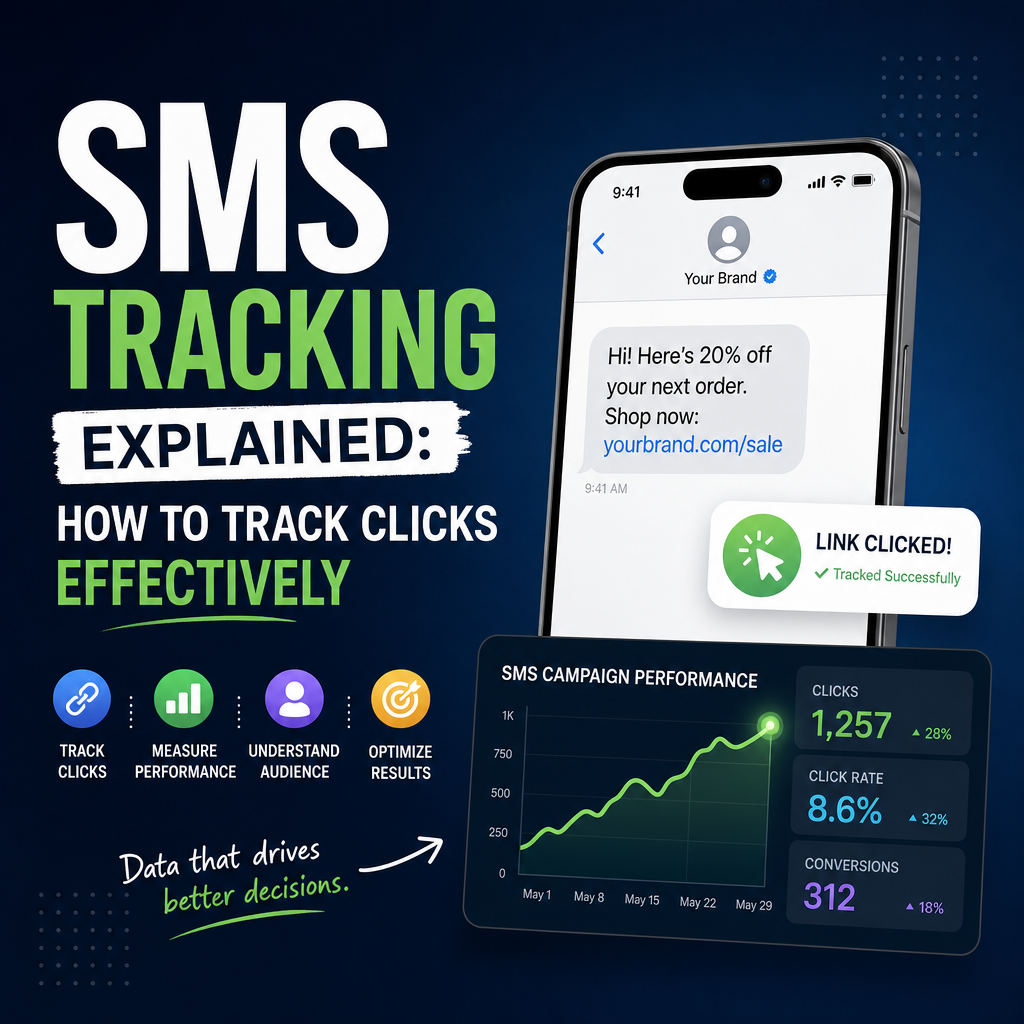
SMS Click Tracking Explained
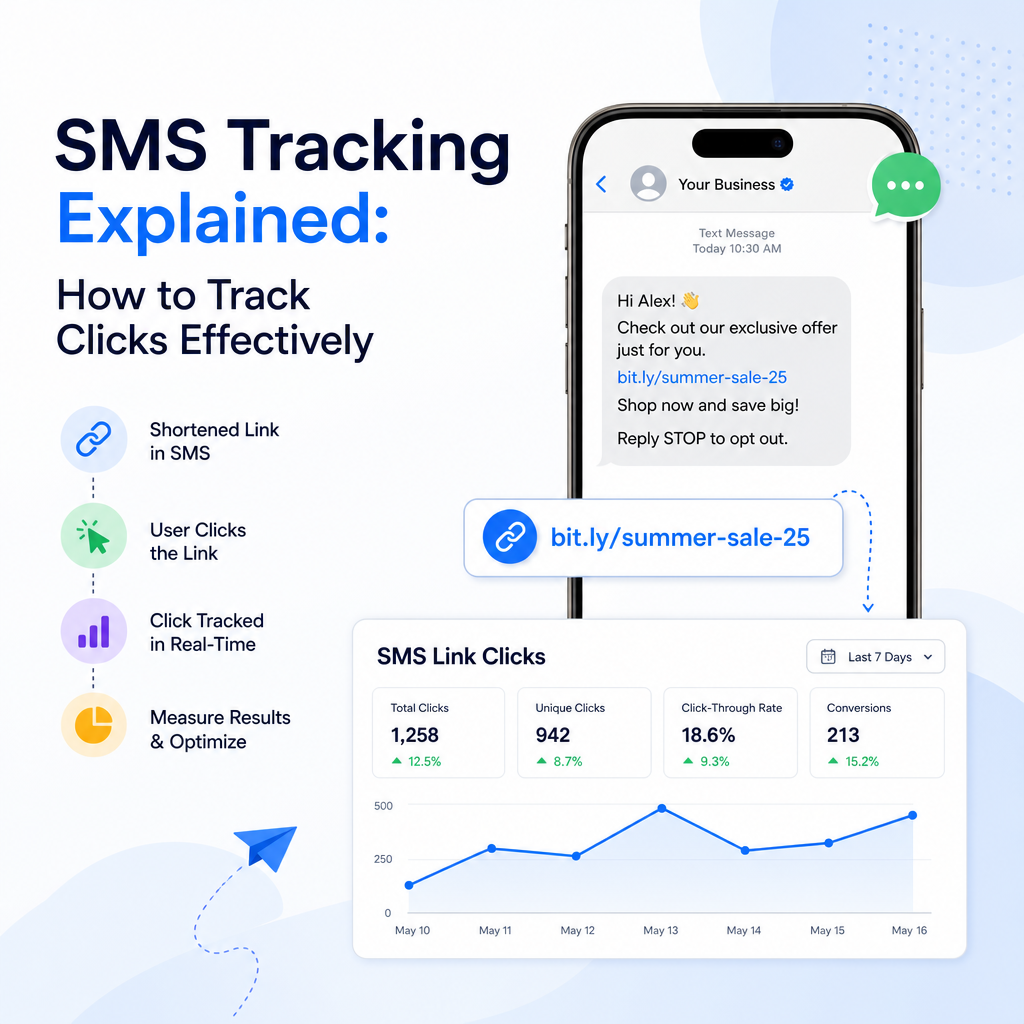
SMS marketing works because it is immediate, personal, and easy to act on. But sending a text is only half the job. To understand whether your messages are actually driving results, you need a way to measure what happens after someone taps a link. That is where SMS click tracking comes in.
SMS click tracking helps you see how many people clicked a link in your text message, which links performed best, and how those clicks connect to sales, signups, or other business goals. For marketers, this is one of the most useful tools in sms tracking because it turns a simple message into measurable data.
In this article, we will break down what SMS click tracking is, how it works, why it matters, and how to use it effectively.
What Is SMS Click Tracking?
SMS click tracking is the process of measuring when someone clicks a link included in a text message. Instead of sending a direct URL and hoping for the best, marketers often use tracked links that can record important engagement data.
At a basic level, click tracking answers questions like:
- How many recipients clicked the link?
- Which campaign generated the most clicks?
- What time of day got the best response?
- Did the clicks lead to purchases, form submissions, or downloads?
This makes sms tracking much more actionable. Rather than just knowing a message was delivered, you can see whether it inspired action.
A simple example
Imagine a clothing store sends this text:
“Flash sale: 25% off all jackets today only. Shop now: example.com/jackets”
If the store uses click tracking, it can see:
- how many people clicked the link
- how many clicks came from iPhone vs. Android
- whether the link was clicked during the first hour or later in the day
- whether the click led to a checkout
Without tracking, the business only knows the message was sent. With tracking, it knows whether the message worked.
How SMS Click Tracking Works
Although the process may look simple to the recipient, there is quite a bit happening behind the scenes.
1. A unique tracked link is created
Instead of using a standard URL, the sender uses a unique tracking link. This often redirects through a tracking system before sending the user to the final destination page.
For example:
- Original URL:
yourstore.com/sale - Tracked version:
trk.example.com/abc123
That tracking link logs the click first, then forwards the user to the landing page.
2. The system records the click
When someone taps the link, the tracking platform captures data such as:
- timestamp
- campaign name
- phone number or subscriber ID
- device type
- location estimate, depending on the system
- source channel or audience segment
This data is then stored in your analytics dashboard.
3. Performance is connected to outcomes
Good sms tracking does more than count clicks. It can connect those clicks to downstream results like:
- purchases
- account signups
- demo requests
- app installs
- coupon redemptions
This is where the real value comes in. A click is useful, but a click tied to revenue is far more powerful.
Why SMS Click Tracking Matters
Many businesses send texts because SMS has high open rates and fast response times. But open rates alone do not tell the whole story. Click tracking gives you the missing layer of insight.
It shows real engagement
A text may be read, but not acted on. Click tracking shows who actually took the next step.
For example, if 10,000 messages are delivered and 1,500 links are clicked, you know 15% of recipients engaged with the offer. That is much more meaningful than simply knowing the message landed in someone’s inbox.
It helps improve campaigns
By comparing campaigns, you can learn what works best:
- short vs. long copy
- emojis vs. plain text
- urgency-based language vs. benefit-based language
- morning sends vs. evening sends
- one clear CTA vs. multiple options
This turns sms tracking into a testing tool. Every campaign becomes a source of insight.
It supports better ROI measurement
Marketing spend is easier to justify when results are visible. If you can show that a certain campaign generated clicks, conversions, and sales, you can calculate return on investment more accurately.
It helps segment audiences
Not every subscriber behaves the same way. Some click immediately, some ignore certain offers, and some respond only to specific product categories.
Click tracking helps you segment based on behavior, such as:
- frequent clickers
- inactive subscribers
- buyers vs. browsers
- product-specific interest groups
That means future messages can be more personalized and effective.
Key Metrics in SMS Click Tracking
To get value from sms tracking, it helps to understand the most important metrics.
Click-through rate (CTR)
CTR is the percentage of recipients who clicked the link.
Formula:
CTR = (Number of clicks ÷ Number of delivered messages) × 100
Example:
If 500 people clicked out of 10,000 delivered texts, the CTR is 5%.
CTR is one of the clearest indicators of message performance.
Unique clicks
Unique clicks count each person only once, even if they tap the link multiple times.
This helps you understand how many individuals engaged with the campaign, rather than how often the same person returned.
Total clicks
Total clicks include every click, even if one person clicks more than once.
This is useful if you want to measure repeated interest, but it can exaggerate engagement if used alone.
Conversion rate
Conversion rate tracks how many people completed the desired action after clicking.
Examples of conversions include:
- buying a product
- filling out a form
- scheduling an appointment
- downloading a guide
This metric is often more important than clicks because it shows business impact.
Time to click
Time to click measures how quickly recipients respond after receiving the text.
This is especially useful in SMS because messages often generate immediate action. If most clicks happen within 10 minutes, timing is likely a major factor in performance.
Best Practices for SMS Click Tracking
Click tracking is only useful if the data is accurate and the campaign is well designed. Here are some best practices to keep in mind.
Use one clear call to action
A text message should usually focus on one primary action.
Good example:
“Get 20% off your next order today. Shop now: [tracked link]”
Less effective example:
“Check out our sale, read our blog, and follow us on social.”
Too many options can reduce clicks because the recipient does not know where to focus.
Keep the message short and direct
SMS is a quick channel. Long messages may lose attention before the user reaches the link.
Aim for:
- a clear offer
- a sense of value
- a simple CTA
- a tracked link
Make sure the landing page matches the message
If the text promises one thing and the landing page shows something else, people may leave immediately.
For example:
- Message: “50% off running shoes”
- Landing page: generic homepage
A better approach is to send users directly to the relevant page, such as the running shoes category or sale page.
Use short, clean links
Long URLs can look messy and reduce trust. Tracked links should be short and branded when possible.
A branded tracking domain often looks more professional and can improve click confidence.
Test different versions
A/B testing is one of the most valuable uses of sms tracking. Send two versions of the same campaign with one variable changed, such as:
- headline
- offer
- CTA wording
- send time
- emoji use
Then compare click performance.
For example:
- Version A: “Shop the sale now”
- Version B: “Your 20% off starts now”
Even small wording changes can create big differences in engagement.
Common Challenges With SMS Click Tracking
While SMS click tracking is powerful, there are a few challenges to be aware of.
Link shorteners and trust issues
Some users are wary of shortened or unfamiliar links. If the link looks suspicious, they may not click at all.
To reduce this concern:
- use branded domains
- keep messaging clear
- avoid excessive link shortening
- make the sender identity recognizable
Privacy and compliance
SMS marketing must comply with regulations such as opt-in requirements, consent rules, and unsubscribe instructions. Tracking should be used responsibly and in line with applicable privacy laws.
When collecting and storing data, it is important to:
- inform users appropriately
- minimize unnecessary data collection
- secure subscriber information
- respect opt-out requests
Good sms tracking should improve marketing without creating privacy risks.
Shared devices or incomplete attribution
Sometimes a phone is shared between users, or a click may not lead to a tracked conversion if cookies are blocked or attribution breaks across devices.
For example, a subscriber may click on a phone but complete the purchase on a laptop later. Without cross-device tracking, the sale might not be credited to the original text.
Clicks do not always equal interest
A click is a strong signal, but not all clicks are equally valuable. Some people click out of curiosity and bounce immediately.
That is why it is important to track the full journey:
- click
- landing page engagement
- conversion
- repeat purchase
How Businesses Use SMS Click Tracking
Different industries use SMS click tracking in different ways. Here are a few practical examples.
Retail and eCommerce
Retailers use tracked SMS links to measure the performance of:
- flash sales
- abandoned cart reminders
- back-in-stock alerts
- seasonal promotions
For instance, a store might send a back-in-stock text to 2,000 customers. If 300 click the link and 50 buy the item, the business can see which audience segment responded best.
Restaurants and food delivery
Restaurants often use sms tracking for:
- limited-time offers
- menu updates
- reservation reminders
- loyalty promotions
A lunch special text sent at 10:30 a.m. may get more clicks than the same offer sent after lunch. Tracking helps identify that timing difference.
Events and ticketing
Event organizers use tracked SMS links to measure:
- ticket sales
- reminder effectiveness
- last-minute attendance boosts
If a reminder text sends a strong percentage of clickers to a ticket page, the organizer knows the message is helping fill seats.
Service businesses
Agencies, clinics, salons, and local service providers use SMS click tracking for:
- booking pages
- consultation forms
- service offers
- review requests
A salon might send a text offering a discount on weekday appointments. Click tracking shows whether the promotion drives bookings or needs adjustment.
How to Improve Results With SMS Tracking Data
Collecting data is only useful if you act on it. Here are a few ways to use click tracking results to improve future campaigns.
Identify your best-performing offers
Look for patterns in the campaigns that get the most clicks. Are discounts better than free shipping? Do limited-time promotions outperform general announcements?
Use that information to shape future messaging.
Optimize send times
If campaigns sent in the morning get more clicks than those sent at night, adjust your schedule accordingly.
You may also discover that different audience segments respond at different times.
Refine audience segments
If some subscribers click product links frequently while others only engage with deals, you can send more relevant content to each group.
This improves engagement and reduces message fatigue.
Improve CTA wording
Sometimes a small change in language can increase clicks.
Compare examples like:
- “Shop now”
- “Claim your offer”
- “See today’s deal”
- “Reserve your spot”
The best CTA depends on your audience and goal.
Align tracking with business goals
Don’t track clicks just for the sake of it. Tie them to outcomes that matter, such as revenue, appointments, or qualified leads.
That way, sms tracking becomes a decision-making tool rather than just a reporting feature.
Conclusion
SMS click tracking gives marketers a clear picture of what happens after a text is sent. It shows who clicked, when they clicked, and how those clicks connect to real business outcomes. With the right approach, sms tracking can improve campaign performance, support A/B testing, strengthen audience segmentation, and help prove ROI.
The key is to use tracked links thoughtfully, keep messages clear, and focus on meaningful metrics like click-through rate and conversion rate. When done well, click tracking turns SMS from a simple broadcast channel into a measurable, highly optimized part of your marketing strategy.
