
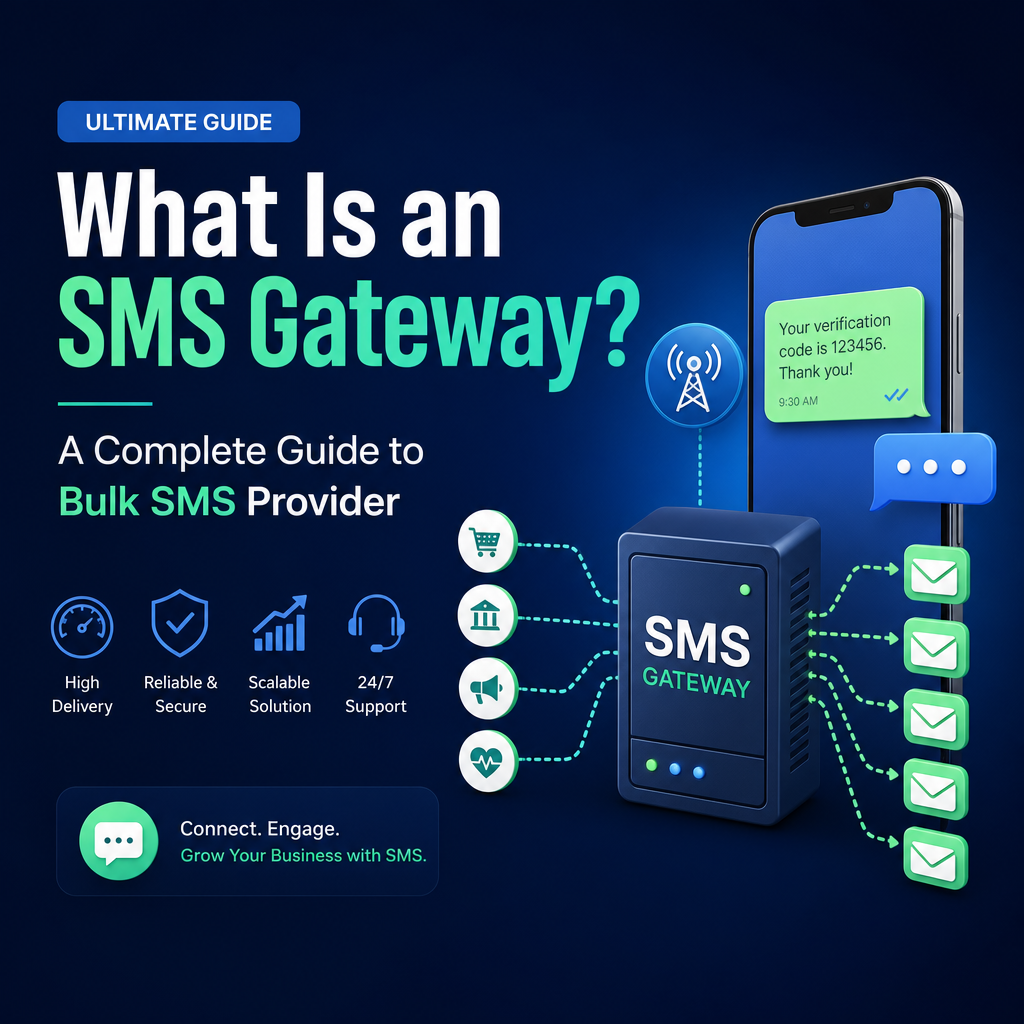
What Is an SMS Gateway?
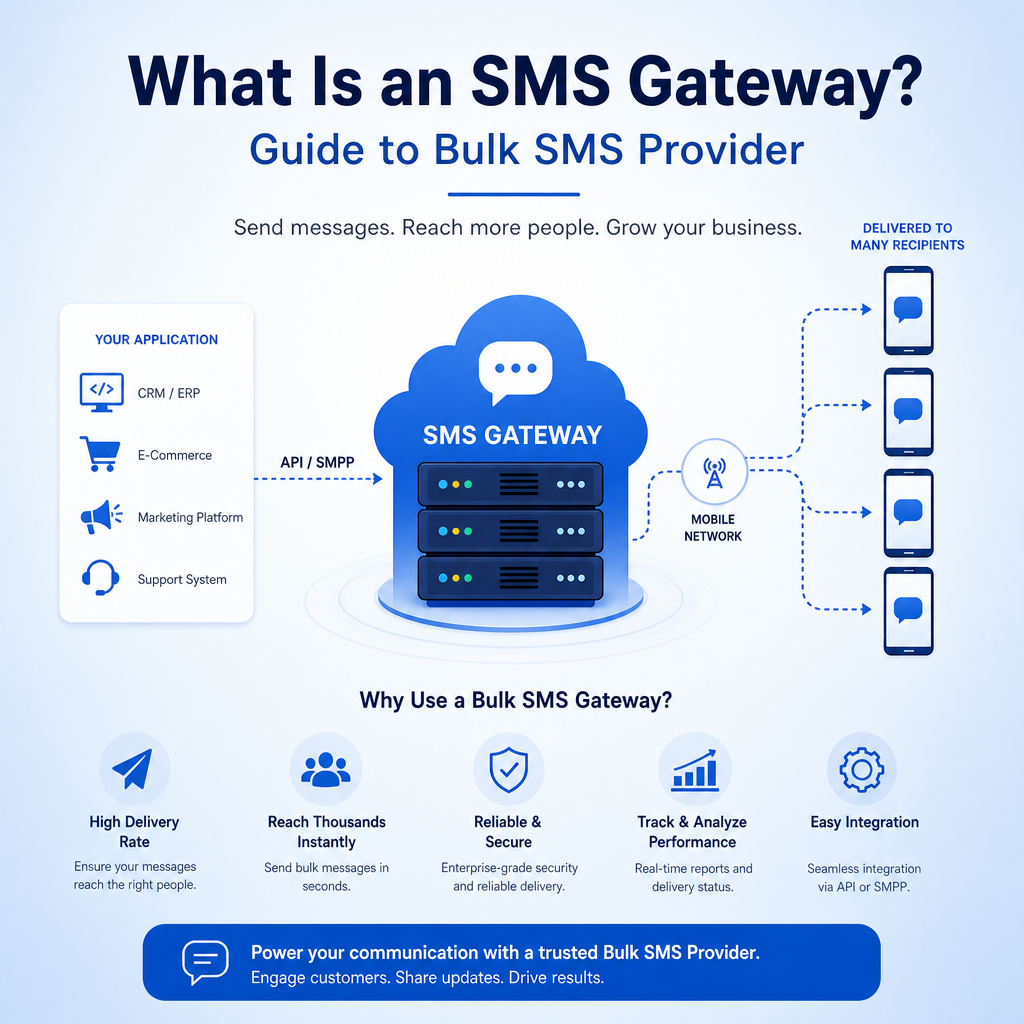
An SMS gateway is the technology that allows businesses, apps, and online platforms to send and receive text messages between software systems and mobile networks. In simple terms, it acts as a bridge between the internet and the telecom world. When a company sends a message through a website, CRM, or application, the SMS gateway takes that digital request and delivers it as a standard text message to a mobile phone.
SMS gateways are a core part of modern business communication. They power everything from appointment reminders and login verification codes to marketing alerts and customer service notifications. If you have ever received a text message from a bank, delivery service, or online store, an SMS gateway was likely involved behind the scenes.
How an SMS Gateway Works
An SMS gateway connects software to mobile carriers. It receives a message from a system, processes it, and forwards it to the appropriate phone network. The carrier then sends the SMS to the recipient’s phone.
Here is a simplified view of the process:
- A business application creates a text message.
- The message is sent to the SMS gateway using an API, web dashboard, or integration.
- The gateway checks the recipient’s phone number and message format.
- The gateway routes the message to the correct mobile carrier.
- The carrier delivers the SMS to the recipient’s device.
This process happens in seconds, which is why SMS remains one of the fastest and most reliable communication channels available.
Key Components of an SMS Gateway
Most SMS gateway systems include the following:
- API access for programmatic sending and receiving of messages
- Web interface or dashboard for manual message management
- Carrier connections to mobile networks around the world
- Delivery reports to show whether messages were successfully sent
- Inbound message handling for replies, opt-ins, and customer responses
A good sms gateway should also provide security features, scalability, and compliance tools, especially for businesses that send large volumes of text messages.
Why Businesses Use an SMS Gateway
Companies use SMS gateways because text messaging is fast, direct, and highly effective. Compared with email or social media, SMS has a much higher open rate and usually gets read within minutes.
Some of the most common business uses include:
- Transactional messages such as order confirmations and shipping updates
- Two-factor authentication and security verification codes
- Marketing campaigns and promotional alerts
- Customer support messages and automated updates
- Appointment reminders and service notifications
- Internal communication for staff alerts and scheduling
For example, a healthcare clinic may use an SMS gateway to remind patients about upcoming appointments. An e-commerce store may send order status updates. A fintech app may send one-time passwords for secure logins. In each case, the gateway ensures the message reaches the mobile network quickly and reliably.
SMS Gateway vs. Bulk SMS Provider
People often confuse an SMS gateway with a bulk sms provider, but the two are not exactly the same.
An SMS gateway is the underlying technology that handles message delivery. A bulk sms provider is the company or service that offers access to that gateway, often along with a dashboard, APIs, customer support, analytics, and compliance tools.
The Difference in Practice
- SMS gateway: the communication engine that sends messages to mobile carriers
- Bulk sms provider: the service company that gives businesses a way to use that engine at scale
Think of it this way: the gateway is the machinery, while the provider is the business that packages and sells access to the machinery.
Many providers operate their own gateway infrastructure, while others connect to third-party networks. A strong bulk sms provider typically offers:
- High message delivery rates
- Global or regional carrier coverage
- Easy integration with apps and websites
- Bulk sending capabilities
- Real-time reporting
- Two-way messaging support
If a business needs to send hundreds or thousands of messages at once, working with a bulk sms provider is often the easiest way to access gateway functionality.
Types of SMS Gateways
SMS gateways can take different forms depending on how they are used and how messages are sent.
1. HTTP/HTTPS API Gateway
This is the most common type for modern applications. Businesses send messages using an API request from their software. It is ideal for automation, customer notifications, and system integrations.
Example use cases:
- Sending password reset codes
- Alerting users about failed payments
- Triggering SMS from an e-commerce platform
2. Email-to-SMS Gateway
An email-to-SMS gateway converts an email into a text message. This can be useful for simple notifications, especially in organizations that rely heavily on email systems.
Example use cases:
- IT alerts
- Emergency notifications
- Internal team updates
3. Web-Based SMS Gateway
This type includes a dashboard or portal where users can manually enter phone numbers and message text. It is helpful for small businesses or teams that do not need deep technical integration.
Example use cases:
- Sending event reminders
- Running small promotional campaigns
- Messaging customers without using software integrations
4. SMPP Gateway
SMPP, or Short Message Peer-to-Peer, is a protocol used for sending large volumes of SMS messages efficiently. It is often used by enterprises, telecom operators, and high-volume messaging platforms.
Example use cases:
- Banking alerts
- Telecom notifications
- Large-scale marketing campaigns
Benefits of Using an SMS Gateway
An SMS gateway offers several important advantages for businesses of all sizes.
Fast Delivery
Text messages are usually delivered within seconds. This makes SMS ideal for time-sensitive communication such as OTPs, alerts, and confirmations.
High Read Rates
SMS messages are commonly opened and read very quickly. Compared with email, text is more immediate and harder to ignore.
Automation
Businesses can connect an SMS gateway to their systems and automate messages based on user actions. For example, a customer placing an order can instantly receive a confirmation message without any manual work.
Scalability
A gateway can handle anything from a handful of messages to millions, depending on the provider and setup. This makes it suitable for startups and large enterprises alike.
Two-Way Communication
Many gateways support replies. This means customers can respond to messages, confirm appointments, opt in to alerts, or ask for support.
Global Reach
A reliable gateway can connect to carriers across multiple countries, making it easier to communicate with customers around the world.
Common Use Cases for an SMS Gateway
SMS gateways are used across nearly every industry. Here are some of the most common examples.
E-Commerce
Online stores use gateways to send:
- Order confirmations
- Shipping updates
- Delivery alerts
- Cart reminders
- Promotional offers
Banking and Finance
Financial institutions use SMS for:
- Transaction alerts
- Two-factor authentication
- Fraud warnings
- Account activity notifications
Healthcare
Medical practices and clinics use SMS to:
- Confirm appointments
- Send check-in reminders
- Notify patients about schedule changes
- Share follow-up instructions
Education
Schools and universities use SMS gateways for:
- Attendance alerts
- Event updates
- Emergency announcements
- Fee reminders
Travel and Hospitality
Airlines, hotels, and travel services use them to send:
- Booking confirmations
- Check-in reminders
- Gate changes
- Reservation updates
Marketing
Businesses also use SMS for:
- Flash sales
- Coupon codes
- Loyalty program updates
- New product launches
Because text messages feel personal and immediate, they often perform well in marketing campaigns when used responsibly.
Features to Look for in an SMS Gateway
Not all SMS gateways are the same. If a business is choosing a provider, it should look for features that match its needs.
Reliable Delivery
The gateway should have strong carrier connections and high delivery success rates. This is especially important for critical messages like security codes and payment alerts.
API Documentation
A good API makes it easier for developers to integrate SMS into websites, apps, and internal systems.
Delivery Reports
Detailed reporting helps businesses see whether messages were delivered, failed, or pending.
Compliance Tools
Businesses must follow local regulations and opt-in rules. A quality provider should support compliance with messaging laws and anti-spam policies.
Scalability
The system should be able to handle growing message volumes without delays or disruptions.
Two-Way Messaging
If a business expects customer replies, two-way communication is essential.
Global and Local Coverage
Depending on the audience, the gateway should support the right countries and carriers.
Security
Sensitive messages should be protected with secure transmission, account controls, and privacy safeguards.
SMS Gateway and Compliance
Using an SMS gateway is not just about sending texts. Businesses also need to respect privacy laws and messaging regulations. This includes:
- Getting user consent before sending marketing messages
- Offering opt-out options
- Avoiding spam-like behavior
- Protecting customer data
- Following country-specific carrier rules
Failure to comply can lead to blocked messages, penalties, or damage to brand trust. A reputable bulk sms provider will usually offer tools to help with consent management, quiet hours, sender verification, and opt-out handling.
Example: How a Business Uses an SMS Gateway
Imagine an online clothing store that wants to improve customer communication.
When a customer places an order, the store’s platform sends the order details to an SMS gateway. The gateway routes a confirmation text to the buyer’s phone. When the package ships, the store sends another message with a tracking link. If the delivery is delayed, the customer receives an update right away.
The same store might also use the gateway for:
- Promotional campaigns during holiday sales
- Abandoned cart reminders
- Loyalty rewards notifications
This kind of automated messaging saves time, improves customer experience, and helps the business stay in touch without manual effort.
Is an SMS Gateway the Same as an SMS Platform?
Not exactly. An SMS gateway is the infrastructure that delivers text messages. An SMS platform may include the gateway plus additional tools such as contact lists, campaign management, analytics, templates, and scheduling features.
In other words:
- Gateway = the delivery layer
- Platform = the broader software environment built around messaging
Many companies choose a platform because it simplifies sending messages, while developers often prefer direct gateway access for more control and customization.
Conclusion
An SMS gateway is the essential bridge between software systems and mobile networks. It enables businesses to send text messages quickly, reliably, and at scale. Whether used for alerts, verification codes, customer service, or marketing, it plays a major role in modern communication.
For organizations that need to send large volumes of messages, partnering with a trusted bulk sms provider can make the process easier and more efficient. With the right gateway and provider, businesses can reach customers instantly and keep communication simple, direct, and effective.
