
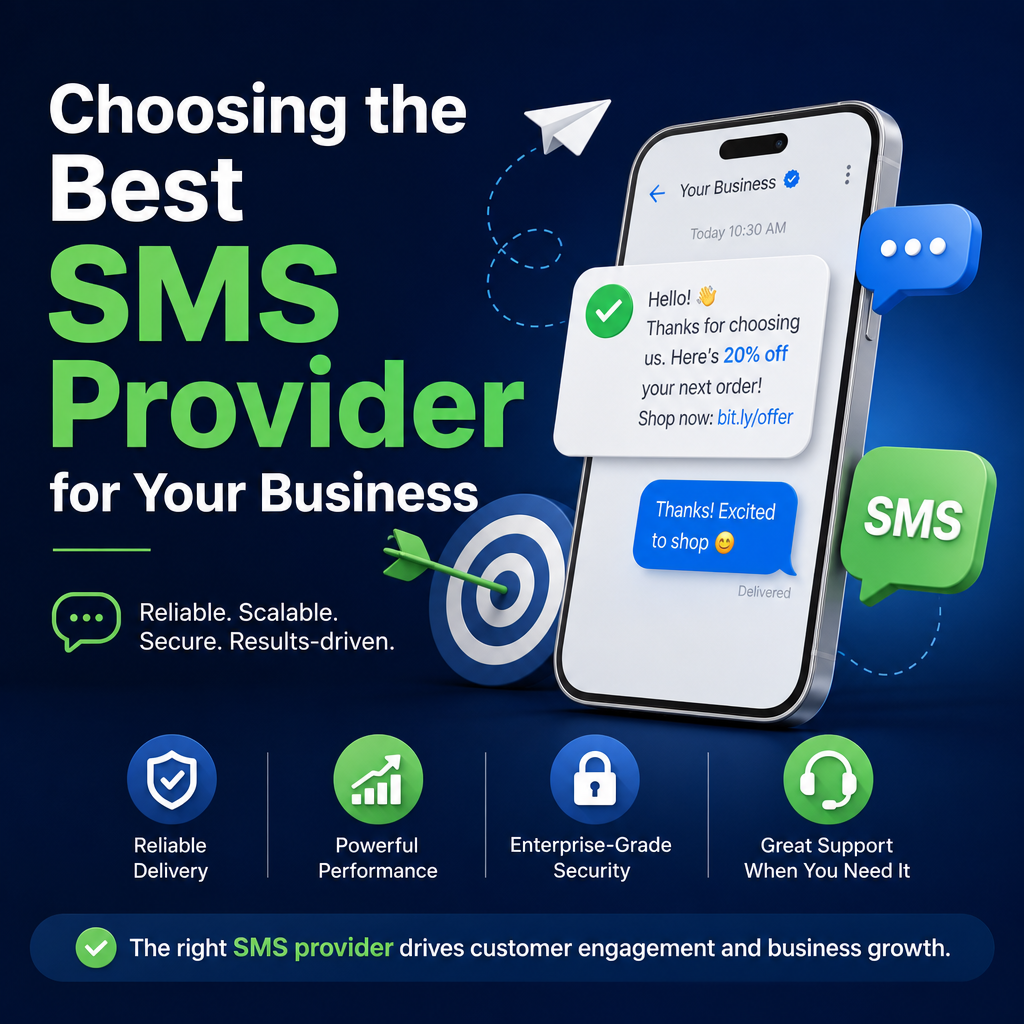
Choosing the Best SMS Gateway
Text messaging remains one of the most reliable ways to reach customers quickly. Whether you are sending appointment reminders, one-time passwords, shipping alerts, or promotional campaigns, the right messaging platform can make a major difference in deliverability, cost, and customer experience. That is why choosing the best SMS gateway is an important business decision, not just a technical one.
A strong SMS gateway helps you send messages at scale, track results, and integrate messaging into your existing systems. But with so many options available, how do you decide which one fits your needs? The answer depends on your goals, audience, budget, and the features that matter most to your team.
What Is an SMS Gateway?
An SMS gateway is a service that connects your software, website, or application to mobile networks so you can send and receive text messages. In simple terms, it acts as the bridge between your system and your customers’ phones.
Businesses use an SMS gateway for many different purposes:
- Sending transactional alerts
- Delivering verification codes
- Running marketing campaigns
- Notifying customers about order updates
- Automating reminders and follow-ups
- Enabling two-way communication
A reliable SMS provider gives you access to this infrastructure without needing to build it yourself. Instead of negotiating with mobile carriers individually, you work through a platform that handles message delivery, routing, and reporting.
Why Choosing the Right SMS Provider Matters
Not all messaging platforms are equal. The best SMS provider for a small local business may not be the best choice for a large enterprise, and a provider that is excellent for marketing may not be ideal for secure authentication messages.
Choosing carefully matters because the wrong platform can lead to:
- Delayed or failed message delivery
- Higher-than-expected fees
- Poor customer support
- Limited integrations
- Compliance problems
- Weak reporting or analytics
For example, imagine an e-commerce store that sends order tracking updates. If the provider has weak carrier relationships, customers may not receive messages in time. That could lead to support tickets, refunds, and lost trust. On the other hand, the right SMS gateway improves communication and helps the business appear more professional and responsive.
Key Factors to Consider When Choosing an SMS Gateway
1. Delivery reliability
Delivery reliability should be at the top of your list. A message that never reaches the customer is wasted money and effort. Look for a provider with strong global coverage, established carrier connections, and a clear record of high deliverability.
Ask questions such as:
- Does the provider support the countries where your audience is located?
- Does it have direct carrier relationships?
- Does it offer delivery reports and status tracking?
- Are there tools to monitor failed messages?
If you are sending time-sensitive messages, such as login codes or emergency notifications, reliability becomes even more important.
2. Pricing structure
SMS pricing can be surprisingly complex. Some providers charge per message, while others use tiered plans or monthly subscriptions. You may also encounter separate fees for short codes, long codes, toll-free numbers, or international messaging.
Before choosing a provider, check:
- Per-message rates
- Monthly minimums
- Setup fees
- Number rental costs
- Charges for inbound messages
- International rates
- Volume discounts
A low per-message price may look attractive at first, but extra fees can quickly add up. For example, a company sending 50,000 messages per month may save more with a provider offering volume pricing than with a cheaper-looking basic plan.
3. Coverage and global reach
If your business serves customers in multiple countries, international coverage is essential. Some SMS providers perform well in one region but poorly in another. The best choice is one that supports your current markets and gives you room to grow.
Consider:
- Supported countries and carriers
- Local phone number availability
- Regional regulations
- Message encoding and language support
- Sender ID options by country
For global businesses, local delivery quality matters just as much as broad coverage. Customers are more likely to trust a message that arrives from a recognizable local number or sender ID.
4. Ease of integration
An SMS gateway should fit into your existing workflow, not create extra work. If your team uses a CRM, marketing platform, help desk, or custom application, make sure the SMS provider offers the integrations you need.
Look for:
- REST APIs
- SDKs for common programming languages
- Prebuilt integrations with popular tools
- Webhooks for delivery notifications
- Clear documentation
- Sandbox or test environments
For example, a SaaS company might connect the SMS gateway to its app so users receive password reset codes automatically. A clinic might integrate messaging with its scheduling system so patients get reminders before appointments. The easier the integration, the faster your team can launch and scale campaigns.
5. Security and compliance
SMS is often used for sensitive communication, so security should never be overlooked. If you are sending authentication codes, account alerts, or personal information, you need a provider with strong protection measures.
Check whether the SMS provider offers:
- Encryption in transit
- Access controls
- Audit logs
- Two-factor authentication for account access
- Data retention controls
- Compliance support
Depending on your industry and location, you may also need to consider regulations such as GDPR, HIPAA, or TCPA. For example, marketing messages in many regions require explicit opt-in consent. A good provider should help you manage consent and avoid compliance mistakes.
6. Reporting and analytics
You cannot improve what you cannot measure. A quality SMS gateway should give you data on message status, delivery performance, click tracking, opt-outs, and campaign results.
Useful reporting features include:
- Delivered, failed, and pending message statuses
- Open or response rates, where applicable
- Link tracking
- Carrier-level error details
- Exportable reports
- Dashboard analytics
These insights can help you optimize campaigns over time. For instance, if delivery rates are lower in one country or carrier network, you can investigate and adjust your sending approach.
7. Support and service quality
Even the best platform can run into problems. When that happens, support quality becomes crucial. If your team depends on SMS for critical workflows, slow or unhelpful support can be costly.
Look for providers that offer:
- 24/7 support
- Live chat, email, or phone support
- Technical documentation
- Dedicated account management for larger plans
- Fast response times
- Clear troubleshooting resources
A business sending order confirmations during holiday sales cannot afford to wait days for help. Good support can prevent small issues from becoming major disruptions.
8. Scalability
Your SMS needs today may be very different from your needs next year. The provider you choose should be able to grow with you.
Think about:
- Message volume limits
- API throughput
- Campaign scheduling tools
- Multiple user accounts
- Team permissions
- Enterprise-level features
For example, a startup may begin by sending only a few thousand texts per month, but as it grows, it may need higher throughput and more advanced automation. Choosing a scalable SMS provider prevents the need to switch platforms later.
Types of SMS Use Cases and What to Prioritize
Different use cases require different strengths. Here is how to think about the right gateway for your needs.
Transactional messaging
Transactional messages include things like password resets, order updates, and booking confirmations. For these use cases, prioritize:
- High deliverability
- Fast sending speed
- Reliable API
- Security features
- Uptime guarantees
A message that arrives late may be useless, especially if it is a verification code or delivery alert.
Marketing campaigns
If you are using SMS for promotions, discounts, or announcements, focus on:
- Segmentation tools
- Opt-in management
- Personalization features
- Scheduling and automation
- Reporting and conversion tracking
A retail brand, for example, might send flash sale alerts to different customer groups based on purchase history or location. The right SMS provider should make that easy.
Customer service and two-way messaging
For support and engagement, choose a gateway with:
- Two-way messaging
- Shared inboxes
- Team collaboration tools
- Conversation history
- Smart routing or automation
This can be especially useful for businesses like salons, repair services, or healthcare offices that need to answer questions and schedule appointments by text.
Common Mistakes to Avoid
When evaluating SMS gateways, businesses often make avoidable mistakes. Here are some of the biggest ones.
Choosing based on price alone
Price matters, but the cheapest option is not always the most cost-effective. Poor deliverability or weak support can cost more in the long run than paying a slightly higher rate for a dependable service.
Ignoring hidden fees
Always read the pricing details carefully. Setup costs, inbound message fees, number rental charges, and international surcharges can significantly affect your monthly bill.
Overlooking compliance
Marketing texts and customer notifications are subject to laws and carrier rules. Failing to manage consent, opt-outs, or sender requirements can lead to penalties and blocked messages.
Forgetting about integration needs
A provider may look great on paper but still fail if it does not connect to your software stack. Make sure it works with your CRM, ecommerce platform, or application before committing.
Not testing before scaling
Always test message delivery, speed, and formatting before rolling out a large campaign. A simple test can reveal issues with encoding, sender IDs, or carrier filtering.
A Simple Framework for Comparing SMS Providers
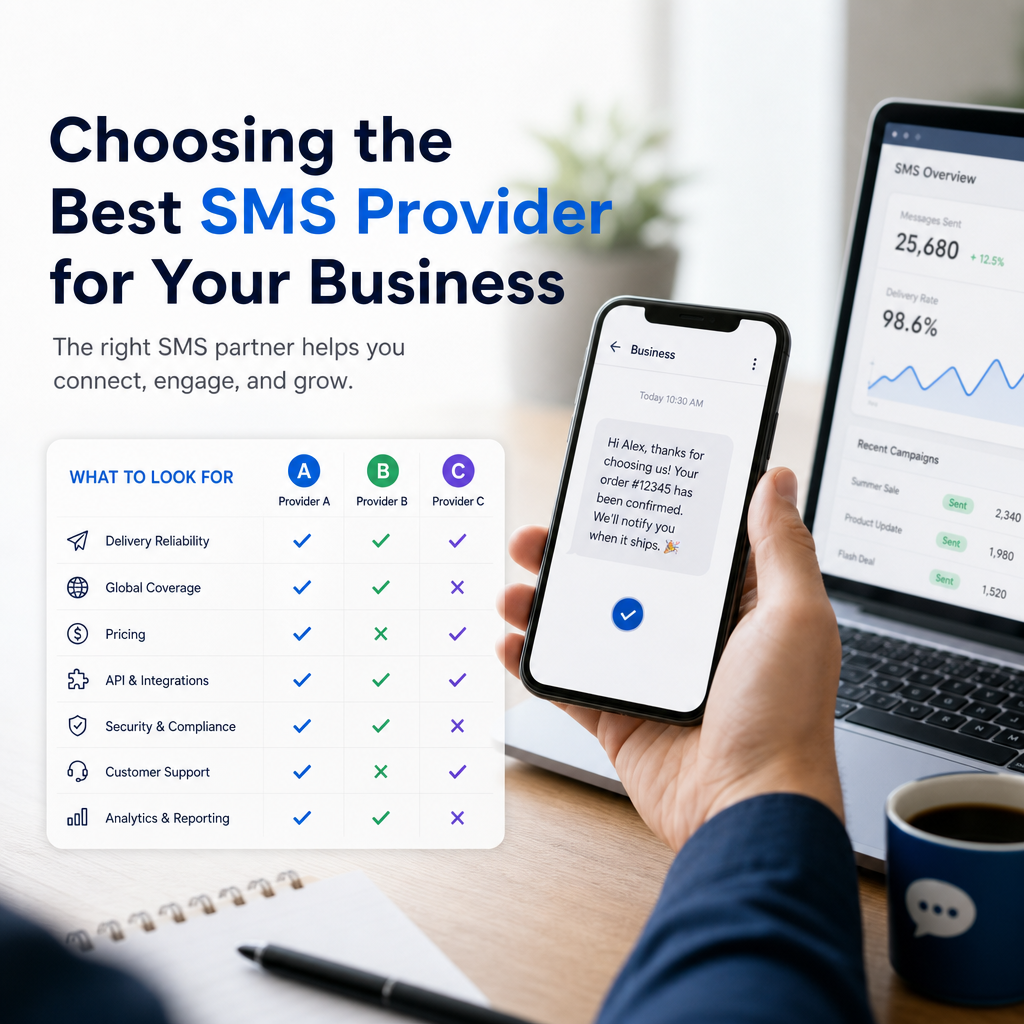
If you are comparing multiple platforms, use a checklist to evaluate them consistently. Score each SMS provider based on the following:
- Delivery reliability
- Pricing transparency
- International support
- API and integration quality
- Security and compliance
- Reporting tools
- Customer support
- Scalability
You can assign each category a rating from 1 to 5. For example:
- A healthcare business may score compliance and reliability highest.
- A marketing team may prioritize segmentation, automation, and analytics.
- A startup developer team may focus on API quality and documentation.
This structured approach makes it easier to compare options objectively rather than choosing based on brand name or marketing claims.
Example: Picking the Right SMS Gateway for Different Businesses
Small local business
A small dental office might need appointment reminders and two-way responses. For this business, ease of use, reliability, and simple pricing matter more than advanced enterprise features.
Ecommerce store
An online store may send order updates, shipping notifications, and discount messages. It should choose an SMS provider with strong automation, integrations with ecommerce platforms, and clear reporting.
SaaS company
A software company may need verification codes, alerts, and in-app notifications. Security, speed, API documentation, and scalability will be key priorities.
Enterprise organization
A larger company may require global coverage, dedicated support, compliance tools, and high throughput. In this case, the best SMS gateway is likely one that offers enterprise-grade infrastructure and flexible configuration.
These examples show that the “best” provider depends on the business problem you are solving.
Final Thoughts on Choosing the Best SMS Gateway
Choosing the best SMS gateway is about balancing reliability, cost, features, and long-term fit. The right platform should deliver messages quickly, integrate smoothly with your systems, support your compliance needs, and grow with your business.
Before making a decision, define your main use case, test several providers, and compare the full pricing structure rather than just the headline rate. A thoughtful choice now can save time, reduce costs, and improve customer communication for years to come.
In the end, the best SMS provider is the one that helps you send messages confidently, efficiently, and at scale.
