
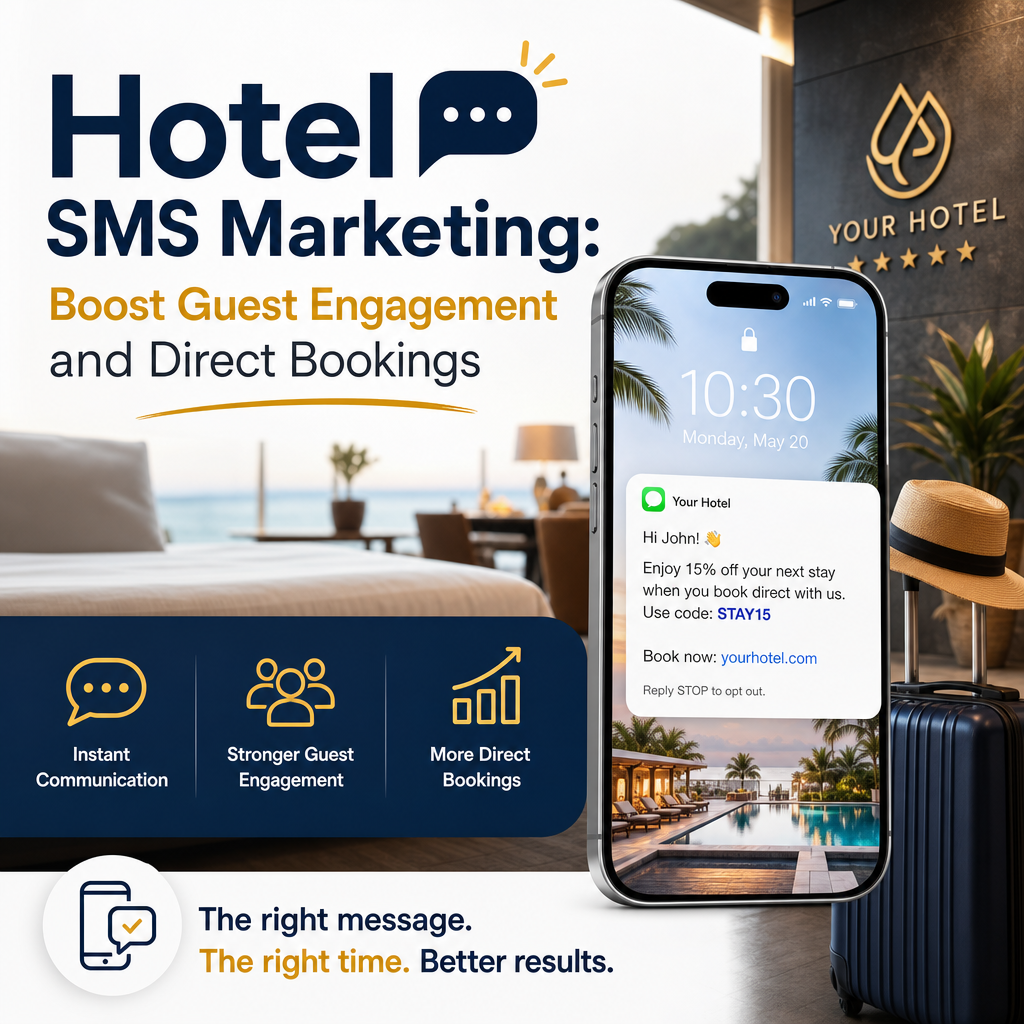
SMS Marketing for Hotels: A Practical Guide to Better Guest Communication
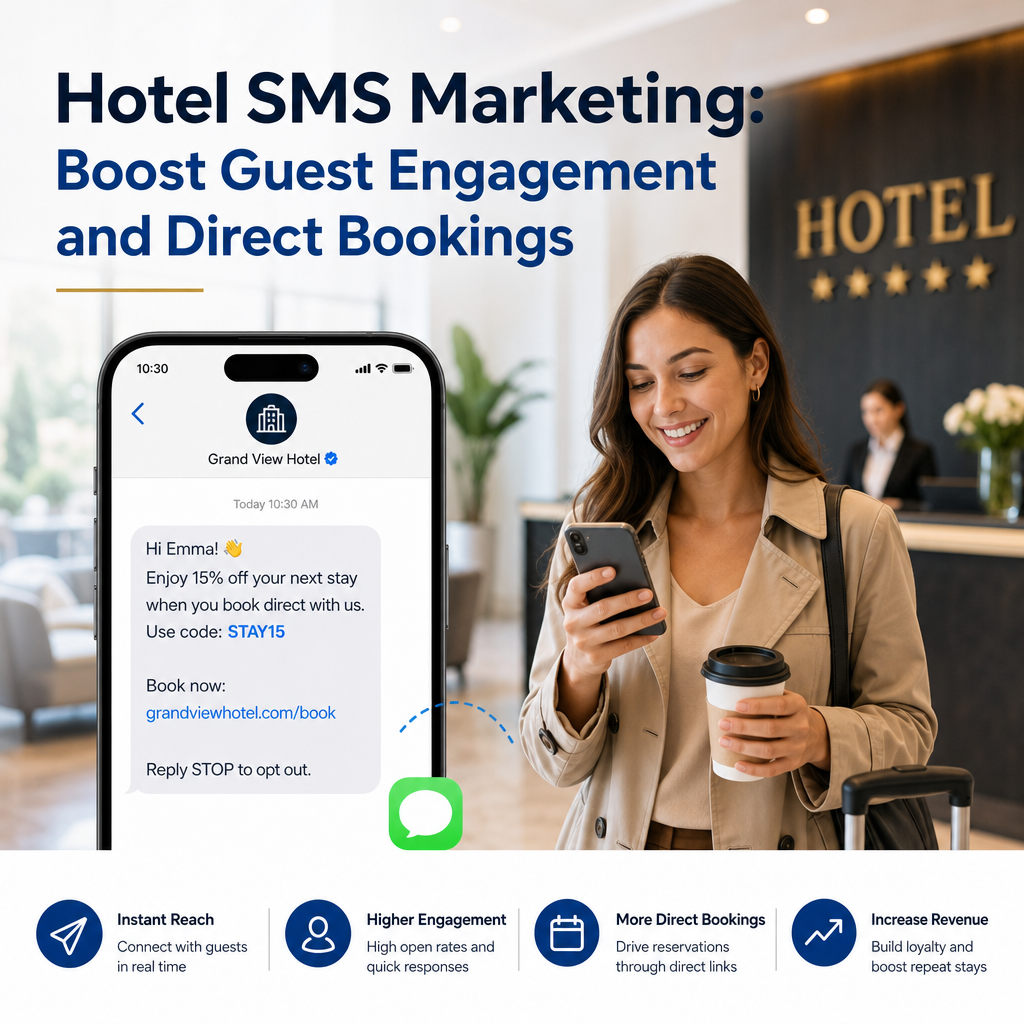
In hospitality, timing and convenience matter. Guests want quick answers, easy check-in, timely updates, and a smooth stay from start to finish. That is exactly why hotel sms marketing has become such a valuable channel for modern hotels.
Unlike email, which may sit unread for hours, text messages are usually opened within minutes. This makes SMS a powerful way to reach guests with important information, promotional offers, and service updates. When used well, SMS helps hotels improve guest satisfaction, increase direct bookings, and drive more revenue without overwhelming the customer.
This guide explains what hotel SMS marketing is, why it works, and how to use it effectively across the guest journey.
What Is Hotel SMS Marketing?
Hotel SMS marketing is the use of text messages to communicate with guests, leads, and past customers. These messages can be promotional, transactional, or service-related.
Common uses include:
- Confirming bookings
- Sending check-in and check-out reminders
- Sharing room upgrade offers
- Promoting on-property dining or spa services
- Requesting feedback after a stay
- Sending special offers to past guests
A strong hotel SMS strategy is not just about sending promotions. It is about delivering useful, timely information that improves the guest experience.
Why SMS Works So Well for Hotels
Hotels operate in a fast-moving environment where guest needs can change quickly. SMS fits this setting because it is immediate, personal, and simple.
High open rates
Text messages are often read almost instantly. That means urgent or time-sensitive updates are much more likely to be noticed than emails or app notifications.
Direct communication
Guests do not need to log in, open an app, or search through an inbox. A text message appears directly on the device they use most.
Better engagement
Because SMS is short and easy to read, guests are more likely to respond to offers, reminders, and service prompts.
Convenient for travelers
Travelers are often on the move. They may be checking flights, navigating a new city, or preparing for arrival. SMS gives hotels a simple way to stay in touch without adding friction.
Supports both service and sales
Hotel SMS marketing can help with operational communication and also generate revenue. That makes it more versatile than many other channels.
Best Uses of Hotel SMS Marketing
To get the most value from SMS, hotels should use it across the guest journey, from pre-arrival to post-stay follow-up.
1. Booking confirmations
A booking confirmation text reassures guests that their reservation is secure. It can include:
- Reservation number
- Check-in and check-out dates
- Hotel address
- Contact number
- Link to manage the booking
Example:
Thank you for booking with Skyline Hotel. Your reservation is confirmed for June 12–15. Check-in is from 3 PM. Reply HELP for assistance or view your booking here: [link]
2. Pre-arrival reminders
A day or two before arrival, a text reminder can help guests prepare for their trip. This is also a great moment to share useful information such as parking details, directions, or early check-in options.
Example:
We look forward to welcoming you tomorrow at Riverside Suites. Check-in begins at 3 PM. Parking details and directions: [link]
3. Check-in and check-out notifications
SMS can reduce front desk confusion and make arrival smoother. Guests appreciate reminders about check-in time, mobile check-in options, and late check-out availability.
Example:
Your room is ready at Harbor View Hotel. Check-in starts at 3 PM. Need a late check-out? Reply to this message for availability.
4. Upsell and cross-sell offers
Hotel sms marketing is ideal for offering upgrades and add-ons before or during a stay. Since messages are short, they work best for simple offers with clear value.
Examples include:
- Room upgrades
- Breakfast packages
- Spa appointments
- Airport transfers
- Dining reservations
- Late check-out
Example:
Make your stay even better with a premium room upgrade for just $30 more per night. Reply UPGRADE to learn more.
5. On-property service updates
During a stay, SMS can help guests access services more easily. Hotels can use it to share spa hours, restaurant reservations, pool closures, or event reminders.
This keeps communication efficient and reduces the need for guests to call the front desk.
6. Guest feedback requests
After check-out, a short text message can encourage guests to leave a review or complete a survey. Since the experience is still fresh, response rates are often better than with later requests.
Example:
Thank you for staying with us at Lakefront Hotel. We’d love your feedback. Please take a 2-minute survey here: [link]
7. Promotional campaigns
Hotels can use SMS to promote seasonal packages, weekend deals, holiday offers, and last-minute discounts to past guests or subscribers.
Because messages are short and immediate, they work especially well for flash sales and time-sensitive promotions.
Example:
Escape for the weekend and save 20% on stays this month at City Central Hotel. Book by Friday: [link]
How to Build an Effective Hotel SMS Marketing Strategy
Sending texts is easy. Sending the right texts to the right guests at the right time takes more planning. A thoughtful strategy can make hotel sms marketing much more effective.
Build a permission-based list
Always collect phone numbers legally and ethically. Guests should knowingly opt in to receive text messages. This protects your hotel from compliance issues and helps ensure the audience is receptive.
Ways to build opt-in lists include:
- Booking forms
- Front desk sign-up prompts
- Wi-Fi login pages
- Newsletter subscriptions
- Loyalty program enrollment
Make the value of subscribing clear. Tell guests they will receive booking updates, special offers, or helpful stay information.
Segment your audience
Not every guest should receive the same message. Segmentation helps you send relevant texts based on guest type, behavior, or travel purpose.
Common segments include:
- First-time guests
- Repeat guests
- Business travelers
- Leisure travelers
- Families
- Loyalty members
- Event attendees
For example, business travelers may respond better to early check-in offers and quiet workspace promotions, while families may appreciate messages about pool hours or nearby attractions.
Keep messages short and useful
SMS works because it is concise. Avoid long paragraphs or overly promotional language. Focus on one clear message and one action.
A good text should include:
- A clear purpose
- A relevant offer or update
- A call to action
- A short link if needed
Use timing wisely
Timing can make or break a text campaign. A message sent too early may be forgotten, while one sent too late may feel unhelpful.
Examples of good timing:
- Confirmation immediately after booking
- Reminder 24 to 48 hours before arrival
- Upsell offer a few days before check-in
- Feedback request within 24 hours after departure
- Promotional campaign at the start of a booking window
Personalize when possible
A guest is more likely to respond to a message that feels relevant. Personalization can include the guest’s first name, stay dates, room type, or previous preferences.
Example:
Hi Sarah, your ocean-view room at Palm Bay Resort is confirmed for next weekend. Want to add breakfast for $15 per day? Reply YES.
Even small details can make the message feel more helpful and less generic.
SMS Marketing Tips for Hotels That Improve Results
To make the most of hotel sms marketing, follow a few practical best practices.
1. Focus on value, not volume
Text messages should feel useful. If guests receive too many texts, they may opt out. Send only when the message provides clear value.
2. Include a strong call to action
Every SMS should tell the guest what to do next. Examples:
- Reply YES
- Click to book
- Confirm your arrival time
- Complete your survey
- View upgrade options
3. Make it easy to opt out
Guests should always have a clear way to unsubscribe. This is both a legal requirement in many regions and a best practice for trust.
4. Test different messages
Try variations of wording, offers, or timing to see what performs best. For example, compare two subject lines or two different upgrade offers. Over time, testing helps improve open rates and conversions.
5. Coordinate with other channels
SMS works best as part of a broader communication plan. It should complement email, website messaging, app notifications, and front desk communication rather than replace them entirely.
For example, you might use:
- Email for detailed pre-arrival information
- SMS for a same-day reminder
- Front desk for in-person service
- Post-stay email for a longer survey
Compliance and Guest Privacy
Because SMS is a direct and personal channel, hotels need to be careful about privacy and compliance.
Important principles include:
- Obtain explicit consent before sending marketing texts
- Clearly identify the hotel sender
- Offer an easy opt-out method
- Avoid sending messages at inappropriate times
- Protect guest data and phone numbers securely
Rules can vary by country and region, so hotel teams should understand the legal requirements where they operate. Good compliance is not only about avoiding penalties. It also builds trust with guests.
Common Mistakes to Avoid
Even well-intentioned SMS campaigns can fail if they are poorly executed. Here are a few common mistakes to avoid.
Too many messages
If guests feel spammed, they will stop reading or unsubscribe. Keep your messaging frequency reasonable.
Messages that are too generic
A text that sounds like a mass blast is less effective than one that feels timely and specific.
Weak calls to action
If guests do not know what to do next, the message loses its value. Make the next step obvious.
Poor timing
A late-night promotional text or a last-minute reminder can feel intrusive. Timing should respect the guest experience.
No measurement
If you do not track results, you will not know what is working. Measure click-throughs, replies, opt-outs, and conversion rates.
Measuring the Success of Hotel SMS Marketing
To improve performance, hotels should track key metrics. The most useful ones depend on the campaign type, but these are a good starting point:
- Delivery rate
- Open or read rate
- Click-through rate
- Reply rate
- Booking conversion rate
- Upsell revenue
- Survey completion rate
- Opt-out rate
For example, if an upgrade campaign gets high clicks but few purchases, the offer may need to be adjusted. If a feedback request gets low responses, the timing or wording may need improvement.
Tracking these metrics helps hotels refine their hotel sms marketing strategy over time.
Real-World Example: A Better Guest Journey
Imagine a guest books a two-night stay at a boutique hotel.
- Immediately after booking, they receive a confirmation text.
- Two days before arrival, they get a message with parking instructions and a link to mobile check-in.
- On arrival day, they receive a text saying their room is ready.
- During the stay, the hotel sends an offer for spa appointments and dinner reservations.
- After checkout, the guest gets a survey request and a thank-you message with a return-guest discount.
This sequence is simple, helpful, and revenue-friendly. It keeps communication relevant without feeling excessive. That is the power of smart hotel sms marketing.
Conclusion
SMS is one of the most effective communication tools available to hotels today. It is fast, direct, and highly personal, making it ideal for confirmations, reminders, upsells, service updates, and post-stay follow-up.
When used strategically, hotel sms marketing can improve guest satisfaction, increase direct revenue, and create a smoother experience from booking to checkout. The key is to focus on value, timing, and relevance. Send only the messages that matter, and guests are far more likely to respond positively.
For hotels that want stronger relationships and better results, SMS is not just a marketing channel. It is a practical way to deliver better hospitality.
