
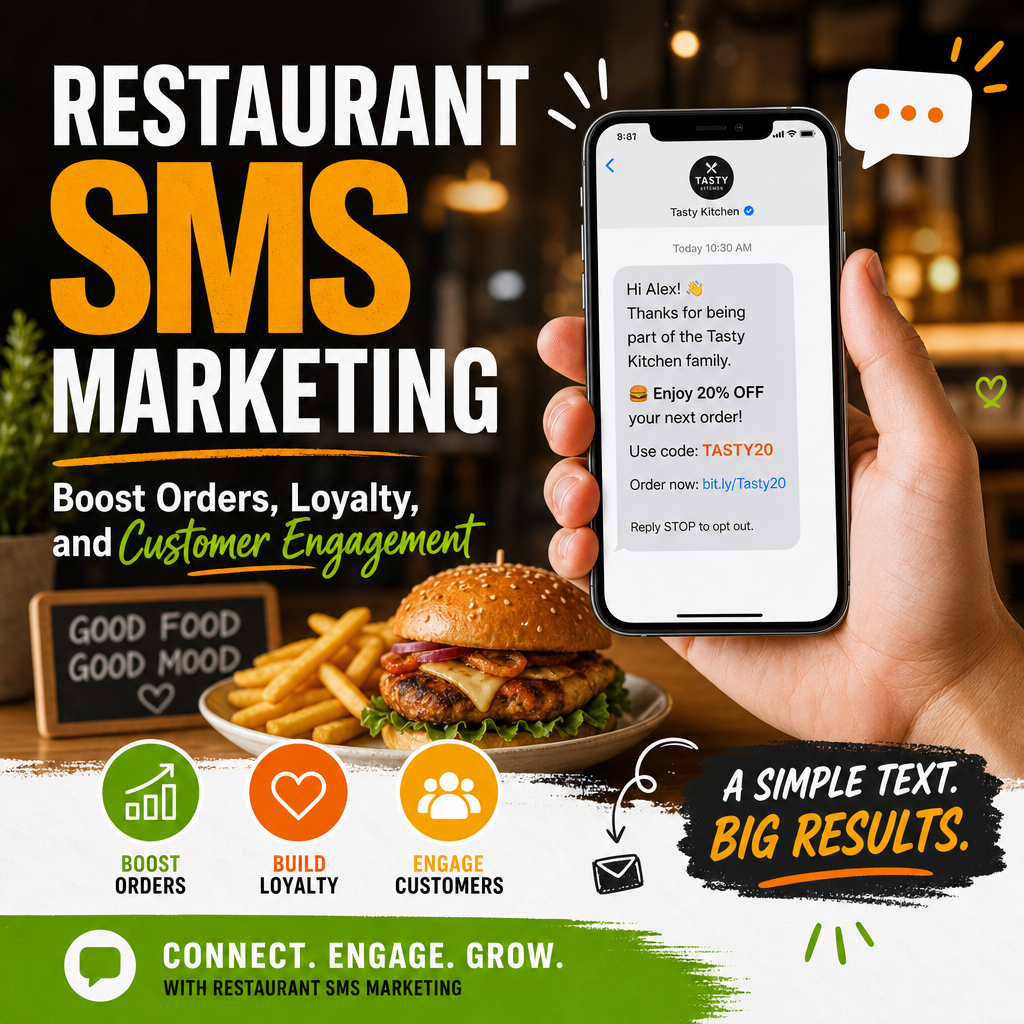
SMS Marketing for Restaurants: A Simple Way to Fill Tables and Bring Guests Back
Restaurant owners have more marketing channels than ever, but not all of them produce fast, reliable results. Social media can be crowded. Email often gets ignored. Paid ads can become expensive quickly. That is why restaurant sms marketing has become such a practical tool for restaurants that want to drive reservations, increase repeat visits, and promote offers in a direct, personal way.
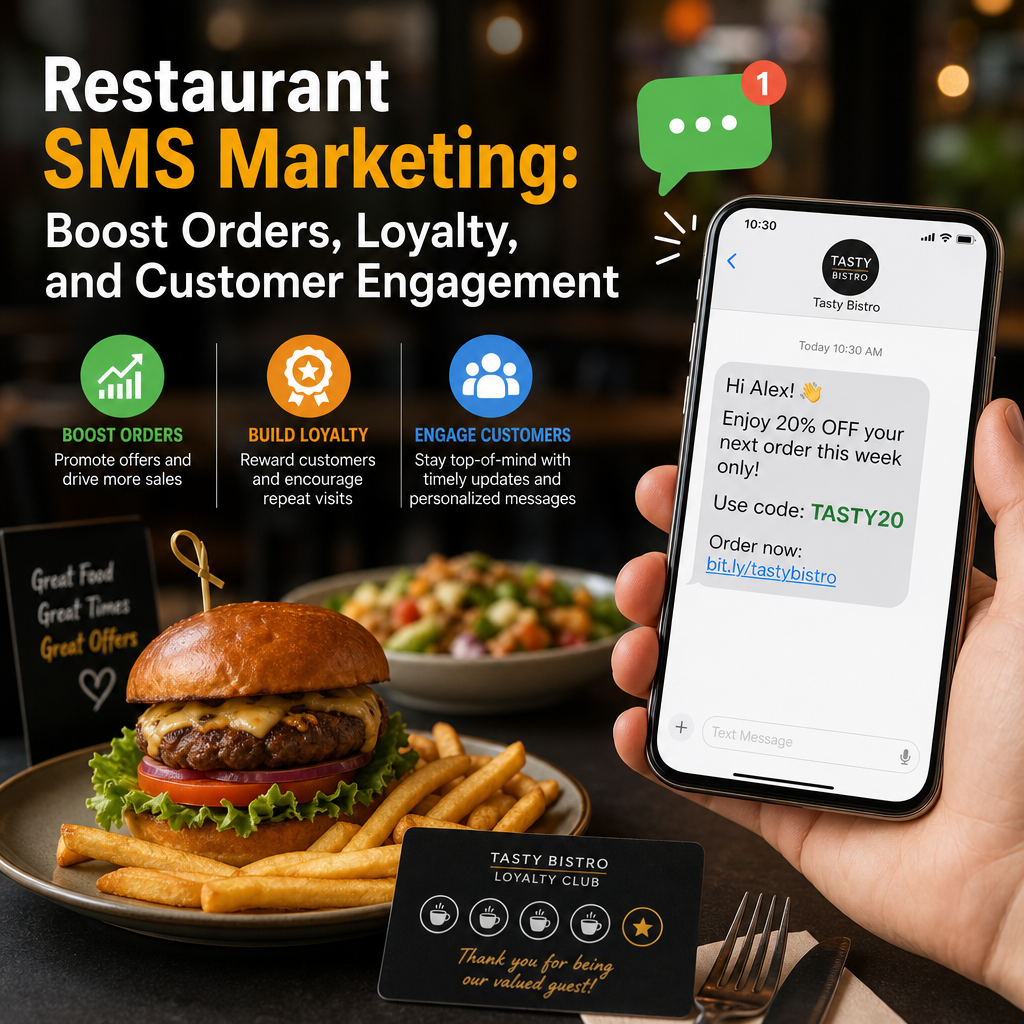
Text messaging stands out because people actually read their messages. In fact, most SMS messages are opened within minutes. For restaurants, that speed can make a real difference. A lunch special sent at 10:30 a.m. can bring in customers before noon. A birthday coupon sent on the right day can turn a casual guest into a loyal regular. A reminder about a reservation can reduce no-shows and keep the evening running smoothly.
In this article, we will look at how SMS marketing works for restaurants, why it is effective, and how to use it without overwhelming guests. You will also see practical examples and strategies you can use right away.
What Is Restaurant SMS Marketing?
Restaurant SMS marketing is the use of text messages to communicate with customers about promotions, updates, reservations, events, loyalty programs, and other restaurant-related offers. It is usually done through a text messaging platform that allows restaurants to send messages to a list of subscribers who have opted in.
Unlike social media posts, which depend on algorithms, SMS goes straight to a customer’s phone. That makes it a powerful channel for time-sensitive messages such as:
- Daily specials
- Happy hour promotions
- Limited-time discounts
- Event announcements
- Reservation reminders
- Loyalty rewards
- Holiday offers
- New menu launches
The key part is consent. Guests should always opt in to receive texts. When done properly, restaurant sms marketing feels helpful rather than intrusive.
Why SMS Works So Well for Restaurants
Restaurants operate in a fast-moving environment. You may need to fill slow periods, promote last-minute changes, or encourage repeat visits quickly. SMS fits this pace better than many other marketing tools.
1. Text messages get noticed
Most people check texts almost immediately. That means your message is more likely to be seen than an email sitting unread in an inbox.
2. It is great for time-sensitive offers
Restaurants often need to promote offers that are only relevant for a short period. A text works perfectly for:
- “Happy hour starts in one hour”
- “Today only: free dessert with dinner”
- “We have a few tables open tonight”
3. It drives action
Text messages tend to create fast responses. A guest can click a link, book a table, reply to confirm, or walk in the same day.
4. It supports customer retention
Many restaurants focus heavily on attracting new customers, but repeat business is where long-term profitability often lives. SMS helps you stay in touch with past guests and give them a reason to return.
5. It feels personal
When a message is relevant and well-timed, it feels like a direct invitation rather than a mass promotion. That personal feel can strengthen customer loyalty.
Best Ways Restaurants Can Use SMS Marketing
There are many ways to use SMS effectively. The best restaurant campaigns are simple, useful, and targeted.
Promote slow periods
If your restaurant is slower on Mondays or between lunch and dinner, SMS can help bring in traffic during those off-peak times.
Example:
“Slow Monday special: Get 15% off all entrées today from 4–7 PM. Show this text to your server.”
Send reservation reminders
No-shows can hurt revenue, especially on busy nights. A friendly reminder helps guests remember their booking and gives them a chance to cancel if plans change.
Example:
“Hi Taylor, this is a reminder about your reservation at Coastal Table tonight at 7:30 PM. Reply C to confirm or call us if your plans changed.”
Announce limited-time offers
Text marketing is especially useful for urgent promotions.
Example:
“Tonight only: Buy one pizza, get one half off from 5–9 PM. Dine in or take out.”
Because the message is short and time-sensitive, it encourages quick action.
Promote events and specials
If your restaurant hosts trivia nights, live music, wine tastings, or seasonal menus, SMS is a great way to spread the word.
Example:
“Join us this Friday for live jazz from 7–10 PM and 20% off select bottles of wine.”
Reward loyal guests
Loyalty messaging can make customers feel appreciated and encourage repeat visits.
Example:
“Thanks for being a loyal guest! Enjoy a free appetizer with your next entrée purchase this week.”
Recover abandoned orders or missed opportunities
If your restaurant uses online ordering or reservations, SMS can help recover abandoned carts or encourage guests to complete a booking.
Example:
“Still thinking about dinner? Complete your online order today and get free delivery with code DINEFREE.”
Building a Strong SMS Marketing List
A text campaign is only effective if people actually want to hear from you. That is why building a quality subscriber list matters more than collecting random phone numbers.
Collect opt-ins at the right moments
You can ask guests to sign up when they:
- Make a reservation
- Place an online order
- Join your loyalty program
- Scan a QR code in-store
- Fill out a comment card or Wi-Fi signup form
- Enter a contest or giveaway
The goal is to make the sign-up process simple and clear.
Offer a reason to join
People are more likely to subscribe if they know what they will get in return. Consider offering:
- A welcome discount
- Exclusive offers
- Early access to events
- Birthday treats
- Loyalty points or rewards
Example:
“Text JOIN to 12345 to receive exclusive offers and a free dessert on your next visit.”
Set expectations early
Tell subscribers how often they will hear from you and what type of content they will receive. This reduces unsubscribes and builds trust.
For example:
“Get 2–4 texts per month with special offers, event invites, and VIP updates.”
Writing Effective Restaurant Text Messages
A good text message is short, clear, and actionable. You do not have much space, so every word matters.
Keep it concise
SMS messages should be easy to read quickly. Avoid long paragraphs or unnecessary details.
Bad example:
“We are excited to announce that starting this Friday we will be offering a new seasonal menu with several fantastic options including grilled salmon, roasted vegetables, and a new dessert. Come see us anytime this weekend.”
Better example:
“New seasonal menu launches Friday! Try our grilled salmon, herb chicken, and strawberry tart. Reserve your table now.”
Include one clear call to action
Each message should have a purpose. Do you want guests to reserve a table, order online, or show a coupon? Make that obvious.
Examples:
- “Reserve now”
- “Order online”
- “Show this text to redeem”
- “Reply YES to confirm”
- “Book your table today”
Make offers easy to understand
If the promotion is complicated, people may ignore it. Keep it simple and direct.
Good:
“Enjoy 20% off all takeout orders today after 3 PM.”
Less effective:
“Spend $50 after 3 PM, mention this text, use code TAKE20, and show it at pickup to qualify.”
Personalize when possible
Even simple personalization can improve results. Use first names, birthday messages, or location-based offers when relevant.
Example:
“Happy birthday, Mia! Celebrate with a free dessert on us this week.”
Timing Matters in Restaurant SMS Marketing
The same message can work beautifully at one time and fail at another. Timing is one of the most important parts of restaurant sms marketing.
Send messages when they are useful
A lunch special should go out before lunch, not after. A weekend event reminder should arrive before people make plans elsewhere.
Good timing examples:
- Lunch promo: 10:30 a.m.
- Happy hour reminder: 2:30–4:00 p.m.
- Dinner offer: mid-afternoon or early evening
- Weekend event promo: Thursday or Friday afternoon
Avoid overmessaging
Too many texts can annoy subscribers and lead to opt-outs. Most restaurants do best with a moderate schedule rather than daily messages.
A practical approach is:
- 1–2 texts per week for active promotions, or
- 2–4 texts per month for general marketing
The right frequency depends on your audience and restaurant type.
Respect quiet hours
Do not send messages too early or too late. Late-night texts can feel invasive, especially if the offer is not urgent.
Automation Ideas That Save Time
Automation makes SMS easier to manage and more effective. Instead of sending every text manually, you can set up messages that trigger based on guest behavior or dates.
Welcome messages
When someone joins your list, send an automatic welcome text.
Example:
“Welcome to the family! Thanks for signing up. Show this text for 10% off your next visit.”
Birthday messages
Birthday offers are a simple way to build goodwill.
Example:
“Happy birthday! Enjoy a free dessert or drink with your meal this month.”
Post-visit follow-ups
A thank-you text after a visit can encourage a return trip.
Example:
“Thanks for dining with us yesterday. We hope to see you again soon—here’s 15% off your next meal this week.”
Reminder sequences
If a guest makes a reservation, you can send one reminder 24 hours before and another a few hours before the booking.
This can reduce no-shows while keeping the process smooth.
Loyalty milestones
Celebrate repeat visits or reward points with automatic SMS messages.
Example:
“You’ve earned a reward! Visit us by Sunday to redeem your free appetizer.”
Measuring SMS Marketing Results
To know whether your restaurant sms marketing strategy is working, track the right metrics. These numbers will help you improve future campaigns.
Key metrics to monitor
- Delivery rate: How many messages were successfully delivered
- Open rate: How many messages were read
- Click-through rate: How many people clicked a link
- Redemption rate: How many guests used the offer
- Conversion rate: How many texts led to reservations or purchases
- Opt-out rate: How many people unsubscribed
Look for patterns
Pay attention to which offers get the best response. You might find that:
- Lunch promotions work better than dinner promotions
- Discount offers outperform event reminders
- Birthday texts get strong engagement
- Shorter messages convert better than longer ones
Use those insights to refine your strategy over time.
Common SMS Marketing Mistakes to Avoid
SMS can deliver great results, but only if it is used thoughtfully. Avoid these common mistakes:
Sending too many messages
If customers feel spammed, they will unsubscribe. Quality matters more than quantity.
Being too vague
Messages like “Come see us today!” do not give enough reason to act. Be specific about the offer.
Ignoring consent rules
Always make sure subscribers opted in to receive messages. This protects your restaurant and builds trust.
Using poor timing
A promotion sent after lunch ends will not help much. Match the message to the moment.
Forgetting a clear action
If the guest does not know what to do next, the message will not perform well. Add a clear call to action every time.
A Simple Example of a Restaurant SMS Campaign
Here is a basic campaign that a restaurant could run over one week:
Monday:
Send a slow-day lunch special to local subscribers.
Wednesday:
Promote a midweek wine or appetizer deal.
Friday:
Send a weekend reservation reminder or dinner event announcement.
Sunday:
Share a loyalty offer to encourage guests to return next week.
This kind of structure keeps messages relevant and helps you stay visible without overwhelming your audience.
Conclusion
Restaurant sms marketing is one of the most effective ways to connect with guests quickly and personally. It can help fill seats during slow periods, reduce no-shows, boost repeat visits, and promote offers that need immediate attention.
The best SMS campaigns are simple, timely, and useful. They respect the customer’s inbox, offer real value, and give people a clear reason to act. With the right strategy, texting can become one of the most valuable tools in your restaurant’s marketing mix.
