
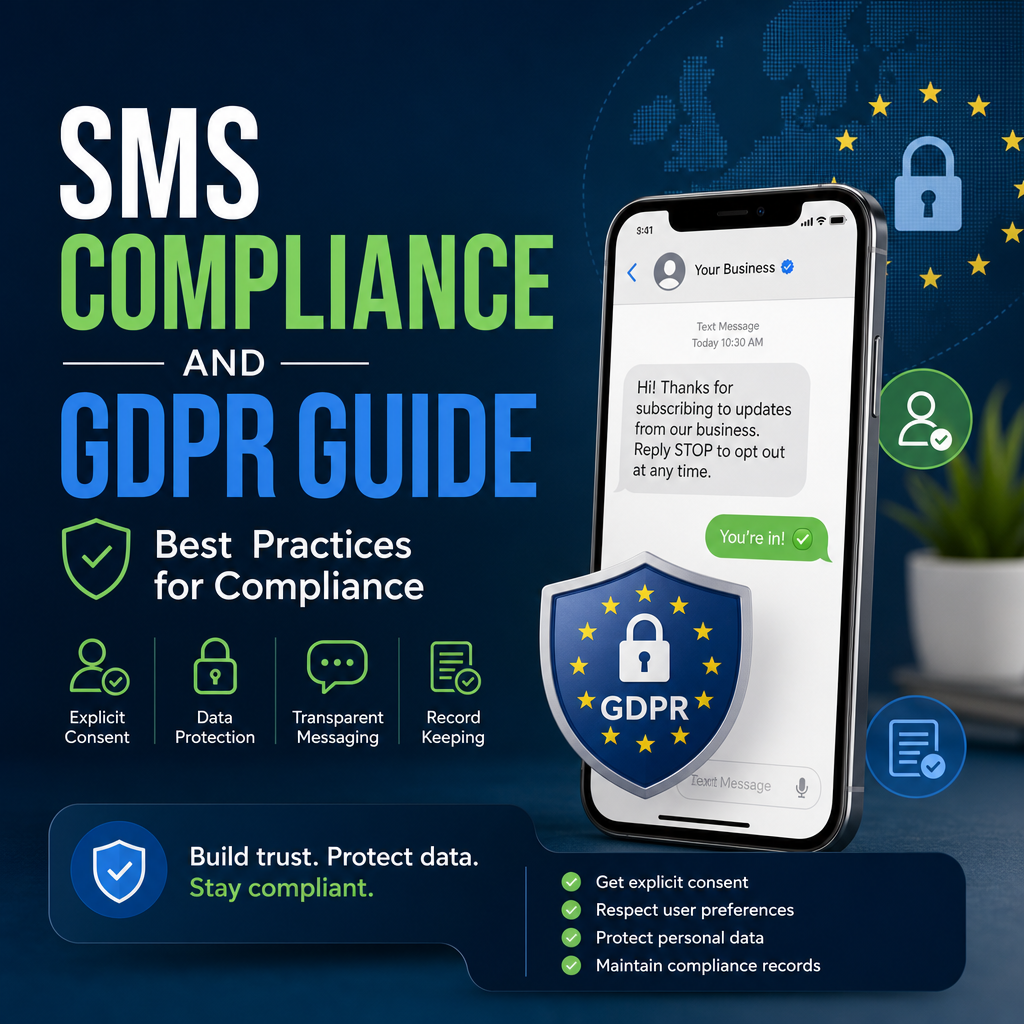
SMS Compliance and GDPR Guide
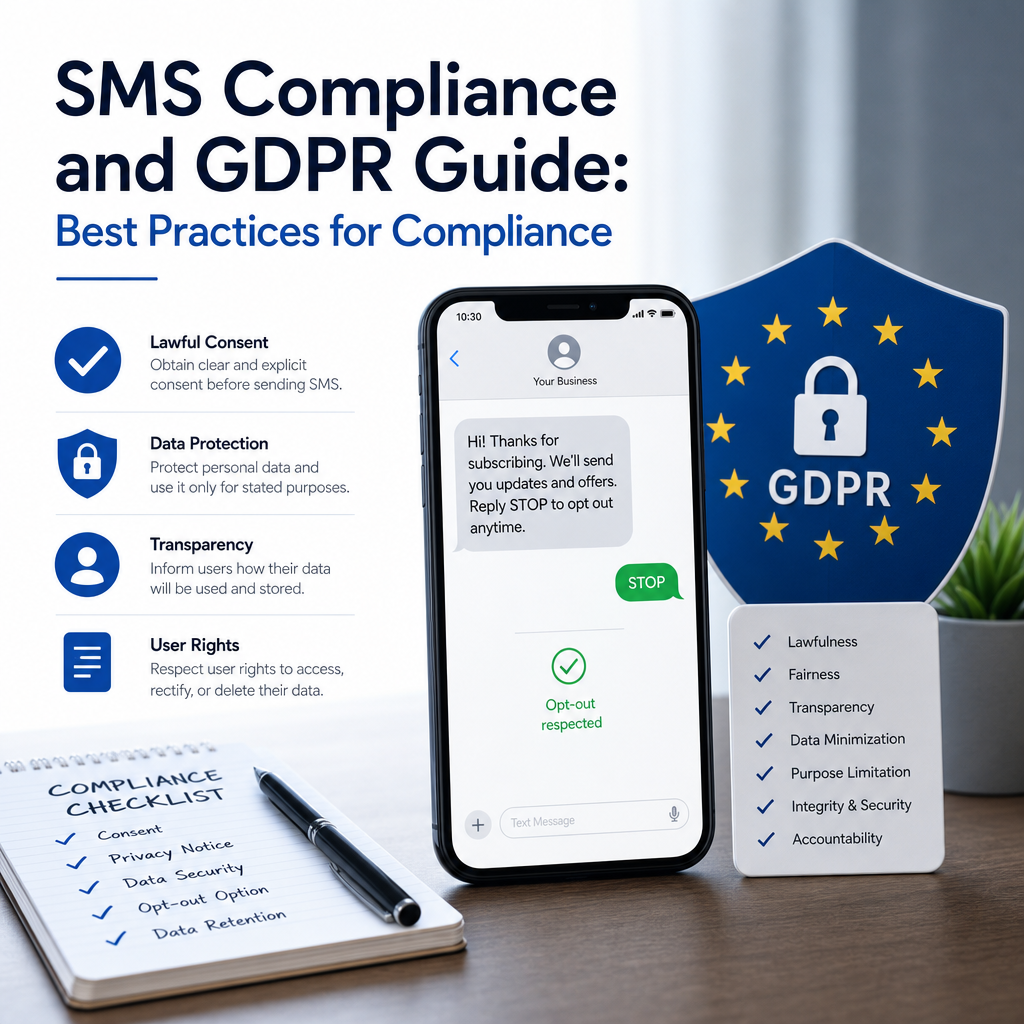
SMS remains one of the most effective ways to reach customers quickly. Open rates are high, messages are read fast, and text messaging can drive immediate action. But because SMS is so direct and personal, it also comes with serious legal responsibilities. If you collect phone numbers, send promotional texts, or use SMS for reminders and alerts, you need to understand both sms compliance and gdpr.
This guide explains what businesses need to know to send SMS messages legally and responsibly. It covers consent, data handling, message content, retention, and practical steps to reduce risk while still using SMS effectively.
Why SMS Compliance Matters
Unlike email, SMS usually feels more intrusive. A text message arrives directly on someone’s phone, often with a notification and sound. That makes it powerful, but it also means regulators expect businesses to be especially careful.
Failing to follow sms compliance rules can lead to:
- Regulatory fines
- Customer complaints
- Carrier filtering or blocked messages
- Reputation damage
- Loss of trust
When GDPR applies, the stakes are even higher. SMS campaigns often involve processing personal data such as phone numbers, names, location data, and behavioral information. Under GDPR, that data must be collected and used lawfully, fairly, and transparently.
What GDPR Means for SMS Marketing
GDPR is the European Union’s data protection law. It applies to organizations that collect or process personal data of people in the EU, even if the business is based elsewhere. In SMS marketing, GDPR affects how you collect phone numbers, what you say in consent forms, how you store contact data, and how users can withdraw permission.
A phone number is personal data under GDPR if it can identify a person directly or indirectly. If you are using SMS to send promotions, updates, or transactional notices, you need a lawful basis for processing that data.
Common lawful bases for SMS
For SMS marketing, the most common lawful basis is consent. In some cases, businesses may rely on legitimate interests for limited communications, but this is more complex and usually not suitable for promotional texts unless carefully assessed.
For most marketing campaigns, consent is the safest and clearest route.
Consent: The Core of SMS Compliance
Consent is the foundation of both sms compliance and GDPR-friendly marketing. It must be:
- Freely given
- Specific
- Informed
- Unambiguous
That means a user must actively choose to receive SMS messages. Pre-checked boxes, buried terms, or vague wording are not enough.
Good consent example
A user signs up on a website and sees:
“I agree to receive promotional text messages from Company X at the number I provided. Message frequency may vary. Msg & data rates may apply. Reply STOP to opt out.”
They check an empty box voluntarily.
Bad consent example
A website form includes a sentence in small print:
“By submitting this form, you agree to all communications, including marketing.”
The box is already checked, or no checkbox is present at all.
The first example is much closer to GDPR expectations. The second is likely non-compliant because it does not clearly separate marketing consent from general form submission.
SMS Compliance Best Practices for Consent
To reduce risk, build your SMS collection process around clear consent.
1. Use explicit opt-in
Always ask users to actively opt in before sending marketing texts. Use a separate checkbox or signup field specifically for SMS.
2. Separate marketing from other messages
Do not bundle SMS consent with general terms of service or email consent. Users should be able to sign up for one channel without being forced into another.
3. Keep records of consent
Under GDPR, you need to prove that consent was given. Store:
- The date and time of opt-in
- The source of consent
- The wording shown at the time
- The phone number used
- Any confirmation steps completed
4. Use double opt-in where possible
Double opt-in adds another verification step. After a user signs up, send a text asking them to confirm they want to receive messages. This reduces fraud and wrong-number signups.
5. Make opting out easy
Every marketing SMS should explain how to stop messages, usually with “Reply STOP to unsubscribe.” The unsubscribe process should be immediate and simple.
What Counts as Personal Data in SMS Campaigns
Many businesses think only the phone number matters, but SMS programs often involve more personal data than expected. Under GDPR, personal data includes any information that identifies or can identify a person.
This may include:
- Phone number
- Name
- Email address linked to SMS records
- Delivery address
- Purchase history
- Appointment details
- Location or device information
- Behavioral data, such as clicks or responses
Even message metadata can be sensitive in context. For example, appointment reminders can reveal medical visits, and delivery texts can reveal someone’s home schedule. The more sensitive the content, the more carefully you must manage it.
SMS Compliance Rules for Marketing Messages
Marketing SMS is the area where compliance mistakes happen most often. While exact rules vary by country, the general principles are similar.
Keep messages transparent
Users should always know:
- Who is sending the message
- Why they are receiving it
- How often messages may come
- How to opt out
A text like this is clear:
“Hi Sarah, this is GreenHome. Your order has shipped. Track it here: [link]”
A vague text like this is risky:
“Your update is ready. Check now.”
The recipient may not know who sent it or why.
Respect message frequency
Over-messaging can quickly trigger complaints. Even if someone consented, frequent texts can still feel spammy. Set a reasonable cadence and match it to user expectations.
Avoid misleading content
Do not use deceptive headlines, false urgency, or disguised promotions. The message should honestly reflect its purpose.
Include required disclosures
Depending on jurisdiction and campaign type, you may need disclosures such as:
- Brand name
- Marketing identification
- Contact details
- Terms and rates notice
Many businesses include brief opt-out language in recurring campaigns to reinforce compliance.
Transactional vs. Marketing SMS
A major compliance issue is confusing transactional and marketing messages.
Transactional SMS
These are messages related to a user’s request or relationship with your business, such as:
- Order confirmations
- Shipping alerts
- Password reset codes
- Appointment reminders
- Account notifications
Marketing SMS
These are promotional messages, such as:
- Sales offers
- Product launches
- Coupons
- Abandoned cart promotions
- Re-engagement campaigns
The distinction matters because consent requirements can differ. A user may agree to receive shipping updates, but that does not mean they agreed to promotional texts.
Example
If a customer buys shoes and opts in to receive shipping updates, you can send:
“Your shoes are out for delivery.”
You should not automatically send:
“20% off our new collection this weekend!”
Unless they separately consented to marketing messages.
Data Minimization and Retention
GDPR requires businesses to collect only the data they need and keep it only as long as necessary. This principle, known as data minimization, is highly relevant to sms compliance.
Collect only necessary information
For a simple SMS campaign, you may only need:
- Phone number
- First name, if personalization is useful
- Consent record
- Opt-out status
Do not request unnecessary personal data if it is not required for the campaign.
Set retention limits
Create a retention policy that defines how long you keep SMS records. For example:
- Consent logs: kept for audit purposes
- Inactive contacts: deleted after a defined period
- Opted-out numbers: kept only to suppress future contact
You may need to retain some records longer for legal defense or compliance, but the policy should be clear and documented.
Security Requirements for SMS Data
A compliant SMS program is not just about consent. You also need to protect the data you collect.
Use secure systems
Store contact data in secure platforms with:
- Access controls
- Encryption
- Audit logs
- Role-based permissions
- Strong authentication
Limit internal access
Only staff who need SMS data should be able to view it. Sales, support, and marketing teams should not all have unrestricted access by default.
Protect integrations and APIs
Many SMS platforms connect to CRMs, forms, or e-commerce tools. These integrations should be reviewed for security risks, especially if they transfer phone numbers or message history between systems.
Prepare for breaches
If SMS data is exposed, GDPR may require notification to authorities and affected individuals. Have an incident response plan before a problem occurs.
Rights of Users Under GDPR
People whose data you collect have rights that affect SMS operations.
Right to be informed
You must clearly explain how their data will be used. Privacy notices should mention SMS communication, lawful basis, retention, and opt-out methods.
Right of access
Users can ask what data you have about them, including consent records and message history.
Right to rectification
If a phone number is wrong, users can request correction.
Right to erasure
In many cases, users can request deletion of their data. However, if you need to keep a record to prevent future contact, you may retain minimal suppression data.
Right to withdraw consent
This is especially important for SMS marketing. Every message should make it easy to unsubscribe.
International Considerations
GDPR is one framework, but SMS compliance also depends on where your audience lives. For example, some countries require prior express consent for marketing texts, while others have carrier-level rules or consumer protection laws.
If you operate internationally, do not assume a GDPR-compliant process is enough everywhere. A global SMS program should account for:
- Local telecom regulations
- Consumer marketing laws
- Consent requirements
- Carrier policies
- Age restrictions
- Sector-specific rules, such as healthcare or finance
A business sending texts in multiple regions should review each market separately.
Practical SMS Compliance Checklist
Use this checklist to strengthen your compliance program:
- Collect explicit opt-in consent for marketing SMS
- Separate marketing consent from other consent types
- Record when, where, and how consent was given
- Provide clear sender identification in every message
- Include easy opt-out instructions
- Honor unsubscribe requests immediately
- Keep message content truthful and transparent
- Minimize data collection
- Store data securely
- Set retention and deletion rules
- Document lawful basis for processing
- Update privacy notices to explain SMS use
- Review third-party SMS vendors for compliance
- Train staff on data protection and messaging rules
Common Mistakes to Avoid
Even well-intentioned businesses make simple errors. Some of the most common include:
Assuming a customer relationship equals consent
Just because someone bought from you does not mean they agreed to marketing texts.
Using vague signup language
If users cannot tell what they are agreeing to, consent may be invalid.
Failing to keep proof of consent
If challenged, you must show records. Without them, compliance is difficult to defend.
Sending marketing through transactional lists
Do not mix order updates with offers unless users explicitly consented to both.
Ignoring opt-outs
If someone unsubscribes, stop messaging them immediately. Continued contact is a major violation.
Keeping old contact data forever
Inactive or no-longer-consenting contacts should not remain in your active marketing database indefinitely.
Example of a Compliant SMS Flow
Here is a simple compliant workflow for an e-commerce brand:
- A shopper enters their phone number at checkout.
- They see a separate checkbox for SMS promotions.
- The box is unchecked by default.
- The consent text explains message frequency and opt-out instructions.
- The system logs the consent details.
- A confirmation text is sent if using double opt-in.
- Promotional texts are sent only to opted-in subscribers.
- Every message includes brand identity and unsubscribe language.
- Opt-outs are processed instantly.
- Consent and suppression records are stored securely.
This kind of process supports both practical marketing and legal accountability.
Conclusion
SMS can be a powerful communication channel, but it must be handled with care. Strong sms compliance practices and a solid understanding of gdpr help you protect customer trust, reduce legal risk, and build a messaging program that lasts.
The key principles are straightforward: get clear consent, be transparent about how data is used, protect personal information, and make opting out easy. If you follow those basics consistently, you can use SMS effectively without crossing legal lines.
