
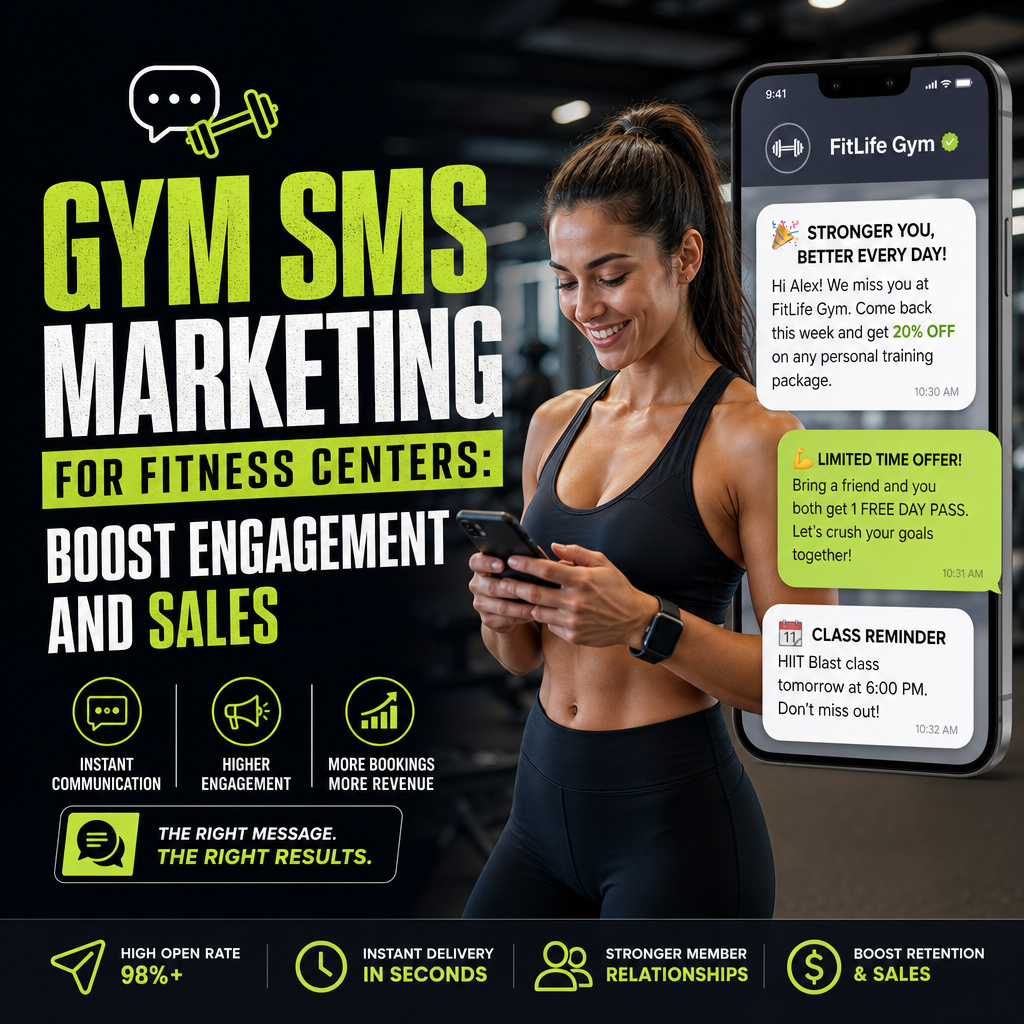
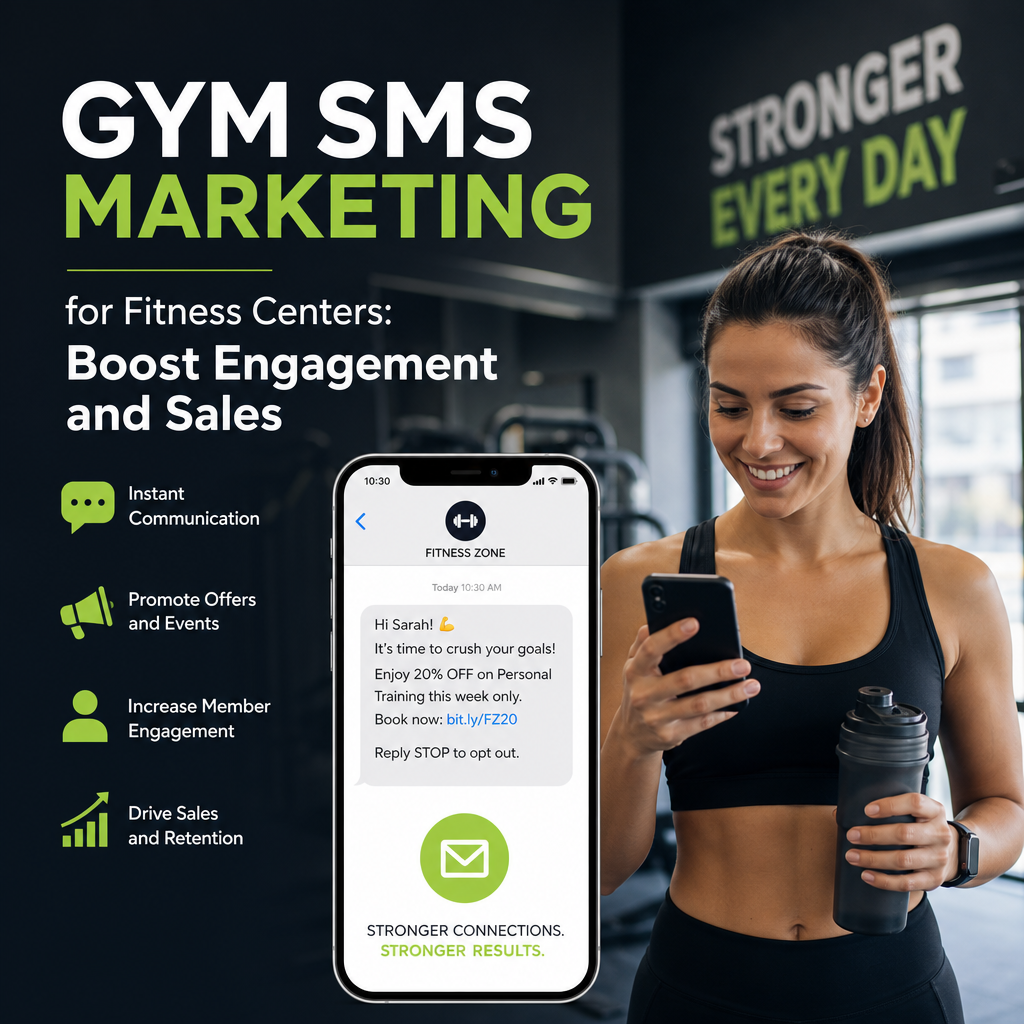
SMS Marketing for Gyms and Fitness Centers
In a crowded fitness market, getting members through the door—and keeping them coming back—takes more than great equipment and enthusiastic trainers. Gyms and fitness centers need a marketing channel that is fast, personal, and hard to ignore. That is exactly why SMS has become such a powerful tool for fitness marketing.
With open rates far higher than email and response times measured in minutes, text messaging gives gyms a direct line to prospects and members. Whether you are promoting a new class, reminding someone about a membership renewal, or re-engaging inactive members, gym sms can help you communicate in a way that feels immediate and relevant.
This article explains how SMS marketing works for gyms, why it is effective, and how to use it without annoying your audience.
Why SMS Works So Well for Gyms
People are busy. They may ignore an email, forget a social media post, or miss a phone call, but they almost always notice a text message. That is what makes SMS such a valuable channel for fitness marketing.
Text messages get attention fast
Most text messages are read within minutes. If a gym wants to fill a class with a few open spots, announce a flash promotion, or send a same-day reminder, SMS is one of the quickest ways to reach members.
Texts feel personal
A well-written text feels direct and relevant. When a member receives a message about their favorite class or a reminder to return after a missed week, it feels more personal than a generic ad.
SMS supports action
Texts are short, which means they are ideal for clear calls to action. A gym can link to a booking page, encourage a reply, or promote a time-sensitive offer with just a few words.
It reaches people on the go
Fitness customers are often mobile. They may be commuting, at work, or heading to the gym. SMS fits naturally into that lifestyle and lets you connect when they are most likely to respond.
The Best Ways to Use Gym SMS
Not every message should be promotional. The most effective gym sms campaigns combine value, convenience, and timing. Here are some of the best use cases for gyms and fitness centers.
Class reminders
One of the simplest and most effective uses of SMS is reminding members about upcoming classes.
Example:
“Reminder: Your 6:00 PM spin class starts tonight. Don’t forget your water bottle!”
These reminders reduce no-shows and help members stay consistent with their routines.
Membership renewals and payment notices
Many gyms lose revenue because members forget to renew. A text reminder can prompt action before a membership lapses.
Example:
“Hi Sarah, your membership renews in 3 days. Reply YES to keep your spot active or visit [link] to review your plan.”
This kind of message is helpful, not pushy, and can prevent unnecessary cancellations.
New class announcements
When you launch a new class or training program, SMS can help you fill spots quickly.
Example:
“New class alert: Strength Circuit begins this Saturday at 10 AM. Limited spaces available. Reserve now: [link]”
Because the message is short and timely, it creates urgency without needing a long explanation.
Flash promotions
If you want to drive sales fast, SMS works well for limited-time offers.
Examples include:
- Free trial weekends
- Personal training discounts
- Sign-up fee waivers
- Referral bonuses
Example:
“Today only: Join our gym with no enrollment fee. Offer ends at midnight. Sign up here: [link]”
Re-engagement messages
Inactive members often need a gentle nudge. A thoughtful message can bring them back.
Example:
“We miss seeing you at the gym! Come back this week and enjoy a free guest pass on your next visit. Book here: [link]”
Re-engagement campaigns work especially well when they feel encouraging rather than guilt-driven.
Event and challenge promotion
Fitness centers often host events like boot camps, weight-loss challenges, yoga workshops, or open houses. SMS can help promote these before the registration deadline.
Example:
“Join our 30-day summer challenge starting Monday. Train with support, accountability, and prizes. Register today: [link]”
Personal training follow-ups
SMS is useful for encouraging clients who work with trainers. A short follow-up after a session can increase retention and motivation.
Example:
“Great job today, Marcus. Let us know if you want to book your next PT session for next week.”
Building an Effective Gym SMS Strategy
To get results, text messaging needs a plan. A random stream of promotions will not deliver the same value as a structured strategy. Here are the key steps to building an SMS program that works.
Start with consent
Always get permission before texting anyone. Members should opt in through a sign-up form, waiver, website form, or checkout process. This is not just best practice; it is essential for compliance and trust.
Make the opt-in process clear by explaining:
- What kind of messages they will receive
- How often they can expect texts
- How to opt out at any time
A simple sign-up line might read:
“Get class reminders, special offers, and gym updates by text. Reply YES to opt in.”
Segment your audience
Different people need different messages. A first-time visitor does not need the same texts as a long-term member or a personal training client.
Useful segments may include:
- New leads
- Trial members
- Active members
- Inactive or lapsed members
- Class attendees
- Personal training clients
- Teen or family membership holders
Segmentation makes your fitness marketing more relevant and improves response rates.
Choose the right message type
Not every text should ask for a sale. A healthy SMS mix includes:
- Informational messages
- Reminders
- Promos
- Re-engagement texts
- Event announcements
- Loyalty and appreciation messages
A good rule is to provide value before asking for action.
Time messages carefully
A message sent at the wrong time can feel intrusive. A noon class reminder should not arrive at 10 PM. A weekend promotion may perform better on Friday afternoon than Monday morning.
General timing tips:
- Send reminders 1 to 24 hours before an event
- Avoid very early or very late hours
- Use time-sensitive offers sparingly
- Match the message time to the customer’s routine
Keep it short and clear
SMS works best when it is concise. Say what you need to say, include one call to action, and avoid unnecessary filler.
Good text structure:
- Personal greeting if needed
- Brief message
- Clear action link or reply request
Example:
“Hi Alex, your yoga class starts tomorrow at 7 AM. Tap here to confirm your spot: [link]”
Include a strong call to action
Every marketing message should tell the reader what to do next. Whether you want them to book, buy, reply, or visit, make the next step obvious.
Examples:
- “Reserve your spot”
- “Reply YES to confirm”
- “Sign up today”
- “Claim your free pass”
- “Book your session now”
Best Practices for Gym SMS Marketing
To get the most from gym sms, follow a few core best practices. These help you stay effective while protecting the member experience.
Personalize when possible
Using a member’s first name or referencing their activity can increase engagement.
Examples:
- “Hi Jenna, your Zumba class starts in an hour.”
- “Thanks for attending boot camp this morning, Chris.”
Personalization should feel helpful, not creepy. Keep it simple and relevant.
Don’t over-message
If members receive too many texts, they may opt out. The goal is to be useful, not noisy.
A balanced approach could be:
- One weekly promotional text
- One or two reminders for key events
- Occasional re-engagement messages
- Transactional updates as needed
Use SMS to support other channels
Text messaging works best when connected to email, social media, and in-person promotions. For example, an email might explain a new challenge in detail, while the SMS announces the deadline.
A multi-channel strategy can look like this:
- Email for long-form information
- Social media for awareness
- SMS for reminders and urgency
- Front desk staff for personal follow-up
Test and improve campaigns
Track which messages drive the most responses. Try different wording, timing, or offers to see what works best.
Useful metrics include:
- Opt-in rate
- Click-through rate
- Reply rate
- Conversion rate
- Opt-out rate
For example, you may discover that class reminders work better when sent 24 hours in advance, while promotions perform best in the late afternoon.
Make it easy to opt out
Every SMS campaign should include a simple opt-out option. This protects your audience relationship and keeps your list healthy.
A standard line might be:
“Reply STOP to opt out.”
Respecting preferences is part of good fitness marketing.
SMS Ideas for Different Types of Gyms
Different fitness businesses can use SMS in slightly different ways. The right message depends on your audience and offerings.
Boutique studios
Yoga, Pilates, and cycling studios can use SMS to:
- Fill last-minute class spots
- Announce schedule changes
- Promote memberships or intro packs
- Encourage trial visitors to return
Example:
“We added 3 open spots to tonight’s Pilates class. Book now before they’re gone: [link]”
Big-box gyms
Large gyms often benefit from SMS for:
- Membership renewals
- New equipment announcements
- Free pass promotions
- Seasonal sign-up campaigns
Example:
“New cardio zone now open at Main Street Fitness. Come check it out this week!”
Personal training studios
Training-focused gyms can use texts to:
- Confirm sessions
- Follow up after appointments
- Encourage package renewals
- Promote consultation offers
Example:
“Your next training block is coming up. Want to stay on track? Reply BOOK to reserve your spot.”
Family and community gyms
Centers that serve families or local communities can use SMS to:
- Share holiday hours
- Announce youth programs
- Promote family deals
- Remind members about community events
Example:
“KidFit summer camp registration is now open. Secure your child’s spot today: [link]”
Common Mistakes to Avoid
SMS can be highly effective, but it can also backfire if handled poorly. Avoid these mistakes.
Sending too many sales messages
If every text tries to sell something, members may tune out. Balance promotions with reminders, value, and appreciation.
Using unclear language
Your message should be easy to understand at a glance. Avoid jargon and long explanations.
Forgetting mobile-friendly links
If your message includes a link, make sure the landing page works well on mobile devices and loads quickly.
Ignoring compliance rules
Always follow messaging regulations and get proper consent. This protects your brand and your audience.
Not measuring results
If you do not track campaign performance, you will not know what is working. Use data to improve over time.
Example SMS Campaign Plan for a Gym
Here is a simple monthly fitness marketing plan using SMS.
Week 1: New member onboarding
- Welcome text after sign-up
- First-class reminder
- Quick check-in after initial visit
Week 2: Engagement
- Promo for a group class
- Trainer introduction text
- Tips message with a useful fitness reminder
Week 3: Conversion
- Personal training offer
- Limited-time membership upgrade
- Referral incentive
Week 4: Retention
- Encouragement text for inactive members
- Loyalty appreciation message
- Reminder about next month’s schedule or special event
This kind of rhythm keeps your communication varied and purposeful.
Measuring Success
The success of SMS marketing is not just about sending messages. It is about generating visits, bookings, and renewals.
Watch for results such as:
- More class attendance
- Higher renewal rates
- Increased trial conversions
- Better response from inactive members
- More personal training bookings
If your texts are getting opened but not converting, the issue may be your offer or call to action. If people are opting out quickly, you may be sending too often or at the wrong time.
Conclusion
SMS gives gyms and fitness centers a direct, fast, and personal way to connect with members and leads. When used thoughtfully, gym sms can improve attendance, drive renewals, promote events, and strengthen member relationships.
The key is to make your texts relevant, timely, and valuable. In modern fitness marketing, a good SMS strategy is not about sending more messages—it is about sending the right message at the right time.
