
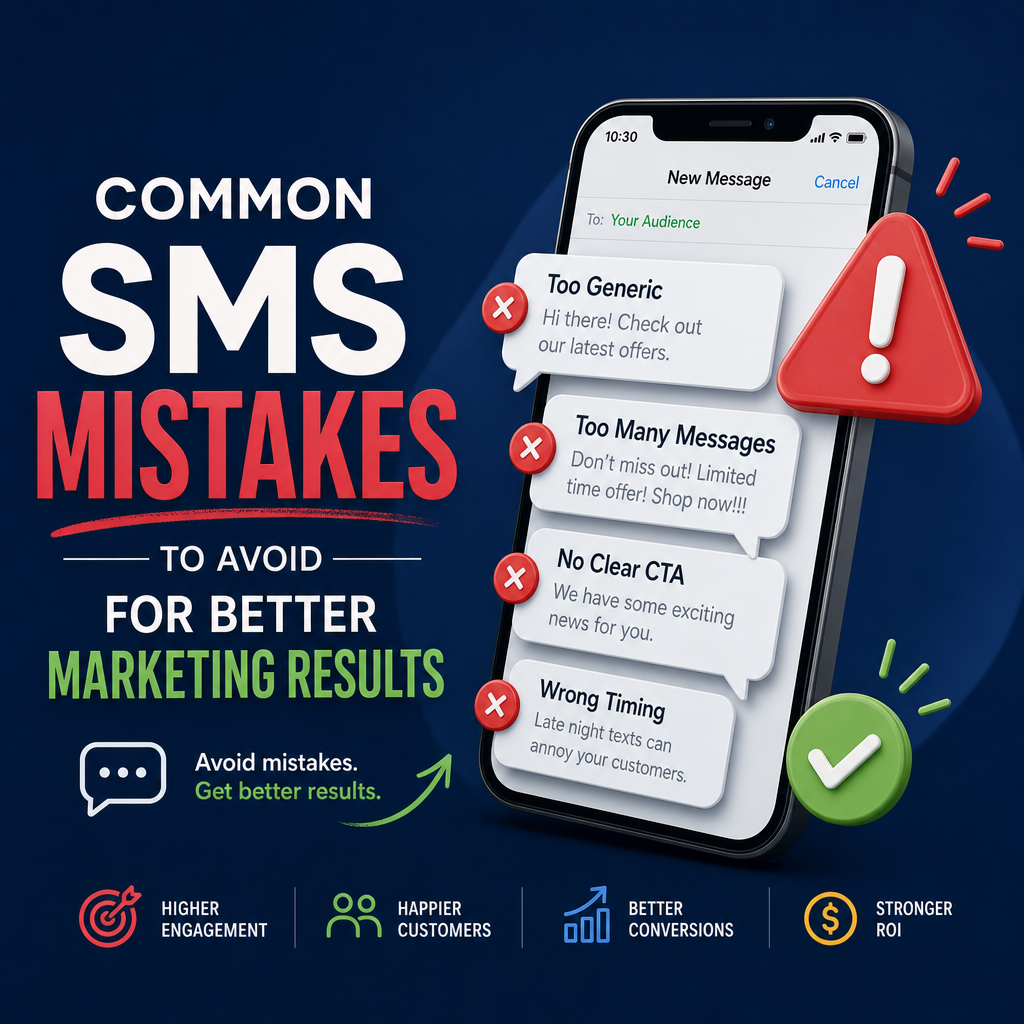
Common SMS Marketing Mistakes and How to Avoid Them
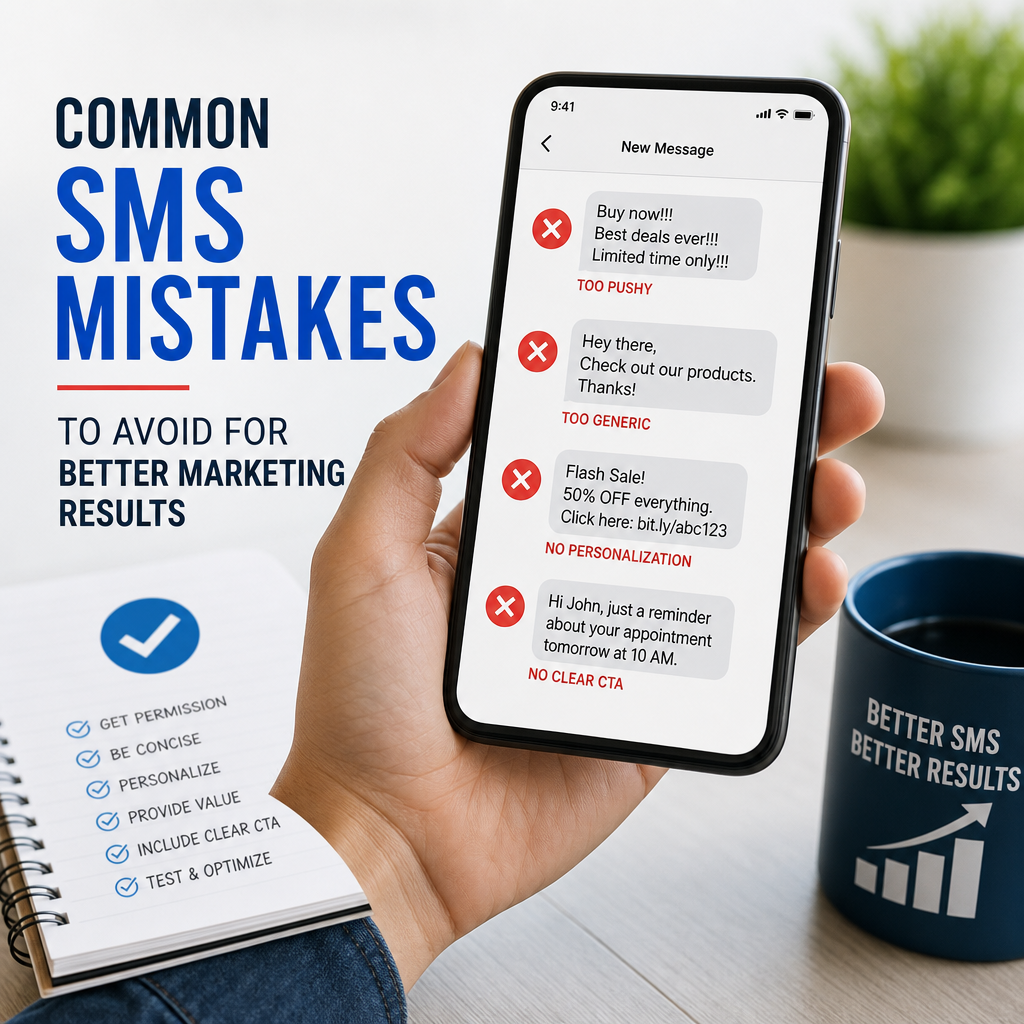
SMS marketing can be one of the most effective ways to reach customers quickly. Text messages are usually opened within minutes, and they can drive immediate action when the offer, timing, and message are right. But that same speed and directness can also backfire if campaigns are poorly planned.
Many businesses make avoidable sms mistakes that lead to unsubscribes, low engagement, or even legal trouble. The good news is that most of these problems are easy to fix once you know what to look for. In this article, we’ll break down the most common SMS marketing mistakes, explain why they hurt performance, and show you how to avoid them.
Why SMS Marketing Works So Well
Before diving into the mistakes, it helps to understand why SMS is such a powerful channel. Compared with email or social media, text messages are:
- Immediate — they reach people almost instantly
- Personal — they feel direct and one-to-one
- Highly visible — most messages are read quickly
- Action-oriented — perfect for flash sales, reminders, and updates
Because SMS is so direct, users expect messages to be relevant, timely, and concise. When a brand gets that wrong, people notice fast. That’s why avoiding common sms mistakes is essential for protecting both your brand and your results.
1. Sending Messages Without Permission
One of the biggest SMS marketing mistakes is texting people who never opted in. Unlike many other marketing channels, SMS requires clear permission. If someone did not agree to receive messages, your text can feel intrusive and may violate regulations.
Why this is a problem
- It damages trust
- It increases spam complaints
- It can lead to legal penalties
- It often results in immediate unsubscribes
Better approach
Build your list through clear opt-in methods such as:
- Website forms with a checkbox
- In-store signups
- Checkout opt-ins
- Keyword-to-join campaigns
- QR codes that lead to a signup page
Always tell people what kind of messages they will receive and how often. A transparent opt-in process leads to a stronger, more engaged audience.
2. Over-Messaging Your Audience
Another common sms mistake is sending too many texts. Because messages arrive directly on a phone, too much frequency can quickly become annoying. Customers may start ignoring your messages or opt out completely.
Signs you’re overdoing it
- Unsubscribe rates are rising
- Click-through rates are dropping
- Customers complain about too many messages
- Engagement declines over time
How to fix it
Create a clear messaging schedule. For many brands, one to four messages per month may be enough, while others can justify more frequent contact depending on the industry and customer expectations.
A good rule is to ask: Would this message matter to the recipient right now? If the answer is no, don’t send it.
Example
A clothing retailer sends a text every day with new arrivals, flash sales, and style tips. At first, customers respond well. After a few weeks, many opt out because the messages feel excessive. A better strategy would be to send fewer but more targeted messages, such as:
- One monthly VIP sale alert
- One restock alert for popular items
- One seasonal promo
That keeps the audience engaged without overwhelming them.
3. Making Messages Too Long
SMS is not the place for long-winded copy. One of the most common sms mistakes is trying to pack too much information into a single text. Long messages are harder to read, less likely to be acted on quickly, and can make the offer less clear.
What long texts usually do wrong
- Include too many details
- Hide the main offer
- Make the call to action weak
- Feel more like an email than a text
Keep it short and focused
A strong SMS message should usually include:
- A clear offer or reason to act
- A sense of urgency or relevance
- A simple call to action
- A link, phone number, or reply instruction
Example
Too long:
“Hi valued customer! We wanted to let you know that we are excited to announce that our summer sale is now live. You can save up to 40% on selected items in every category, including clothing, accessories, shoes, and more. Visit our website today to browse everything before it ends this weekend.”
Better:
“Summer sale is live: Up to 40% off selected items. Shop now before Sunday: [link]”
The second version is easier to read and more likely to convert.
4. Sending Generic Messages to Everyone
Not all subscribers want the same things. A major SMS mistake is blasting the same message to your entire list. This makes texts feel irrelevant and lowers response rates.
Why personalization matters
People are much more likely to engage when the message matches their interests, behavior, or location. If you send a local event reminder to someone in another city, or a product promo for something they already bought, the message loses value.
Ways to segment your list
- New customers vs. repeat customers
- VIP buyers vs. casual shoppers
- Product interest or category
- Location
- Purchase history
- Engagement level
Example
A gym could send different texts to different groups:
- New member: onboarding tips and class schedules
- Lapsed member: reactivation offer
- Current member: event reminders and booking prompts
This approach makes messages more useful and reduces one of the most common sms mistakes: treating all subscribers as if they have the same needs.
5. Forgetting a Clear Call to Action
Every SMS should make it obvious what the recipient should do next. Some businesses send texts with no clear next step, which creates confusion and lowers conversion.
Weak CTA examples
- “Check it out soon”
- “Take a look when you can”
- “We thought you’d like this”
These phrases are vague and don’t tell the customer what action to take.
Strong CTA examples
- “Shop now”
- “Book your appointment”
- “Reply YES to confirm”
- “Claim your 20% discount”
- “Tap to learn more”
A good call to action should be simple and easy to act on immediately. SMS is a fast channel, so your CTA should match that speed.
6. Ignoring Timing and Time Zones
Timing can make or break an SMS campaign. Sending a great offer at the wrong time can reduce engagement or upset customers. This is one of those sms mistakes that seems small but has a big impact.
Poor timing examples
- Sending early in the morning
- Texting late at night
- Sending during holidays when people are distracted
- Ignoring the recipient’s local time zone
Better timing strategy
Think about when your audience is most likely to act. For example:
- Restaurants may do well before lunch or dinner
- Retail brands often see better results in the afternoon or early evening
- Appointment reminders are best sent the day before or a few hours ahead
- Flash sales may perform best when sent during active shopping hours
Example
A salon sends a booking reminder at 8 p.m. to clients in different time zones. Some recipients see it at a convenient time, but others receive it late at night and find it irritating. By scheduling based on local time, the salon could avoid unnecessary complaints and improve response rates.
7. Sending Messages Without Value
People won’t keep reading your texts if they feel like every message is just a sales push. One of the biggest sms mistakes is failing to provide real value. If every message asks for a purchase, customers may tune out.
What counts as value?
- Exclusive discounts
- Order updates
- Appointment reminders
- Event alerts
- Helpful tips
- Early access to products
- Loyalty rewards
Why this matters
When subscribers consistently get something useful from your texts, they are more likely to stay engaged. Value builds trust, and trust leads to conversions.
Example
Instead of sending only promotional texts, a skincare brand might mix in useful content like:
- “Your order shipped”
- “New arrival: SPF products for summer”
- “Reminder: Don’t forget to reapply sunscreen every 2 hours”
- “VIP early access starts tomorrow”
That combination keeps the brand helpful, not just promotional.
8. Using Weak or Confusing Language
SMS messages need to be instantly understandable. If your copy is filled with jargon, abbreviations, or unclear phrasing, people may not know what you’re offering. This is a subtle but important sms mistake.
Common language issues
- Too much slang
- Unexplained abbreviations
- Overly formal wording
- Confusing offers
- Unclear dates or deadlines
Better writing practices
- Use simple words
- Lead with the most important information
- State the offer clearly
- Include deadlines when relevant
- Avoid unnecessary filler
Example
Confusing:
“Exclusive access to our tier-one member initiative is now active. Opt into the experience before it closes.”
Clear:
“VIP members get 25% off today only. Shop before midnight: [link]”
Clarity always wins in SMS.
9. Not Testing Campaigns
Some businesses send texts without testing them first. That can lead to broken links, awkward wording, incorrect personalization fields, or messages sent to the wrong audience. These are preventable sms mistakes that can hurt performance and credibility.
What to test before sending
- Link functionality
- Spelling and grammar
- Personalization tags
- Delivery timing
- Mobile formatting
- Compliance language
- CTA clarity
A/B testing can help
You can also test different versions of a message to learn what performs best. For example:
- Short CTA vs. direct CTA
- Discount offer vs. free shipping
- Morning send vs. evening send
- Emoji vs. no emoji
Even small improvements can make a big difference over time.
10. Neglecting Compliance Rules
SMS marketing has rules, and ignoring them is a serious mistake. Depending on where you operate, you may need to follow regulations about consent, identification, frequency, and opt-out options.
Compliance basics often include
- Getting clear opt-in permission
- Identifying your business
- Including opt-out instructions
- Respecting quiet hours
- Not misleading customers
Why this matters
Compliance is not just about avoiding penalties. It also improves the customer experience. People are more likely to trust a brand that respects their preferences and privacy.
A simple line like “Reply STOP to unsubscribe” should usually be included when required, and subscribers should be able to opt out easily.
11. Forgetting to Analyze Results
If you don’t measure performance, you can’t improve it. Many brands keep making the same sms mistakes because they never look at the numbers closely enough.
Key metrics to track
- Delivery rate
- Open rate
- Click-through rate
- Conversion rate
- Unsubscribe rate
- Response rate
- Revenue per message
What to learn from the data
- Low click-through rate may mean your CTA is weak
- High unsubscribe rate may mean you’re messaging too often
- Low conversion rate may mean the offer is unappealing
- Poor delivery rate may indicate list quality issues
Reviewing your results after each campaign helps you refine your strategy and avoid repeating the same errors.
12. Treating SMS Like Email
Although SMS and email can support similar goals, they are not the same channel. One of the more overlooked sms mistakes is copying email marketing habits into text messages.
Why this doesn’t work
- SMS is shorter and more immediate
- Readers expect fast, concise communication
- Long formatting from email doesn’t translate well
- People check texts differently than email
Instead, think mobile-first
Ask yourself:
- Can this be understood in one glance?
- Is the offer clear right away?
- Does the message feel timely?
- Is the CTA easy to tap or reply to?
If a text reads like a mini newsletter, it probably needs to be simplified.
A Simple SMS Marketing Checklist
Before sending a campaign, use this quick checklist to reduce mistakes:
- Did the subscriber opt in?
- Is the message short and clear?
- Does it have a strong CTA?
- Is it personalized or segmented where appropriate?
- Is the timing correct?
- Does it provide value?
- Is it compliant with regulations?
- Have you tested the links and wording?
- Have you reviewed the metrics from past campaigns?
Using a checklist helps you catch small issues before they become costly sms mistakes.
Conclusion
SMS marketing can deliver fast, measurable results when used thoughtfully. But because the channel is so direct, even small missteps can lead to unsubscribes, poor engagement, or compliance problems. The most common sms mistakes usually come down to one thing: not respecting the customer’s time, preferences, and attention.
By focusing on permission, timing, clarity, relevance, and value, you can create SMS campaigns that feel helpful instead of intrusive. Avoid the mistakes covered here, and your texts will be more likely to drive clicks, conversions, and long-term trust.
