
International SMS Marketing Guide
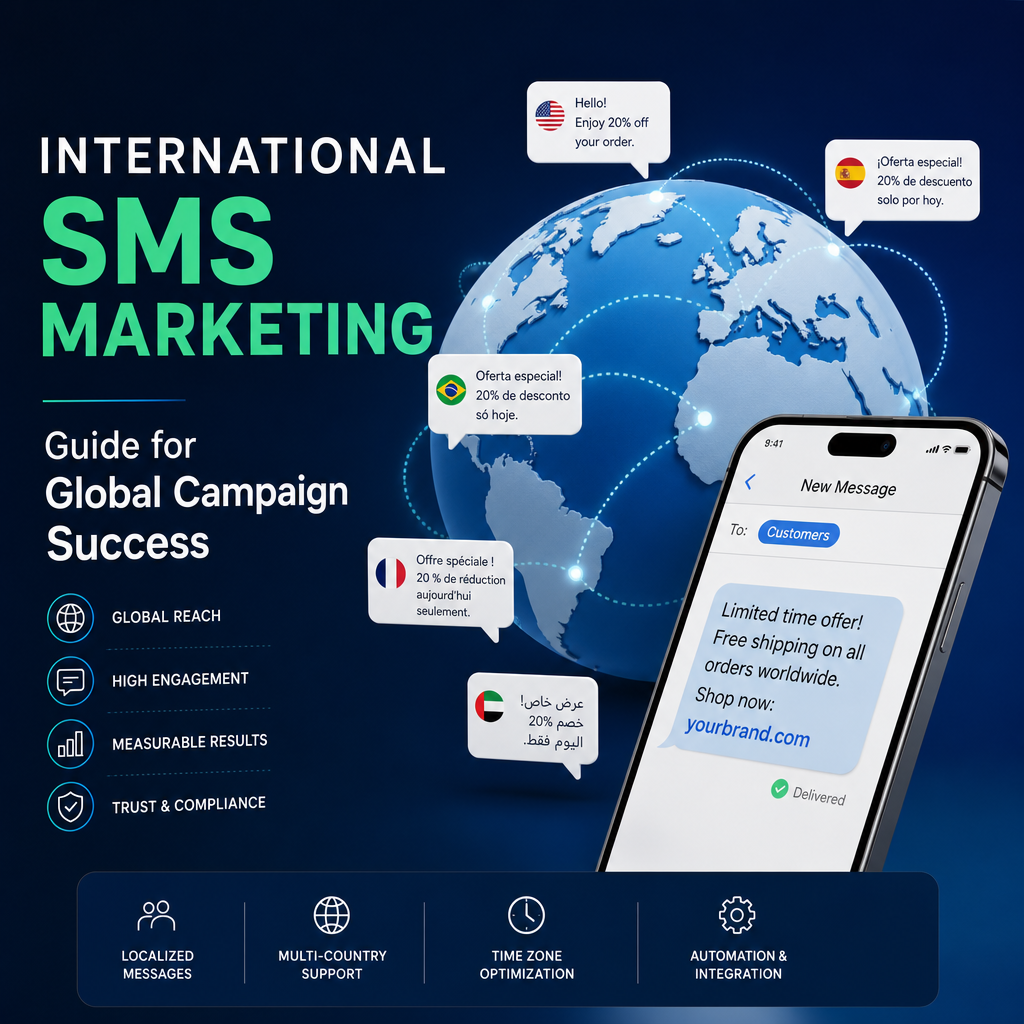
International SMS marketing gives brands a direct line to customers across borders. When done well, it can drive faster engagement, improve conversions, and support customer service at a global scale. But sending messages internationally is not as simple as copying a domestic SMS campaign and turning up the volume. Different countries have different carrier rules, phone number formats, opt-in laws, language expectations, and delivery standards.
This guide explains how to plan, launch, and optimize an international SMS strategy that works across regions while protecting your brand and respecting your audience.
What Is International SMS Marketing?
International SMS marketing is the practice of sending text messages to customers in multiple countries. These messages may include promotions, alerts, transactional updates, appointment reminders, and customer support notifications.
Unlike email or social media, SMS is immediate and highly visible. Most text messages are read within minutes, which makes international SMS especially useful for time-sensitive communication.
Common use cases include:
- Flash sales and limited-time offers
- Shipping and order confirmations
- Appointment reminders
- Event updates
- Loyalty program announcements
- Two-factor authentication and security alerts
For global brands, SMS can help maintain a consistent customer experience regardless of location. The challenge is ensuring each message is delivered legally, locally, and effectively.
Why International SMS Matters
Customers around the world rely on mobile phones as their primary communication device. In many markets, SMS remains one of the most universal and dependable ways to reach people.
Here are a few reasons international SMS is valuable:
High Open Rates
SMS messages are typically opened much faster than emails. This makes them ideal for urgent updates and short campaigns.
Broad Reach
You do not need a smartphone, app, or internet connection to receive a text message. That gives SMS a reach advantage in regions where mobile data access varies.
Strong Engagement
Because messages are concise and personal, SMS often generates strong click-through and conversion rates.
Reliable Delivery
Text messages can reach users even when other channels are crowded or inactive, especially for transactional communications.
Localized Communication
With the right setup, brands can send country-specific offers, support messages, and reminders that feel relevant rather than generic.
Challenges of International SMS
Sending international SMS campaigns introduces more complexity than domestic messaging. A campaign that performs well in one country may fail in another because of legal, technical, or cultural differences.
Different Regulations
Each country has its own rules about consent, sender identification, message content, and data privacy. Noncompliance can lead to blocked messages, fines, or damage to your reputation.
Carrier Filtering
Mobile carriers may filter or block messages that look suspicious, use disallowed content, or come from unapproved routes.
Formatting Issues
Phone numbers must be formatted correctly, usually in E.164 format, so that messages are routed accurately. Local number rules can vary.
Language and Tone
Direct translation is not enough. A message that sounds friendly in one market may feel awkward, pushy, or unclear in another.
Time Zone Differences
Sending a promotional SMS at 9 a.m. in your office location may mean disturbing customers late at night elsewhere.
Pricing Differences
SMS costs can vary significantly by country, destination, and route. Budgeting for international campaigns requires close attention to delivery fees and carrier charges.
Legal and Compliance Basics
Compliance is the foundation of any international SMS strategy. Before sending messages, make sure you understand the rules in each target country.
Get Explicit Consent
In many countries, you need clear permission before sending marketing texts. This usually means the customer must actively opt in.
Best practices for consent:
- Use clear language at signup
- Explain what type of messages users will receive
- Separate marketing consent from transactional consent
- Keep records of when and how consent was collected
Include Opt-Out Instructions
Most regions require an easy way for recipients to unsubscribe. Common examples include “Reply STOP to opt out” or a local equivalent.
Respect Local Privacy Laws
Depending on the country, privacy regulations may govern how you collect, store, and process customer data. You may need to review laws such as GDPR in Europe or other national privacy frameworks.
Identify Your Brand Clearly
Customers should know who is texting them. Messages should clearly identify the sender, especially when using alphanumeric sender IDs or short codes.
Avoid Restricted Content
Some countries limit certain content categories, including financial promotions, political messaging, adult content, or health-related claims. Always check local restrictions before launching.
Choosing the Right Delivery Method
International SMS campaigns can be delivered in several ways, and the right method depends on your goals, destination countries, and compliance requirements.
Local Long Codes
A local long code is a standard phone number in a specific country. It can help your messages appear local and trustworthy.
Pros:
- Familiar format for recipients
- Good for two-way messaging
- Can improve deliverability in some markets
Cons:
- Requires local setup in many countries
- May have lower throughput
- Not ideal for large-scale broadcasts
Short Codes
Short codes are short numeric numbers used for high-volume messaging.
Pros:
- Strong brand recognition
- Fast delivery
- Good for large campaigns
Cons:
- Expensive to obtain
- Country-specific
- Often require regulatory approval
Alphanumeric Sender IDs
These display a brand name instead of a phone number, such as “BrandX.”
Pros:
- Strong branding
- Simple for one-way alerts
- Common in many countries
Cons:
- Usually cannot receive replies
- Not supported everywhere
- May require registration in some regions
SMS APIs and Aggregators
Most brands use an SMS platform or API provider that handles routing, compliance support, and delivery reporting across countries.
When choosing a provider, look for:
- Global coverage
- Compliance tools
- Delivery analytics
- Local sender support
- Strong documentation and API reliability
- Fraud prevention and routing transparency
Building an Effective International SMS Strategy
A strong international SMS plan starts with segmentation and local relevance. Sending the same message to every market rarely works well.
Segment by Country and Region
Group customers based on location, language, and legal requirements. Each segment may need different sender IDs, message timing, and content.
Localize the Message
Localization is more than translation. It means adapting content for local language, currency, date formats, tone, and cultural expectations.
For example:
- Use local currency for pricing
- Format dates in the local style
- Mention region-specific offers
- Avoid idioms that may not translate well
Keep Messages Short and Clear
SMS is a limited channel. Make the message easy to understand in one glance.
A strong promotional SMS usually includes:
- The brand name
- The offer or value
- A clear call to action
- A short link if needed
Example:
Shop 20% off this weekend only. Use code SAVE20 at checkout. Offer ends Sunday. Reply STOP to opt out.
Personalize When Appropriate
Personalization can increase relevance and conversions. Use data such as first name, location, purchase history, or preference data if it is lawful and accurate.
Example:
Hi Maria, your order shipped today and should arrive by Friday.
For marketing campaigns, personalization should feel helpful, not invasive.
Match Timing to Local Time Zones
Schedule messages based on the recipient’s local time, not your headquarters’ time. Avoid sending promotional texts too early or too late.
A good rule is to send during standard business hours or known high-engagement windows for each market.
International SMS Examples by Use Case
Different message types serve different purposes. Here are common examples of how international SMS can support global communication.
Promotional Campaign
Summer sale starts now: 25% off all accessories until midnight. Shop here: example.com/sale
This works well when the offer is time-sensitive and concise.
Order Confirmation
Thanks for your order, Ahmed. Your package has been confirmed and will ship within 24 hours.
Transactional SMS should be informative and reassuring.
Appointment Reminder
Reminder: Your dental appointment is tomorrow at 10:30 a.m. Reply 1 to confirm or 2 to reschedule.
This format reduces no-shows and improves operational efficiency.
Shipping Update
Good news, Lina — your package is out for delivery today. Track it here: example.com/track
Real-time updates are one of the most effective uses of SMS.
Customer Support Follow-Up
We received your support request and will respond shortly. If urgent, call +44 20 1234 5678.
This makes support communication immediate and helpful.
Best Practices for International SMS
To get better results from international SMS campaigns, focus on quality, relevance, and compliance.
1. Build Permission-Based Lists
Never send messages to purchased lists or contacts without clear opt-in. Permission-based audiences are more engaged and safer from a compliance standpoint.
2. Test by Market
Run small tests before launching at scale. A message that performs well in one country may need adjustments elsewhere.
Test:
- Message length
- Language style
- Call to action
- Sending time
- Link placement
- Sender ID type
3. Use Short, Trusted Links
If you include links, use branded or trusted short links. Unfamiliar links can reduce trust and may trigger filters.
4. Monitor Delivery and Response Rates
Track metrics by country and carrier. Delivery success, click-through rates, and opt-out rates can reveal problems quickly.
Important metrics include:
- Delivery rate
- Open or read proxies
- Click-through rate
- Conversion rate
- Opt-out rate
- Response time
- Cost per conversion
5. Keep Frequency Under Control
Too many messages can lead to fatigue and opt-outs. Create a frequency policy for each market based on customer expectations.
6. Prepare for Two-Way Messaging
In some countries, customers may expect to reply. Make sure your workflow can handle inbound messages, automated responses, and escalation to support teams.
7. Maintain Clean Data
Invalid or outdated numbers waste money and hurt deliverability. Use validation tools and suppress inactive or unsubscribed contacts promptly.
Common Mistakes to Avoid
International SMS campaigns can fail for simple reasons. Watch out for these common mistakes:
- Ignoring local consent laws
- Using one message template for every country
- Sending at the wrong local time
- Failing to translate and localize content
- Using unsupported sender IDs
- Forgetting opt-out instructions
- Overloading users with too many texts
- Not tracking results by market
Even one of these mistakes can reduce engagement or cause compliance issues.
Measuring Success
A successful international SMS strategy is measured by more than just delivery. You need to know whether messages are driving the right actions in each market.
Start by reviewing:
- How many messages were delivered
- How many users clicked the link
- How many completed the desired action
- How many users opted out
- Which countries generated the best ROI
Over time, use this data to refine your targeting, content, and send times. For example, if one region has a high delivery rate but low clicks, the issue may be message relevance or language. If another region has strong clicks but high opt-outs, frequency may be the problem.
Conclusion
International SMS is a powerful way to connect with customers across borders, but success depends on more than simply sending texts abroad. You need the right compliance framework, localized content, reliable delivery infrastructure, and a strategy tailored to each market.
When you respect local laws, segment your audience, and send clear, timely messages, international SMS can become one of the most effective tools in your global marketing mix.
